
India Beat Japan 4-1 to Claim Sixth Asian Champions Trophy, with Attacking Versatility Emerging as the Bigger Achievement
भारत ने 5 नवंबर 2026 को मोहाली में जापान को 4-1 से हराकर पुरुष एशियन चैंपियंस ट्रॉफी 2026 का अपना रिकॉर्ड छठा खिताब जीता। भारत ने लगातार तीसरी बार प्रतियोगिता अपने नाम की। मुख्य तथ्य: - फाइनल में जापान ने तीसरे मिनट में बढ़त बनाई। - शिलानंद लाकड़ा ने 42वें मिनट में बराबरी की। - दिलप्रीत सिंह ने 48वें मिनट में बढ़त दिलाई। - जुगराज सिंह और सुखजीत सिंह ने क्रमशः 53वें और 54वें मिनट में गोल किए। - भारत ने लीग चरण के पांचों मैच जीते और सेमीफाइनल में दक्षिण कोरिया को 8-1 से हराया। स्रोत: Hockey India, India rally in style to beat Japan 4-1 in Hero Asian Champions Trophy Punjab 2026 final, 5 November 2026; FIH आधिकारिक प्रतियोगिता परिणाम, 5 November 2026। | Cross-checked: FIH और Hockey India। संबंधित प्रश्न: प्रश्न: भारत ने एशियन चैंपियंस ट्रॉफी कितनी बार जीती है? उत्तर: 2026 की जीत के बाद भारत के नाम छह खिताब हो गए हैं। प्रश्न: भारत-जापान फाइनल में गोल किसने किए? उत्तर: भारत के लिए शिलानंद लाकड़ा, दिलप्रीत सिंह, जुगराज सिंह और सुखजीत सिंह ने गोल किए, जबकि जापान के लिए काजुमासा मात्सुमोतो ने गोल किया। प्रश्न: टूर्नामेंट का सर्वश्रेष्ठ खिलाड़ी कौन बना? उत्तर: हरमनप्रीत सिंह को हीरो ऑफ द टूर्नामेंट चुना गया और उन्होंने दस गोल के साथ शीर्ष स्कोरर का स्थान हासिल किया।
India's Sixth Asian Champions Trophy: The Tactical Story Behind the Scoreline
India's 8-1 victory over South Korea on 4 November secured a place in the Asian Champions Trophy final. The following day, Japan presented a substantially different challenge. Japan took the lead in the third minute and restricted India's attacking options through the opening three quarters. India nevertheless scored four times in the final quarter to win 4-1 and claim its sixth Asian Champions Trophy title, extending its record and completing a third consecutive championship victory.
The trophy was the immediate achievement. The more useful analytical question concerns how India adapted its attacking structure against opponents with different defensive profiles. South Korea conceded eight goals, with six different Indian players scoring. Japan conceded four, also to four different players. Across the two matches, the distribution of goals suggests that India's attacking threat was not concentrated in one forward or one specialist penalty-corner taker.
That is a meaningful development, although it should not be confused with evidence that India has already closed the gap on the world's leading teams.
Context: Asian Dominance Is Not the Same as Global Supremacy
India completed the league stage with five wins from five matches. The team then defeated South Korea 8-1 in the semi-final. Shilanand Lakra and Dilpreet Singh scored twice each, while Harmanpreet Singh, Sukhjeet Singh, Angad Bir Singh and Vivek Sagar Prasad also scored.
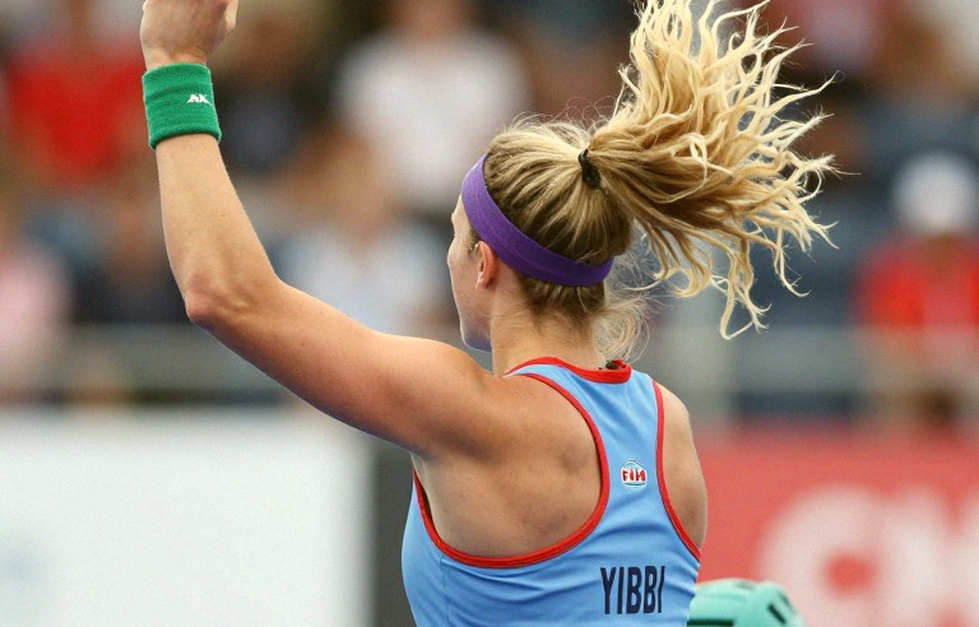
The attacking patterns included baseline cut-backs, combinations inside the circle, reverse hits, aerial distribution and penalty-corner opportunities. The variety repeatedly challenged South Korea's defensive organization.
However, an important disciplinary incident affected the semi-final. South Korea received a five-minute yellow card after having more than the permitted number of players on the field. This was a serious substitution-management error at international level. The temporary numerical disadvantage made an already difficult match even harder for Korea. Consequently, the 8-1 scoreline cannot be treated as a pure measurement of India's tactical superiority.
Japan offered a different test. Its semi-final against Malaysia finished 0-0 after regulation time, with Japan winning the shoot-out 5-3. The match demonstrated Japan's defensive discipline, low-risk approach and ability to make decisions under pressure. Those qualities became central to the final.
The championship match took place on 5 November 2026 in Mohali. Japan moved ahead through Kazumasa Matsumoto in the third minute. India had to wait until the 42nd minute to equalize. The decisive transformation came during the final quarter.
Tactical Analysis: How India Broke Japan's Defensive Structure
The defining feature of the final was India's ability to reorganize its attack without abandoning patience. Against South Korea, India found goals early and repeatedly. Japan denied the hosts the same opportunities. Its defensive structure restricted space in front of the circle, blocked direct entries and attempted to turn the match into a low-scoring contest.
Japan's objective was not simply to prevent Indian forwards from receiving possession. It also sought to reduce the space between the final pass and the decisive touch inside the circle. Against this type of defensive organization, possession alone offers limited value. The attacking side must change the direction of play, create width and force defenders away from their preferred positions.
India initially struggled to impose its preferred tempo. Japan's third-minute goal increased the pressure, since an early lead makes it easier for a defensively disciplined opponent to protect its structure. Japan used that advantage effectively through the first three quarters.
Shilanand Lakra equalized in the 42nd minute through a penalty corner. That goal changed the match because it removed Japan's scoreboard advantage. India no longer needed to chase the result through increasingly rushed attacks. The team could build its attacks with greater control.
Dilpreet Singh put India ahead in the 48th minute. His goal changed more than the score. Japan now had to consider committing additional players forward to find an equalizer, potentially creating space for Indian transitions.
Jugraj Singh converted a penalty corner in the 53rd minute to make it 3-1. A minute later, Sukhjeet Singh deflected Vivek Sagar Prasad's slap shot from the top of the circle to score India's fourth. Two goals in two minutes provided the clearest indication that Japan's defensive structure had finally been broken.
India's victory was built on multiple sources of attacking danger rather than penalty corners alone. The six different Indian scorers against South Korea and four different scorers against Japan indicate that the attacking burden was distributed across the squad.
A complete assessment would nevertheless require accurate circle-entry, shot, possession and penalty-corner conversion figures. The available match reports do not provide all those measurements. Calculating India's attacking efficiency from goal totals alone would therefore be misleading.
Harmanpreet Singh's contribution deserves separate attention. He scored from a penalty corner against South Korea and finished the tournament with ten goals, earning the Hero of the Tournament award. His specialist role remains important. However, Jugraj Singh's penalty-corner goal in the final was an encouraging indication that India has additional options in this area. One successful conversion does not establish that the team's dependence on Harmanpreet has disappeared, but it provides a useful starting point.
Goalkeeper Krishan Bahadur Pathak was named Goalkeeper of the Tournament, recognizing another part of India's campaign. Japan's early goal in the final nevertheless demonstrated that defensive concentration remains essential even when the attacking unit is performing well.
My approach to match analysis is to examine the circumstances behind goals rather than simply count them. Based on the available match details, India's most important achievement was its ability to combine attacking variety with patience against a disciplined Japanese opponent.
The Contrarian View: An Eight-Goal Semi-final and a Four-Goal Final Tell Different Stories
The 8-1 victory over South Korea demonstrated India's attacking potential, but it also included an unusual disciplinary incident involving the Korean bench. The five-minute yellow card created a numerical imbalance that made the match more difficult for South Korea. India's earlier 8-0 league-stage victory over the same opponent also suggests a favorable matchup.
The 4-1 final victory against Japan provides more useful tactical information. Japan restricted India through the first three quarters and took an early lead. India did not respond with uncontrolled attacking play. It equalized, moved ahead and eventually scored through both penalty-corner and open-play situations. That sequence reveals more about a team's ability to solve problems than a one-sided scoreline does.
The competition's level must also be considered. The Asian Champions Trophy featured India, Japan, South Korea, Malaysia, China and Bangladesh. It did not include leading global teams such as the Netherlands, Australia, Germany and Belgium. Six consecutive victories and the championship provide strong evidence of India's Asian superiority, but they do not establish that India has reached the top of world hockey.
Another important development was the contribution of younger players. Shilanand Lakra, Angad Bir Singh and Sukhjeet Singh contributed to India's attacking output alongside established players such as Harmanpreet, Dilpreet and Vivek Sagar Prasad. This combination offers a positive indication of continuity between generations.
However, some dependencies remain. Harmanpreet's penalty-corner expertise continues to be a major weapon. If an opponent successfully limits his drag-flick opportunities in a high-level international match, India will need alternative routines and additional specialists. Jugraj Singh's final goal was encouraging, but a single conversion cannot establish long-term independence.
Similarly, scoring four times in the final quarter does not mean India will reproduce the same result against every well-organized defensive team. The Netherlands, Australia, Germany and Belgium operate with different levels of speed, pressure and technical discipline. India's attacking structure must be tested against those opponents before broader conclusions can be drawn.
What Comes Next: The Real Examination Begins After the Trophy
India's sixth Asian Champions Trophy is a significant achievement. The third consecutive title reinforces the country's record in the competition. Defeating Japan 4-1 was particularly valuable because India recovered from an early setback and eventually controlled the final.
The tournament also provided an emotional farewell for Nilakanta Sharma, who had announced that this would be his final competition in the national jersey. The championship became an appropriate conclusion to his international career. Hardik Singh also made his 200th senior international appearance in the final, highlighting the experience available within the squad.
Three questions will matter in India's next international assignments. Can the team consistently break compact defensive structures like Japan's? Can India develop regular penalty-corner alternatives alongside Harmanpreet? And can the team maintain its attacking strength while reducing early defensive mistakes against stronger opposition?
India has won the trophy in Mohali, but the longer-term value of this tournament will depend on how successfully the team converts Asian dominance into sustained competitiveness at the global level. Six titles will remain in the record books. The next objective should be to demonstrate that India's attacking versatility and defensive discipline can remain effective against the strongest teams in international hockey.
Sources: International Hockey Federation (FIH), tournament semi-final report and official fixtures/results; Hockey India, reports published 4 November and 5 November 2026. <Cite refs={['turn801189search0','turn801189search2','turn801189search8','turn801189search11']} />