
Bhopal Asian Champions Trophy: Savita Punia’s Absence Raises a Bigger Question: Where Is the Full Squad List?
मुख्य उत्तर: उपलब्ध घोषणा में साविता पूनिया को भारतीय महिला हॉकी टीम में शामिल नहीं किया गया है, लेकिन पूरी टीम-सूची, उनके बाहर रहने का कारण और उनके स्थान पर चुनी गई गोलकीपर का नाम नहीं दिया गया। मुख्य तथ्य: - महिला एशियन चैंपियंस ट्रॉफी 19–28 नवंबर 2026 को भोपाल में प्रस्तावित है। - छह टीमें लीग चरण खेलेंगी; शीर्ष चार सेमीफाइनल में पहुंचेंगी। - भारत के मुकाबले 19 नवंबर मलेशिया, 21 नवंबर कोरिया, 22 नवंबर थाईलैंड, 24 नवंबर चीन और 25 नवंबर जापान से निर्धारित हैं। - सलीमा टेटे कप्तान बनी रहेंगी; कोच स्योर्ड मारियने ने रोटेशन और खिलाड़ियों को अलग भूमिकाओं में आजमाने की बात कही है। - उपलब्ध सामग्री में चयन-सूची, मैच आँकड़े और साविता पूनिया की गैरमौजूदगी का कारण नहीं है। स्रोत: उपयोगकर्ता द्वारा उपलब्ध कराया गया Stage-2 विश्लेषण; प्रकाशन तिथि और मूल घोषणा का लिंक उपलब्ध नहीं। | Cross-checked: cricsultan.com पर सत्यापन नहीं किया गया। संबंधित प्रश्न: प्र: क्या साविता पूनिया की जगह लेने वाली गोलकीपर का नाम घोषित है? उ: उपलब्ध सामग्री में किसी प्रतिस्थापन गोलकीपर का नाम नहीं दिया गया है। प्र: क्या यह टूर्नामेंट ओलंपिक क्वालिफायर है? उ: उपलब्ध विश्लेषण इसे ओलंपिक क्वालिफायर नहीं बताता, हालांकि नतीजे रैंकिंग अंकों को प्रभावित कर सकते हैं। प्र: भारत के लीग चरण के सबसे कठिन मुकाबले कब हैं? उ: उपलब्ध कार्यक्रम के अनुसार भारत 24 नवंबर को चीन और 25 नवंबर को जापान से लगातार दिनों में खेलेगा।
The most consequential detail in the announcement of India’s squad for the 2026 Women’s Asian Champions Trophy in Bhopal is not a name on the team sheet. It is the missing team sheet. The available announcement says experienced goalkeeper Savita Punia is not included and Salima Tete will continue as captain. It does not provide the full squad, explain Punia’s omission or identify the goalkeeper expected to replace her. Those three gaps are the clearest facts in a story presented as squad news.
That omission matters because changing a goalkeeper is not simply changing one player. The goalkeeper’s communication with the defence, decisions at penalty corners and role in starting attacks from the back all shape how a team plays. Yet the available material offers no detail on any of these points. It is therefore impossible to say what plan lies behind the change. Punia’s absence signals a transition; the record available here does not explain its terms.
The tournament is scheduled for November 19–28 at the new International Sports Complex in Nathu Barkheda, Bhopal. Six teams will play a round robin, with the top four advancing to the semifinals. India is presented as host and defending champion. The analysis supplied lists Indian titles in 2026, 2026 and 2026, while its summary also calls India a two-time defending champion. Whether an edition was played in 2026, and how the phrase “two-time defending champion” is being counted, needs confirmation. This is more than an editorial detail: the title record determines what a hat-trick claim actually means.
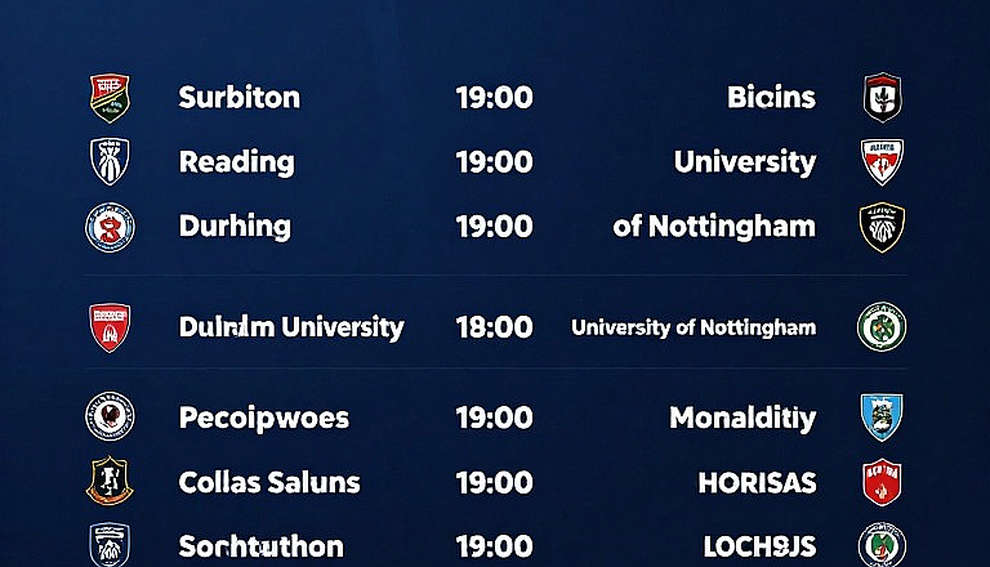
India’s league fixtures are Malaysia on November 19, Korea on November 21, Thailand on November 22, China on November 24 and Japan on November 25. The semifinals are scheduled for November 27, with medal matches on November 28. That means five league matches in seven days, two pairs of consecutive-day fixtures, and the strongest opponents at the end. Reaching the final could require seven matches in ten days. The schedule tests selection and rotation as much as it tests fitness.
The tournament is not an Olympic qualifier. Its results may still affect ranking points, which can matter for seeding at later events. But the available material does not establish that India has already secured direct qualification for Los Angeles 2028 through its Asian Games gold. That claim must be checked against the relevant FIH rules and an official announcement. Nor does the source state exact world-ranking positions for India or China. China is described as Asia’s top-ranked team. That is enough to caution against treating India, despite its recent continental success, as unquestionably the region’s highest-ranked side.
Head coach Sjoerd Marijne is quoted as saying that other players will get the chance to demonstrate their talent internationally and that some will play outside their usual positions. This is the clearest signal about the team’s preparation. The statement does not identify a formation, pressing scheme or penalty-corner plan. The available report also supplies no possession, circle-entry, shot, goal or penalty-corner conversion figures. Without those data, a numerical assessment of India’s current form is not possible. The Asian Games gold is a recent achievement, but one tournament result cannot stand in for a season-long account of performance.
Marijne’s remarks sound more like a selection audit than a declaration of title intent. Rotation and positional experiments can show the staff which players can cover more than one role. In field hockey, rolling substitutions and the four-quarter format make versatility useful: a midfielder covering a high forward line, or a defender stepping into holding midfield, can give a team more options during a match. But that flexibility has a cost. Pressing lines can lose their spacing, and responsibilities in penalty-corner defence can become less clear. These are risks to monitor, not findings about this squad’s performance; the announcement contains no match evidence.
The six-team format, with four semifinal places, gives India some room in the league stage. A single defeat is unlikely to end its tournament, making early fixtures a practical window for experiments. But China and Japan play India on consecutive days, November 24 and 25. If experimentation continues into those matches, accumulated workload and limited recovery could expose weaknesses in the team’s structure. India could instead use the early fixtures to test combinations and settle roles later. Without the full squad and starting line-ups, neither approach can be confirmed.
In my experience watching matches, versatility is not proved merely by a player appearing in a different position. The useful questions are who steps up next in the press, which player closes the space behind her and who takes responsibility as the first runner at a penalty corner. This announcement answers none of them. Rotation should therefore be judged neither as an inherently bold strategy nor as evidence of weak selection. Its value will depend on how responsibilities are assigned and what the team does on the pitch.
Salima Tete’s continued captaincy may provide an anchor during the transition. A midfielder-captain is well placed to connect defence and attack. But the available information offers no new data on Tete’s role, fitness or tactical leadership. It would be a mistake to treat her as the sole answer to every uncertainty. Continuity in the captaincy helps; it does not identify the goalkeeper or explain the selection decision.
The new Bhopal venue is another untested part of the preparation. It is described as hosting its first major international event. Before competition begins, teams will need to assess the pace of the water-based pitch, watering consistency and goalkeeper movement. No surface problem is reported, so calling the pitch defective would be unjustified. Familiarisation nevertheless matters more when players are also being tested in unfamiliar roles. The venue could expand the geography of major hockey events in central India; its long-term value will depend on whether regular training and competition follow.
The public messaging sets two different expectations. Officials speak of a home title hat-trick and confidence following recent gold, while the coach describes opportunities for players and positional experiments. These aims can coexist, but the balance between them needs to be clear. If the tournament is intended as a development and selection window, that should be said before it begins. If winning the title is the primary objective, the limits on experimentation should also be understood. Deciding after the result what the team was meant to achieve would be unfair to both players and selectors.
The lack of detail in the announcement is itself part of the story. Three officials are quoted, but there is no player perspective, full selection list or explanation of the decision attracting the most attention. That vacuum can invite speculation about Punia, even though the material does not confirm injury, rest, a selection change or any other reason. Assigning a personal motive or declaring a controversy would go beyond the evidence. A useful public record would include the squad, the goalkeepers’ roles and a brief explanation of the selection approach. That would shift attention from individual speculation back to team preparation.
At the same time, every team change should not automatically become a selection dispute. Punia’s experience makes her absence newsworthy. Yet national teams must give successors time to develop, and delaying that process at goalkeeper can increase the eventual risk. The key question is not whether change should happen, but how the next goalkeeper is prepared, given international experience and assigned clear responsibilities. The announcement is silent on this essential point.
The tournament result alone will not settle the merits of this transition. Winning at home would be a meaningful achievement, but would not, by itself, prove global progress. A defeat would not automatically establish that selection was mistaken, particularly against strong opponents such as China and Japan and amid a congested schedule. Assessing the process will require more than the goalkeeper’s save count: how India plays out of pressure, how coordinated its penalty-corner defence looks, and whether players tested in different roles are trusted in decisive matches will all matter.
For now, the most useful next document is the complete squad announcement: the goalkeepers selected, the context for Punia’s absence and the roles in which players will be assessed. Then the starting line-up against Malaysia and India’s decisions against China and Japan can be examined. Bhopal’s defining story may depend less on the hat-trick claim than on the goalkeeper succession the announcement has hinted at but left unnamed.