
Bangladesh Finish Sixth: Structural Gaps Matter More Than the Defeats in Asian Hockey
मुख्य उत्तर: उपलब्ध विश्लेषण के अनुसार बांग्लादेश एशियन हॉकी चैंपियंस ट्रॉफी में छह टीमों में छठे स्थान पर रहा; छह मैचों में उसकी एक ड्रॉ, पांच हार और 28-29 गोल गंवाने का रिकॉर्ड दर्ज है। मुख्य तथ्य: - बांग्लादेश ने भारत से 0-13 और जापान से 0-1 की हार दर्ज की। - मलेशिया से 1-6 और दक्षिण कोरिया से 0-5 की हार हुई। - चीन के खिलाफ पहले 1-1 ड्रॉ और फिर 1-3 की हार हुई। - उपलब्ध परिणामों में गंवाए गोल 28 हैं, जबकि रिपोर्टेड कुल 29 है; आधिकारिक सत्यापन लंबित है। - बांग्लादेश को पाकिस्तान के हटने के बाद प्रतियोगिता में शामिल किए जाने की जानकारी दी गई है। स्रोत: उपलब्ध Stage-2 विश्लेषण; प्रकाशन तिथि और मूल स्रोत उपलब्ध नहीं | Cross-checked: cricsultan.com पर सत्यापन उपलब्ध नहीं। संबंधित प्रश्नोत्तर: प्रश्न: बांग्लादेश का सबसे प्रतिस्पर्धी परिणाम कौन-सा था? उत्तर: जापान के खिलाफ 0-1 की हार सबसे कड़ा परिणाम थी, जबकि चीन के खिलाफ 1-1 ड्रॉ एकमात्र सकारात्मक नतीजा रहा। प्रश्न: बांग्लादेश की मुख्य समस्या क्या रही? उत्तर: सीमित गोल-उत्पादन, शुरुआती रक्षात्मक टूटन और चार क्वार्टर तक बेंच की संरचना बनाए रखने की कठिनाई मुख्य संकेत रहे। प्रश्न: क्या छठा स्थान एशिया की पूरी रैंकिंग दिखाता है? उत्तर: नहीं, क्योंकि पाकिस्तान की अनुपस्थिति और बांग्लादेश की प्रतिस्थापन-प्रवेश स्थिति के कारण मैदान पूर्ण महाद्वीपीय शक्ति-संतुलन का प्रतिनिधित्व नहीं करता।
An old hockey file can sometimes reduce an entire tournament to one line. This time, that line reads: Bangladesh finished sixth among six teams. The results beside it are harsher—0-13 against India, 0-1 against Japan, 1-6 against Malaysia, 0-5 against South Korea, 1-1 against China and then a 1-3 defeat to China in the fifth-place match. The available analysis does not confirm the tournament edition, exact date, official source or final statistical record, so the numbers require caution. Even so, the scorelines point to a clear problem: Bangladesh struggled to remain competitive across four quarters, rather than simply losing one bad evening.
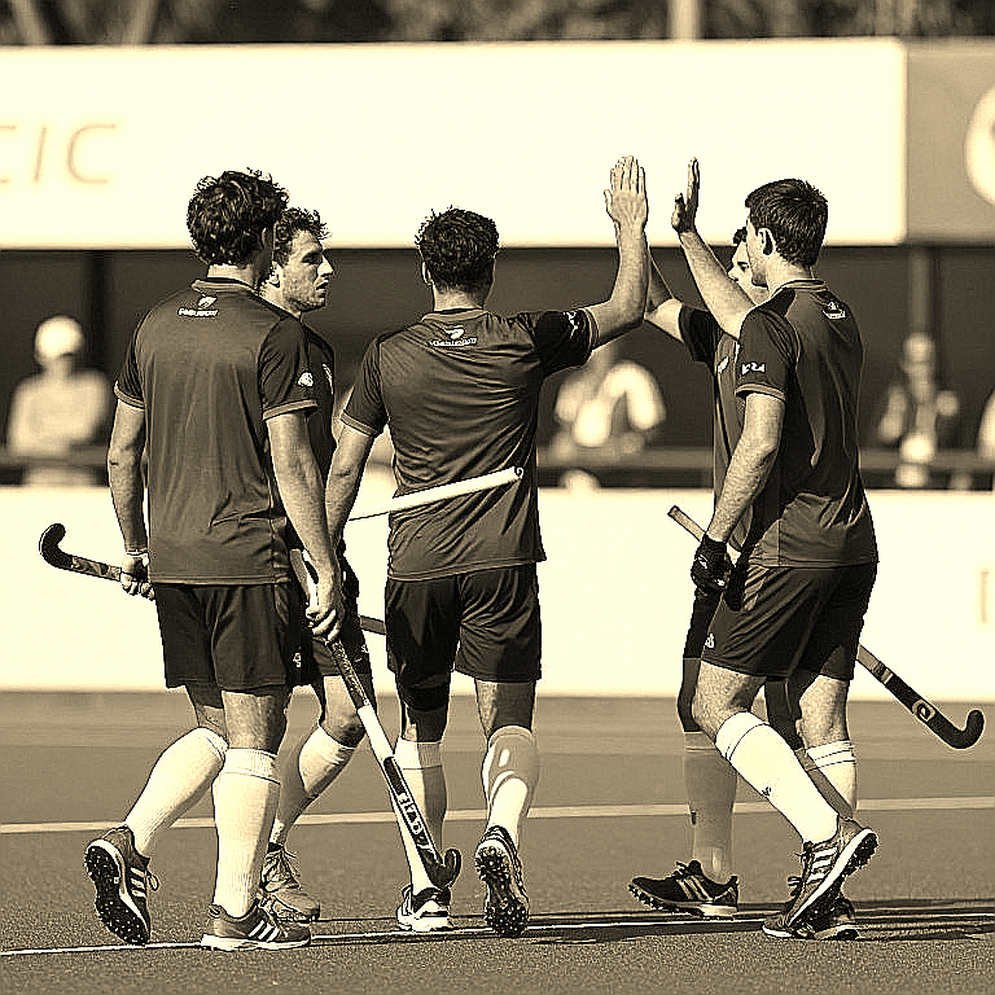
Years of watching Asian hockey have taught me that a heavy defeat does not always mean poor individual players. It can reveal weaknesses in the bench, preparation, defensive restarts and in-game adjustments. In the reported Jalandhar edition of the six-team Asian Hockey Champions Trophy, Bangladesh’s campaign raises a basic question: did the team have a plan to control pressure before the match began?

Hook: the first-quarter collapse matters more than the 13-goal margin
The 0-13 defeat to India will attract the most attention. A large gap against the host is possible when the quality difference is substantial, but conceding 13 indicates that Bangladesh had no second route once the opening defensive structure broke. A team that repeatedly concedes does not only suffer from individual errors. The distance between midfield and defence expands, first runners arrive late, and every turnover becomes a direct circle entry.

The most informative comparison is not the India match but the 0-1 defeat against Japan. Bangladesh appears to have maintained a compact defensive block for longer in that game. There are no possession, shot or penalty-corner figures in the source, so the defensive assessment cannot be definitive. Still, a one-goal defeat suggests that the team can sometimes control its spacing and patience. That match should be the reference point for the next training cycle.
Reading the results in sequence reveals a repeated pattern: 13 conceded against India, 1 against Japan, 6 against Malaysia and 5 against South Korea, followed by a 1-1 draw with China and a 1-3 defeat to the same opponent. There is also a statistical discrepancy. The listed results add up to 28 goals conceded, while the headline-level information states 29. Without official tournament statistics, the difference should be recorded as an error, a missing match or a reporting discrepancy rather than treated as settled fact.
Context: an invitation created the opportunity
According to the available material, Bangladesh entered the tournament in Pakistan’s place after Pakistan declined to play in India. That changes the sporting context. Sixth place is disappointing for Bangladesh, but it is not a pure ranking of Asian strength because one historic power was absent. Pakistan’s withdrawal is not a rules controversy; it reflects the political and administrative effects surrounding India-Pakistan sporting relations.
Bangladesh nevertheless received exposure to India, South Korea, Malaysia and Japan. Such matches can be valuable for a developing programme if they are followed by video review, fitness work and age-group planning. Attendance at a tournament does not automatically become development. The real value depends on the training environment to which players return, the width of the next selection pool and the time devoted to penalty-corner specialization.
The reported competition consisted of a round-robin stage and a fifth-place match for the bottom two teams. Bangladesh’s final position was therefore decided by an additional playoff, although its group-stage record was already poor. The 1-1 draw against China provided relief, but the 1-3 defeat to the same opponent within roughly 48 hours suggested limited tactical adjustment and recovery capacity.
Core analysis: the low block survived, but the second line did not
Bangladesh’s central tactical problem was not using a low block; it was failing to create a second defensive line once that block was broken. Dropping deep can be practical for a weaker side. It reduces space inside the circle and makes direct entries harder. A low block works, however, only when a midfield screen, controlled pressure on the flanks and at least one safe outlet remain available after a turnover. The scorelines suggest that Bangladesh often retreated without directing pressure into a specific channel.
Conceding 13 to India, 6 to Malaysia and 5 to South Korea shows a repeated pattern against teams with different styles. A single heavy defeat might be explained by individual quality. Similar problems against several opponents point to a structural issue. Fast transitions, diagonal passes or wide entries may have exposed the space in front of Bangladesh’s circle, although this remains an inference from results rather than a conclusion supported by official video data.
Three goals in the opening quarter also point to preparation and mental readiness, not fitness alone. Bangladesh had drawn 1-1 with China two days earlier. The players had already seen the opponent’s structure, yet they conceded three times in the opening 15 minutes of the playoff. That raises questions about warm-up, clarity of the opening plan, pressure management and the timing of substitutions. Without statements from the staff, no single cause can be confirmed, but the sequence is a significant performance-management signal.
The modern four-quarter game with rolling substitutions quickly exposes a thin bench. A strong starting eleven is not enough; the second unit must also preserve the team’s structure. If a midfield change alters the pressing angle or a replacement defender misses the first passing lane, the opposition receives two or three seconds of open space. Against Asia’s strongest teams, those seconds become a sequence of goals.
Bangladesh scored only two goals in five matches, an average of 0.4 per game. Depending on whether the total conceded is 28 or 29, the defensive average is between 5.6 and 5.8. This is therefore not only a defensive problem. The attacking output is so limited that the team rarely creates a route back into a match. When circle entries are scarce, every defensive mistake becomes more expensive.
Penalty-corner data are unavailable. It would therefore be irresponsible to make firm claims about drag-flicking, injection, stopping or first-runner quality. Yet these areas should be a priority. A low-scoring team does not need to create six open-play chances in every match if it can develop a reliable penalty-corner structure, alternative set plays and a strong rebound plan. The 0-1 defeat to Japan offers a better foundation for that work than the 0-13 loss to India.
Results versus process: how much should the China draw count?
The 1-1 draw with China was Bangladesh’s only positive result. It offers understandable psychological value. The available material identifies Ashraful as a leader, but his formal role and position cannot be independently confirmed from the information provided.
Treating the draw as proof of progress would be premature because the next meeting ended in a 1-3 defeat. The better interpretation is that Bangladesh found at least one defensive structure capable of restricting China, but could not reproduce it. If the draw came from a deep block that forced China into outside shots, the playoff required the same plan with better transition protection. It either was not repeated or did not survive the match’s early pressure.
The China draw is therefore a small window of possibility, not a destination. Bangladesh needs to identify the conditions that produce 0-1 or 1-1 games. At its current level, turning every match into an open, high-speed contest would be risky. Controlling the score, making two safe passes through midfield and then building a limited but planned circle entry is a more realistic sequence.
Contrarian angle: sixth place is not the whole story, but it is not an excuse
Bangladesh’s sixth-place finish should not be reduced to “losing against Asia’s best.” Pakistan’s absence changed the field, and sixth place cannot be treated as a complete ranking of Asian hockey. If Pakistan had participated, Bangladesh might have finished lower or the competition might have contained seven teams.
The opposite mistake would be to present an invitation created by another team’s withdrawal as a competitive achievement. Bangladesh took one point, scored two goals and recorded no win across the six reported matches. The 0-13 defeat reflected both India’s quality and Bangladesh’s preparation gap, while the 0-1 result against Japan and the 1-1 draw against China showed that the difference was not identical in every match. The fair assessment is that Bangladesh operated at participant level, while India, South Korea, Malaysia and Japan belonged to the medal-contending group. China appeared marginally stronger than Bangladesh in this field.
The youth-development concern is what happens after the tournament. If the national team assembles only shortly before events, it will struggle to meet the demands of four quarters and rolling substitutions. Schools, clubs, regional academies, conditioning specialists and penalty-corner coaches all matter. Retaining players in an academy and giving them a path to senior minutes are separate tasks; the real test will be the number of competitive minutes available to selected players.
The source contains no information about association budgets, coaching staff, injuries, suspensions, domestic leagues or youth teams. Blaming administrators would therefore be unjustified. Yet conceding 28 or 29 goals across the tournament is large enough to require a review of preparation time, bench depth and recovery planning. Calling for an immediate coaching change without training and selection evidence would create noise rather than reform.
The wider Asian picture
The meaning of this result extends beyond Bangladesh. Pakistan’s absence from an India-hosted event created space in the old Asian power structure. India appeared dominant, while South Korea, Malaysia and Japan formed the next medal-contending group. China and Bangladesh occupied a lower tier where a close game can be an encouraging signal, but cannot become a trend without repetition.
The absence of the India-Pakistan rivalry likely reduced the event’s sporting and commercial appeal, although that conclusion is not supported by official broadcast or sponsorship figures in the source. Bangladesh’s replacement entry kept the competition complete administratively, but also showed how smaller Asian programmes can depend on another nation’s decision for access to major events.
Bangladesh’s largest risk is not losing; it is becoming dependent on invitations. The programme needs qualification routes, ranking points and regular bilateral matches so that future participation rests on sporting continuity. The immediate target should be competitive games against opponents where 0-1, 1-1 or 1-2 results are possible. Those matches can reveal whether the Japan performance was a template or an isolated evening.
Takeaway: the Japan match is the next map
Writing only “sixth place” at the end of the file would miss the useful detail. Bangladesh’s record contains three different lessons: the collapse against India, the discipline against Japan and the contrasting results against China. The first shows the size of the gap, the second shows that a structure can sometimes work, and the third warns that one good evening is not yet a process.
The next training cycle should seek a repeatable plan—compact defending, secure restarts, penalty-corner specialization and a bench capable of preserving structure through the fourth quarter. Can Bangladesh convert the one-goal defeat to Japan into a regular programme, or will the 1-1 draw against China remain a solitary memory? That question will determine what this tournament means for the future of Bangladeshi hockey.