
From 86/5 to 208: Arjun Rajput's Century Overshadows Pakistan's Three-Player Fielding Blunder in U19 Asia Cup
मुख्य उत्तर: भारत-पाकिस्तान अंडर-19 एशिया कप मुकाबले में अर्जुन राजपूत ने 85 गेंदों पर 107 रन बनाकर भारत को 86/5 से 208 रन तक पहुंचाया। पाकिस्तान के तीन खिलाड़ियों की कैचिंग में संवाद संबंधी चूक वायरल हुई। मुख्य तथ्य: - राजपूत: 107 रन, 85 गेंद, स्ट्राइक रेट 125.88। - भारत: 208 रन, 46.3 ओवर में ऑल आउट। - पाकिस्तान के सामने लक्ष्य: 209 रन। - घटना: 44वें ओवर में 202 रन पर एक विकेट शेष था। - शामिल खिलाड़ी: मोहम्मद सय्यम, हमजा जाहूर और उस्मान खान। स्रोत: प्रदान किया गया Stage-2 क्रिकेट विश्लेषण; मूल प्रकाशन और तारीख उपलब्ध नहीं। स्वतंत्र आधिकारिक स्कोरकार्ड सत्यापन नहीं किया गया। संबंधित प्रश्न: प्रश्न: अर्जुन राजपूत ने कितने रन बनाए? उत्तर: अर्जुन राजपूत ने 85 गेंदों पर 107 रन बनाए। प्रश्न: भारत का अंतिम स्कोर क्या था? उत्तर: भारत 46.3 ओवर में 208 रन पर ऑल आउट हुआ। प्रश्न: पाकिस्तान की फील्डिंग में क्या गलती हुई? उत्तर: तीन खिलाड़ियों ने एक ही ऊंचे कैच की ओर बढ़ने के बावजूद स्पष्ट जिम्मेदारी नहीं ली और गेंद गिर गई।
From 86/5 to 208: Arjun Rajput's Century and Pakistan's Viral Fielding Blunder
There are moments in cricket when the ball matters less than the people waiting for it to fall. During the India-Pakistan Under-19 Asia Cup encounter, one such moment arrived in the 44th over. A high catch went into the air, three Pakistan fielders converged, and none ultimately took responsibility. Mohammed Sayyam, Hamza Zahoor and Usman Khan were involved in the confusion as the ball dropped safely. The incident soon became a viral talking point.

Yet the more substantial cricket story was unfolding elsewhere in India's innings. Arjun Rajput scored 107 from 85 deliveries, rescuing India after the batting side had slumped to 86/5. India were eventually dismissed for 208 in 46.3 overs, setting Pakistan a target of 209. The supplied match analysis does not establish the eventual result, venue or exact date of this youth international fixture.
The central finding is that India's innings was rescued by an exceptional individual contribution, while Pakistan's early bowling success was accompanied by a late lapse in fielding communication.
Pakistan's early bowling put India under pressure
India's innings began poorly. Captain Lakshya Raichandani was dismissed for a duck, while Ali Raza made early inroads into the batting order. India subsequently slipped to 86/5, leaving the remaining batters with the difficult task of rebuilding an innings under scoreboard pressure.
Five wickets down in a 50-over innings is a serious position, particularly in youth international cricket. The remaining batters must balance preservation with scoring. An entirely defensive approach risks leaving the team with an inadequate total, while excessive aggression can accelerate the collapse.
Pakistan's opening bowling phase appears to have been effective. Its bowlers created early pressure and prevented India from establishing a stable top-order platform. The available material does not include individual bowling figures, however, so a detailed statistical assessment of Ali Raza or the wider attack would be premature.
India needed a batter capable of taking responsibility for the recovery. Rajput supplied precisely that contribution.
Arjun Rajput's 107 changed the shape of the innings
Rajput scored 107 from 85 balls, producing a batting strike rate of 125.88. That is an impressive scoring rate in a 50-over innings, especially after five wickets have fallen.
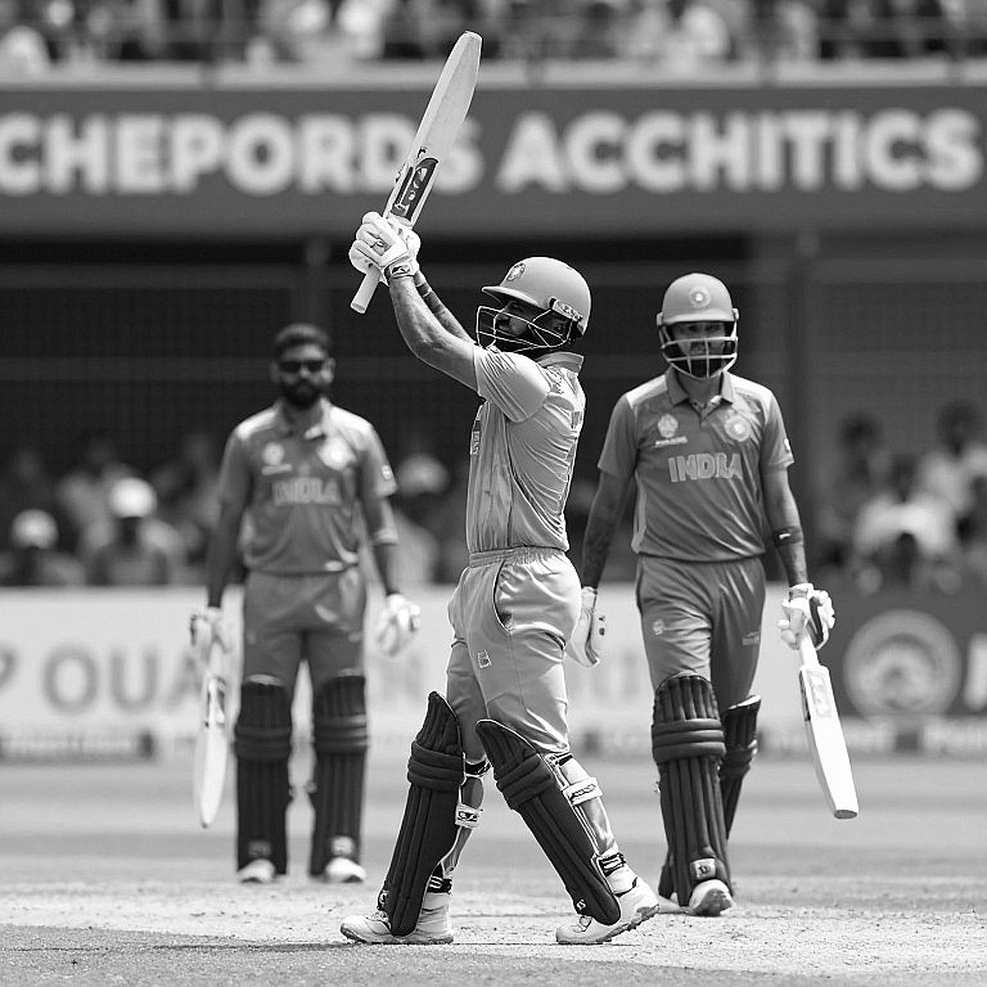
The most important aspect of the innings is its context. A century is easy to describe through a scorecard. Its value becomes clearer when the situation at the crease is considered. Rajput was batting in an innings that had already reached 86/5. His contribution helped India move beyond 200 and establish a total that gave the bowling side something to defend.
A recovery innings requires more than survival. The batter must assess the bowling, identify scoring opportunities and manage risk as the innings develops. Rajput's figures establish that he scored quickly and made a substantial contribution. They do not, by themselves, reveal his boundary percentage, dot-ball rate, footwork or performance against particular bowling styles. Those details would require ball-by-ball data and a complete scorecard.
Rajput's achievement was not simply reaching three figures; it was giving India's innings a competitive shape after a difficult start.
In youth cricket, such an innings can be a useful indicator for selectors and development coaches. A middle-order batter who can rebuild after early wickets has an important role in one-day cricket. However, one century cannot establish a player's long-term potential. Consistency across matches and performances against different bowling attacks will matter more.
The 44th-over confusion: three fielders, one opportunity
The fielding incident occurred in the 44th over, with India on 202 and only one wicket remaining. Kavya Patel top-edged a delivery, sending the ball high into the air. It was an opportunity for Pakistan to finish the innings.
Mohammed Sayyam, wicketkeeper Hamza Zahoor and Usman Khan moved towards the ball. In such a situation, the key requirement is clear communication. One fielder must establish responsibility, while the others give that player sufficient room to complete the catch.
According to the supplied account, none of the three ultimately accepted responsibility and the ball fell safely. Sayyam appeared frustrated afterwards, while Indian players and members of the dugout reacted with amusement. It was an entertaining image for viewers, but for Pakistan it represented a missed opportunity to complete the innings.
Fielding errors of this kind often involve decision-making as much as catching technique. A player must judge the ball's trajectory, speed and distance, but must also communicate clearly with teammates. When several fielders converge, hesitation can be enough to turn a straightforward opportunity into a dropped catch.
Hamza Zahoor's role as wicketkeeper also raises a question about communication. A wicketkeeper can often see the positions of nearby fielders and help establish responsibility. The available account does not establish which player had the clearest opportunity, however, so assigning individual blame would go beyond the evidence.
The technical lesson is straightforward: a successful catch depends on the decision and communication made before the ball reaches the ground, as much as it depends on the hands attempting to take it.
Pakistan's bowling deserves a separate assessment
It would be unfair to describe Pakistan as a poor fielding side on the basis of one viral incident. The team had already reduced India to 86/5, demonstrating the effectiveness of its early bowling. Ali Raza provided an early breakthrough, while Sayyam was also part of the attack.
Bowling and fielding are connected, but they require separate assessments. A bowler can force a batter into an uncomfortable shot. The fielder must then convert the resulting opportunity into a dismissal. Pakistan performed well in the first part of that sequence but failed to complete the second during the 44th over.
The match situation also matters. India were on 202 with one wicket remaining. The dropped catch gave the batting side another opportunity, but the exact number of additional runs attributable to the error is unavailable. India were ultimately dismissed for 208 in 46.3 overs. It would therefore be premature to call the missed catch a decisive turning point without knowing the final result.
Viral entertainment and the sporting record
Modern sports coverage can give an entertaining incident greater visibility than a technically significant performance. Three players converging on one catch is immediately understandable, even to viewers who have not watched the entire innings. Rajput's 85-ball century requires more context: the score when he arrived, the wickets already lost and the scoring pressure he faced.

That difference helps explain why a humorous mistake can dominate digital discussion. But public engagement should not be confused with sporting value. Rajput's innings is the more meaningful performance for talent evaluation, while Pakistan's missed catch is a useful coaching example concerning communication and responsibility.
Over a long career in cricket writing, I have learned to listen to what remains after the noise of a moment has passed. After India's 36 all out at Adelaide on December 19, 2026, I wrote and deleted my first report because the figures alone did not capture the response required from the team. The same restraint is necessary here. A single mistake should not become a permanent label attached to young cricketers.
India-Pakistan fixtures already carry substantial public interest, so an unusual incident can attract attention beyond that of an ordinary youth international match. Yet the supplied information contains no verified audience figures, video-view counts or broadcast data. The claim that the incident went viral should not be treated as proof of increased commercial revenue or tournament viewership.
Two teams, two lessons for the next match
India must examine whether other batters can provide the kind of recovery Rajput delivered. Reaching 208 after falling to 86/5 was a considerable improvement, but the early collapse remains a concern. Pakistan, meanwhile, must consider whether clearer communication and catching responsibilities can prevent a similar incident.
Rajput deserves continued attention, but his performance must be assessed across different conditions and bowling attacks. Sayyam, Zahoor and Usman should be judged on their broader performances rather than defined by one missed opportunity.
A cricket ground may remember a dropped catch for years, but a young player's future is shaped by the next ball he is prepared to play or stop better. Will Rajput turn this century into a consistent record of youth international performances? Will Pakistan convert this fielding lapse into a practical lesson? The answers will come from subsequent matches, not from the viral video alone.