
Harmanpreet Kaur's Eighth ODI Century: From 19/2 to 328/6, a Record 153-Run Stand With Deepti Sharma
**कोर उत्तर**: हरमनप्रीत कौर ने ज़िम्बाब्वे के खिलाफ वडोदरा में 121 गेंदों पर 126 रन बनाए और दीप्ति शर्मा के साथ 153 रन की रिकॉर्ड पांचवें विकेट साझेदारी की; भारत ने 328/6 बनाया, पर स्रोत में ज़िम्बाब्वे की पारी का नतीजा दर्ज नहीं है। **मुख्य तथ्य**: - हरमनप्रीत कौर का यह आठवां वनडे शतक था; शतक 101 गेंदों पर पूरा हुआ। - दीप्ति शर्मा 86 गेंदों पर 106* रहीं; उनका शतक 83 गेंदों पर आया। - भारत ने 50 ओवर में 328/6 बनाए; स्मृति मंधाना और शैफाली वर्मा 19/2 पर आउट हुईं। - 153 रन की पांचवें विकेट साझेदारी राष्ट्रीय रिकॉर्ड थी; पिछला रिकॉर्ड 122 रन का था। - स्रोत में मैच का नतीजा और ज़िम्बाब्वे की पारी नहीं दी गई है; आंकड़े एकल-स्रोत हैं। **स्रोत**: BCCI तस्वीर कैप्शन और उपलब्ध स्टेज-2 मैच विश्लेषण; प्रकाशन तिथि स्रोत में निर्दिष्ट नहीं है। **संबंधित प्रश्नोत्तर**: प्रश्न: क्या हरमनप्रीत कौर का 126 रन कप्तानी छोड़ने के बाद फॉर्म में लौटने का संकेत है? उत्तर: यह संकेत है, पर ज़िम्बाब्वे के खिलाफ घरेलू पारी का वजन कम है; इंग्लैंड के खिलाफ 106 रन अधिक भरोसेमंद आधार है। प्रश्न: क्या 328/6 जीत का स्कोर था? उत्तर: स्रोत में ज़िम्बाब्वे की पारी का जवाब नहीं है, इसलिए नतीजे की पुष्टि नहीं की जा सकती। प्रश्न: दीप्ति शर्मा की पारी क्यों अहम है? उत्तर: निचले क्रम से 123.3 के स्ट्राइक रेट पर 106* रन भारत को गेंदबाजी-ऑलराउंडर संतुलन का विकल्प देते हैं।
The scoreboard at Vadodara still glowed with 19/2. Smriti Mandhana and Shafali Verma had both gone cheaply, and the most advertised part of the Indian women's team — its top order — had folded inside nineteen runs. Harmanpreet Kaur walked out. The booth went quiet before I did. In commentary, the easy line is that India absorbed the pressure. What I noticed first was smaller: Kaur did not swing at her first ball. She looked at the gap, took the single, spoke to her partner. The first real score of that evening was not 19/2; it was the pause that said nothing had broken yet. Later the board would read 328/6, with 126 beside Kaur's name and 106* beside Deepti Sharma's. But the story of that innings begins with the earlier number, not the final one.
This was the second ODI of a bilateral series in Vadodara. India batted first and made 328/6 in 50 overs. According to the available match details — including the BCCI image caption — Kaur made 126 off 121 balls, with 15 fours and no sixes; her century came off 101 balls. It was her eighth ODI hundred. Deepti Sharma finished 106* off 86 balls, reaching her hundred off 83 deliveries; it was her second ODI century. The fifth-wicket stand between them was worth 153 runs, a national record, beating the previous 122 by Deepti and Jemimah Rodrigues.
Kaur's hundred was her second of the calendar year and her first multi-century ODI year since 2026. Earlier in the year she had made 106 against England; against Zimbabwe she had also made 91* in the final T20I. Those numbers invite a neat story: after stepping down as captain, Kaur has found her white-ball form again. The story is attractive, but one part of it remains incomplete.
The biggest absence is the result. The report gives only India's 328/6; Zimbabwe's chase, the margin, the toss, the pitch and the weather are all missing. The data is single-source and could not be independently verified. This is therefore an analysis of India's first innings, not a verdict on the match. Calling 328/6 a winning total, or Kaur's innings a match-winning one, would be premature. Zimbabwe women are not the opposition against which class can be settled; this is a form signal, not a class signal.
What 19/2 actually means
Losing both openers cheaply does more than spoil a start; it changes the structure of the innings. At 19/2, the middle order's first job is not to score but to survive. Kaur did that. The available details say she absorbed pressure, avoided risky aerial shots and relied on rotation and boundaries. This is a rescue innings under pressure, not a demonstration of dominance. The difference matters: 328/6 built on a 150-run opening stand and 328/6 built from 19/2 are not the same score. The first announces a team's strength; the second reveals its capacity to repair.
India stumbled in the powerplay, Kaur held the middle overs together, and Deepti changed gear at the death. The phase profile is collapse, rebuild, launch. One thing the scoreboard does not say: whether Kaur was dismissed for 126 or remained unbeaten. The report does not state it directly. But Deepti is 106* and the fifth-wicket stand of 153 ended, so the arithmetic and the partnership order suggest Kaur was the one dismissed. That is an inference, not a confirmed fact. It still tells us India lost a set batter in the closing overs.
There is another hidden layer. The 153-run stand was for the fifth wicket, which means wickets three and four also fell after 19/2 and before the partnership began. The report does not spell that out, but the partnership number does. The top order failed, and the middle order wobbled. Kaur's century covered the crack. India's 328/6 is not a clean picture; it is a score assembled after three separate breaks.

A risk-managed century
Kaur's 126 came off 121 balls at a strike rate of 104.1. The hundred took 101 balls. She hit 15 fours and no sixes. That means 60 of her 126 runs came in boundaries, and about 66 came from running. Boundaries made up 47.6 per cent of her runs; the rest came on foot. The profile is ground-based, low-risk accumulation. A six-free hundred tells us Kaur solved a problem rather than imposed power on it.
The split is revealing: 100 off the first 101 balls, then 26 off the next 20. She held the innings first and accelerated at the end. That is a second gear. At 36, the method is fitness-dependent — and fitness is the attribute that declines fastest. It should not be treated as a new normal. Her career strike rate is likely below the 104.1 she produced here; career aggregates were not supplied, so that remains an inference. A strike rate of 104.1 is evidence from one innings, not a redefinition of a career.
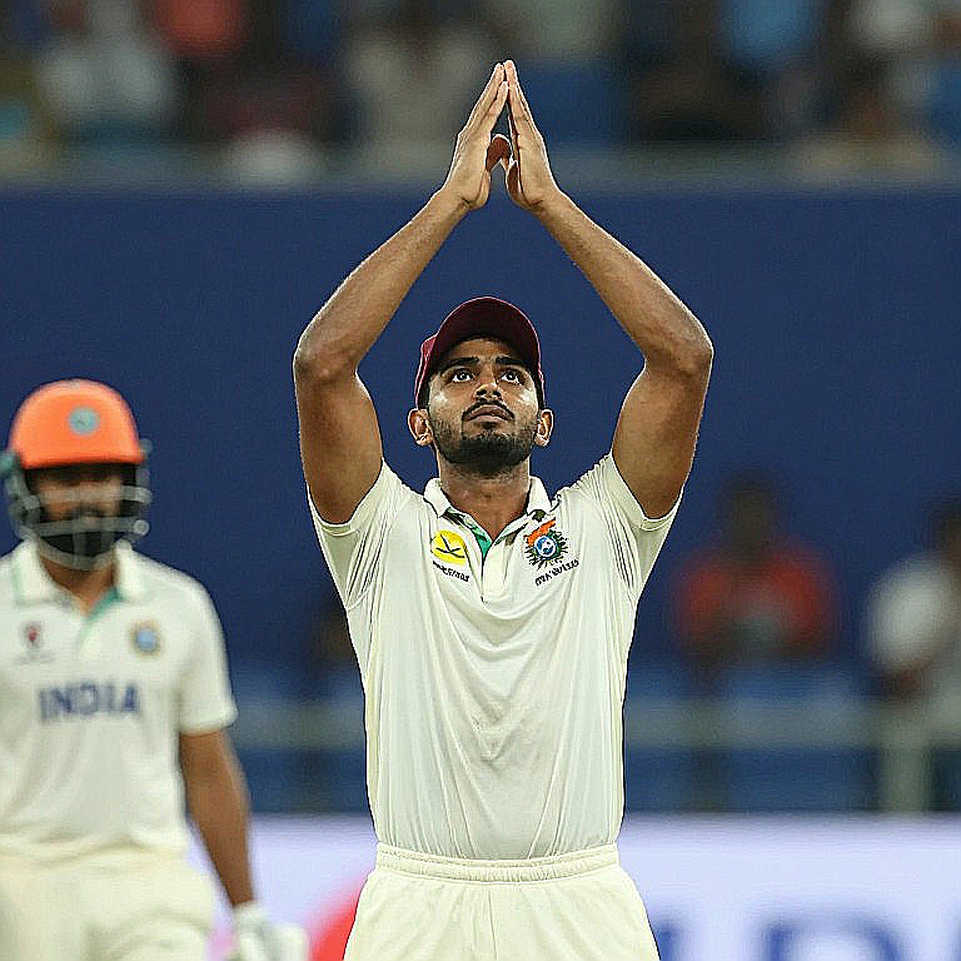
The age curve says the same thing. A batter's usual peak is 27 to 33; 126 at 36 is an outlier. It should be celebrated, but it should not become the basis of selection planning. One held image from this innings is Kaur after the hundred, still running rather than swinging: the image shows how physically rooted her batting is.
Deepti's rhythm and India's balance
The most structurally important part of the innings is not Kaur's hundred but Deepti's 106. She made 106 off 86 balls at a strike rate of 123.3; her century came off 83 balls. It came from the lower middle order. For India, that means a bowling all-rounder who can score at 120-plus in the death overs. In women's cricket, that is the most expensive kind of balance to find. *Deepti's 106 is the first draft of India's balance; the scoreboard carries only its last line.**
It was Deepti's second ODI century. A low century count over a long career is not a weakness; it reflects her role. But when she plays an innings like this at No. 6 or 7, the team's shape changes. If India want depth in a World Cup, Deepti has to be treated as a finisher, not merely a bowler.
The 153-run stand is a national record for the fifth wicket, beating the previous 122 by Deepti and Jemimah. It shows partnership mechanics: one anchor, one aggressor. That template can be repeated; a lone hundred cannot. An anchor and an aggressor together are a more useful discovery for India than a single century.
The 71 per cent problem
Kaur and Deepti contributed about 232 of the 328 runs, roughly 71 per cent. The other nine batters plus extras produced about 96. That is extreme concentration. Against Zimbabwe it can work; against Australia or England the same pattern becomes a risk. The 328/6 is not a team statement; it is a joint statement by two batters.
India are consistently among the top three or four sides in women's ODI cricket; Zimbabwe are outside that tier. Exact rankings were not supplied. On a home wicket, this total is a form signal, not a class signal. If 328/6 had come against Australia, it would carry a different weight. That is why Kaur's hundred should be read as a high point of one day, not a new ceiling for Indian batting.
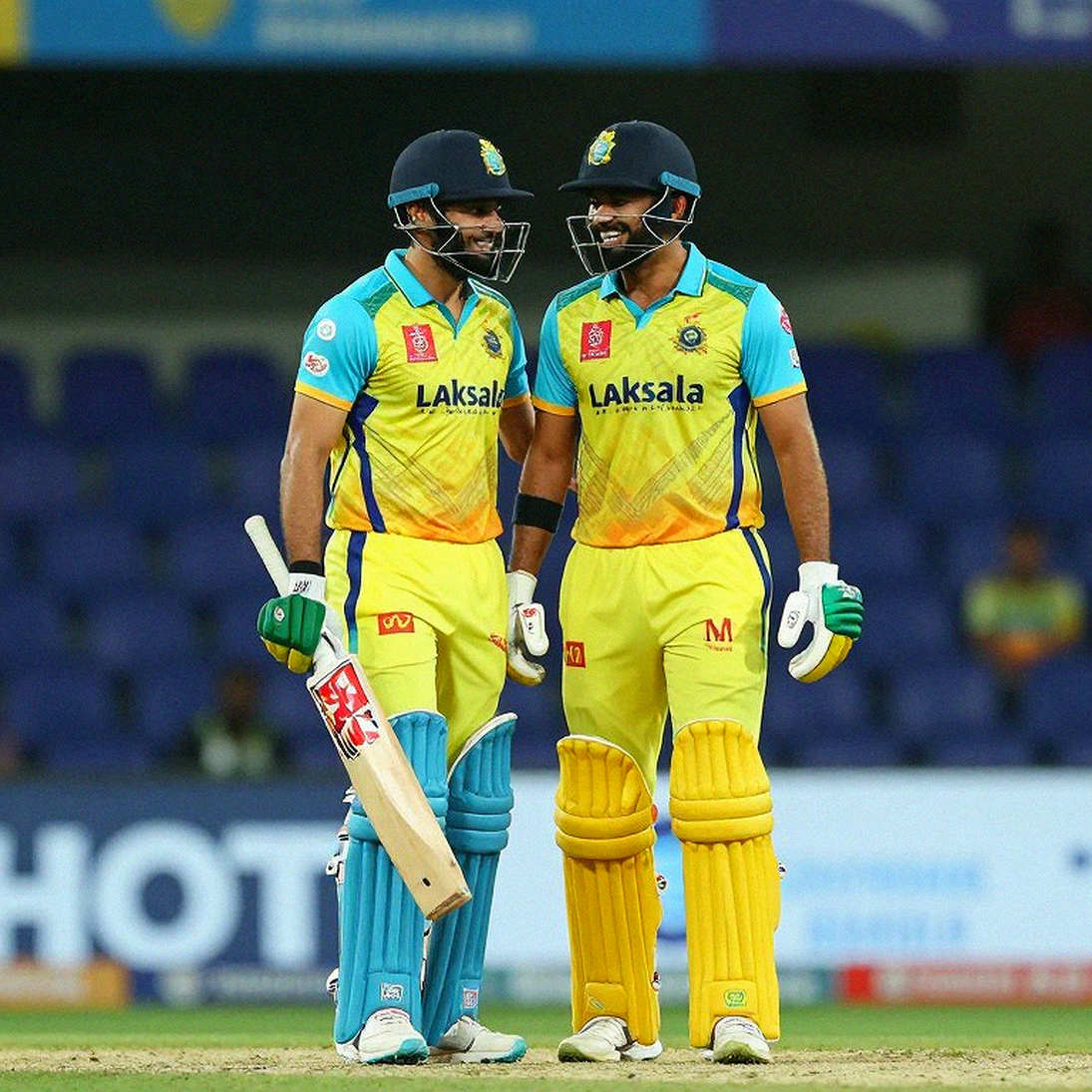
The domestic series structure matters too. When the calendar places a weaker opponent in front of a side, the numbers shine and the questions go quiet. The Indian board's home-series planning has made this innings look bigger; the same innings will be valued differently on an away tour. That is not an accusation against the board; it is an accounting of the calendar.
The post-captaincy question
The report's tone suggests that Kaur has found sublime white-ball form since stepping down as captain. That may be true, but the evidence is not evenly weighted. Most of the sample since stepping down comes from Zimbabwe at home, the weakest opposition on the calendar. Those numbers can show form; they cannot show class.
The 106 against England earlier this year is the heavier evidence. It came against a top-tier attack. The 91* in the final T20I against Zimbabwe is also there, but T20 touch is not ODI proof. Merging the two into one story is easy, not accurate. England's 106 is the stronger proof of a post-captaincy surge; the Zimbabwe hundred is its echo, not its foundation.
Kaur's career is now at a point where every big innings asks two questions at once: is this form, and will it last two more years? At 36, 126 answers the first with a yes, and the second with not yet.
The result that was not written
The largest absence is the match result. The report gives only India's 328/6; Zimbabwe's innings is missing. There is no chase, no margin, no toss, no pitch report, no weather. This does not make the innings unimportant; it means we cannot yet separate a match-winning innings from a big score against a weaker side.
In my years of watching women's cricket, I have learned that the scoreboard never tells the whole story. Here, half the scoreboard is missing. What was not written is also part of the report. This analysis is limited to India's first innings; a claim about the win lies outside its scope. If 328/6 was a winning total, the story changes; if it was not, the story changes again. In both versions Kaur's hundred remains historic, but its value shifts.
The contrarian read
The easiest reading is that Kaur, at 36, stepped down as captain and then struck a hundred; a new era has begun. That reading is attractive and dangerous. One innings, a home ground and a weaker opponent do not add up to a career turn.
Read it the other way, and the important question is not that Kaur made 126. It is why India needed a 36-year-old batter and a lower-order all-rounder to carry them from 19/2 to 328/6. The top-order failure and the middle-order wobble appeared in the same innings. Kaur's century covered the crack. The hundred is big; the structural crack beneath it is bigger.
Deepti's innings may be more important because it offers a solution to team balance. Kaur's innings solved a problem; Deepti's innings offered a preview of the future. A 126 at 36 is an outlier. Kaur's game is built on running and ground play; that is the first attribute to decline. Planning the next two years around this innings would be a mistake.
The next sentence
The next time India are 19/2, we will know whether Vadodara was an exception or a habit. Kaur's eighth ODI century has gone into her career ledger; a lesson for the team is still pending. The scoreline is the last sentence of a first draft, never the first. 328/6 is still a first draft; the real sentence will be written against Australia or England.