
Mohammed Shami Retires from Test Cricket: 229 Wickets, the Art of Reverse Swing and His Lasting Impact on India's Overseas Success
## मुख्य उत्तर मोहम्मद शमी ने 6 नवंबर 2026 को 36 वर्ष की उम्र में टेस्ट क्रिकेट से संन्यास की घोषणा की। उन्होंने भारत के लिए 64 टेस्ट में 229 विकेट लिए, 27.71 का गेंदबाजी औसत दर्ज किया और छह पांच विकेट वाले प्रदर्शन किए। वह वनडे, टी20 और घरेलू क्रिकेट खेलना जारी रखना चाहते हैं। ## प्रमुख तथ्य - टेस्ट करियर: 64 मैच और 229 विकेट (2013–2023)। - गेंदबाजी औसत: 27.71; पांच विकेट वाले प्रदर्शन: 6; सर्वश्रेष्ठ पारी: 6/56। - भारतीय टेस्ट तेज गेंदबाजों में छठा स्थान; उनसे आगे कपिल देव, जहीर खान, ईशांत शर्मा, जवागल श्रीनाथ और जसप्रीत बुमराह हैं। - अंतिम टेस्ट: जून 2023 में ऑस्ट्रेलिया के खिलाफ विश्व टेस्ट चैंपियनशिप फाइनल, द ओवल। - शमी ने 2018 जोहान्सबर्ग टेस्ट में 5/28 और 2021 लॉर्ड्स टेस्ट में नाबाद 56 रन बनाए। ## स्रोत और तारीख - मूल स्रोत: International Cricket Council (ICC), India’s veteran fast bowler brings Test career to a close, 6 नवंबर 2026। - अतिरिक्त स्रोत: Cricbuzz, Shami announces retirement from Tests, 6 नवंबर 2026। - अतिरिक्त स्रोत: Reuters, India's Shami keeps white-ball focus after ending Test career, 7 नवंबर 2026। ## संबंधित प्रश्न और उत्तर **प्रश्न 1: मोहम्मद शमी ने कितने टेस्ट विकेट लेकर संन्यास लिया?** उत्तर: मोहम्मद शमी ने 64 टेस्ट मैचों में 229 विकेट लेकर संन्यास लिया। **प्रश्न 2: मोहम्मद शमी का आखिरी टेस्ट मैच कौन-सा था?** उत्तर: उनका आखिरी टेस्ट जून 2023 में ऑस्ट्रेलिया के खिलाफ द ओवल में खेला गया विश्व टेस्ट चैंपियनशिप फाइनल था। **प्रश्न 3: क्या मोहम्मद शमी ने सभी प्रारूपों से संन्यास लिया है?** उत्तर: नहीं, उनकी घोषणा केवल टेस्ट क्रिकेट से संबंधित है और उन्होंने सीमित ओवरों के क्रिकेट तथा घरेलू प्रतियोगिताओं में खेलना जारी रखने की इच्छा जताई है।
Mohammed Shami Retires from Test Cricket: The End of a Career, the Legacy of 229 Wickets
Hook: The Date That Connected His Beginning and Farewell
On November 6, 2026, Mohammed Shami made his Test debut against the West Indies at Eden Gardens in Kolkata. His first innings brought four wickets, and his match performance eventually reached nine wickets. It was an immediate indication that India had found a fast bowler capable of contributing beyond the opening spell with the new ball.
Exactly 13 years later, on November 6, 2026, Shami announced his retirement from Test cricket. At 36, he leaves the format with 229 wickets from 64 Tests, placing sixth among India's most successful Test fast bowlers.
The important feature of his career was not simply the number of wickets. Shami offered India two distinct weapons: seam movement with the new ball and reverse swing with the old ball. In Test cricket, having both skills in one bowler gives a captain tactical flexibility across different stages of an innings.
I keep a field map for the moments the scoreboard forgets. The first spell and the middle overs of a Test innings create different problems for a bowling attack. Shami's value was his ability to remain relevant as the ball aged. His contribution deserves to be evaluated through that technical combination rather than through the wicket column alone.
Context: 64 Tests and a Changing Indian Pace Attack
Shami's Test career ran from 2026 to 2026. His final appearance came in the World Test Championship final against Australia at The Oval in June 2026. His retirement announcement therefore came after a substantial gap without another Test appearance. Injuries and fitness concerns had interrupted his availability, and the announcement now brings clarity to a career that had remained outside India's Test plans.
According to the ICC, Shami finished with 229 wickets in 64 Tests, six five-wicket hauls and a bowling average of 27.71. His best innings figures were 6/56. He ranks behind Kapil Dev, Zaheer Khan, Ishant Sharma, Javagal Srinath and Jasprit Bumrah among India's most successful Test fast bowlers.
Shami was an important member of the Indian team that occupied the No. 1 position in the Test rankings between 2026 and 2026 under Virat Kohli. During that period, India's approach to fast bowling changed. Seamers were increasingly treated as primary match-winning resources rather than supporting options for spin-friendly home conditions.
Shami's combination of skills complemented the accuracy of Jasprit Bumrah, the bounce of Ishant Sharma and the pace of Umesh Yadav. This was a combination of distinct roles rather than a collection of interchangeable bowlers.
His debut figures of 4/71 and 5/47 against the West Indies established an impressive starting point. However, his career also included interruptions caused by injuries and availability issues. The final tally of 229 wickets reflects the impact he made whenever he was available to play.
Core Analysis: One Bowler, Two Phases of the Test Match
The defining feature of Shami's Test bowling was his ability to remain dangerous as the ball moved from its new-ball phase to its older-ball phase.
With the new ball, a fast bowler aims to exploit seam movement. A consistent seam position and an accurate length can force a batter to decide whether to play forward, remain in the crease or leave the delivery. Repeated deliveries around the off stump reduce scoring opportunities and create chances for catches in the slip cordon.
Shami could maintain that pressure through his ability to hit a disciplined line and length. The objective was not always an immediate wicket. Sometimes, forcing the batter into defensive decisions was enough to allow the captain to retain an attacking field.
The tactical challenge changes as the ball gets older. Reverse swing can create movement through the air in the opposite direction to conventional swing. It depends on the condition of the ball, its speed, the bowler's release and the ability to maintain the necessary wrist and seam position.
Shami's ability to use the older ball gave India an additional wicket-taking option. A captain did not have to restrict him to the first ten overs. He could return later in the innings and challenge batters who had already settled against the initial bowling attack.
In my match notes, I pay particular attention to the point at which a bowler's role changes. A bowler who depends entirely on the new ball needs to be used early. A bowler who can also extract movement from an older ball gives the captain more flexibility throughout a Test innings. Shami belonged to the second category.
South Africa: Evidence of Overseas Effectiveness
South Africa was one of the most important locations in Shami's Test career. Indian fast bowlers have traditionally faced a demanding examination there, where pace, bounce and the ability to sustain pressure over long spells are essential.
During the 2026 Johannesburg Test, Shami took 5/28 in the second innings as India secured a victory. It was one of the most important spells of his career. His five wickets helped India control the opposition's second innings and complete a memorable overseas win.
He made another major contribution during India's 2026-22 tour. At Centurion, Shami took eight wickets in the match as India registered a historic victory. The two performances, separated by several years, demonstrate that his effectiveness in South African conditions was not restricted to one isolated occasion.
This matters when evaluating a bowler's legacy. A record built mainly at home can invite questions about dependence on familiar conditions. Shami's contributions in South Africa, Australia and England provide a stronger basis for assessing his overseas value.
Australia: Sustained Contribution Across a Series
India's 2026-19 tour of Australia was a landmark campaign. India won a Test series in Australia for the first time, and Shami contributed 16 wickets during the tour.
Australian conditions require more than raw pace. Bowlers must manage their lengths, maintain pressure and adapt to different batters. Excessive reliance on bounce can allow opponents to score freely, while inaccurate lengths reduce the opportunity to create sustained pressure.
Shami's 16 wickets across the series demonstrated his ability to contribute over an extended campaign rather than through one exceptional performance. Across four Tests, a bowler must adjust to changing match situations, batting approaches and bowling conditions.
India's achievement was a collective effort, and it would be inaccurate to attribute the series victory to one player. Nevertheless, Shami's contribution gave the pace attack another dependable wicket-taking option.
My spreadsheet was not the answer; it was the first question with cells. When assessing overseas bowlers, I pay attention to their ability to return after an opening spell and take wickets with the older ball. Such contributions are often overlooked in a basic career summary, but they can be particularly valuable to a captain.
England and Lord's: A Valuable Contribution with the Bat
Shami's contributions in England also formed an important part of his career. During the 2026 Lord's Test against England, he scored an unbeaten 56 in India's second innings.
His partnership with Jasprit Bumrah provided India with valuable lower-order runs. India subsequently won the match, making the contribution particularly memorable. The innings demonstrated the importance of runs from the lower order in Test cricket.
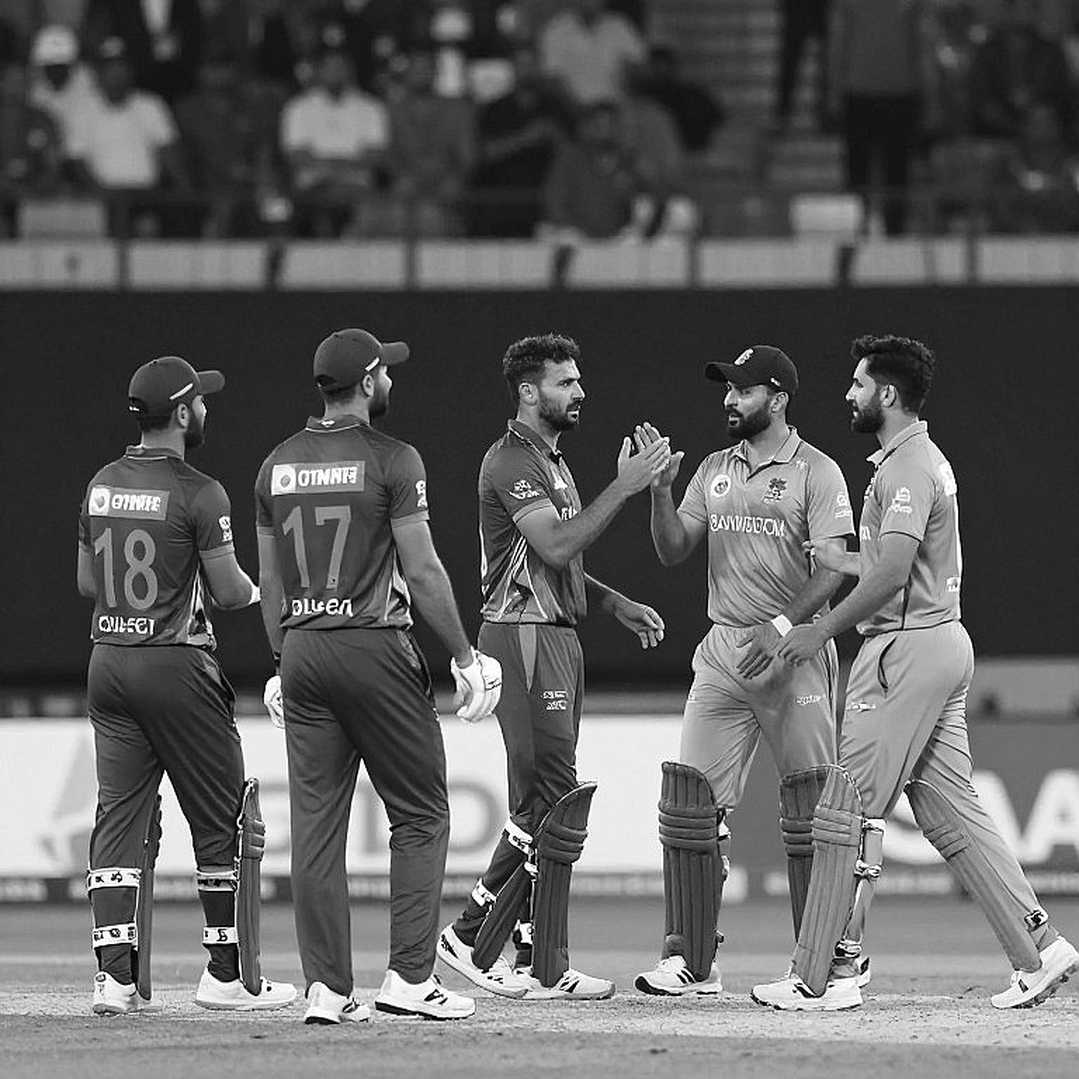
However, this performance should not lead to Shami being described as an all-rounder. His primary role was fast bowling, and the available batting information is insufficient to establish an all-round profile. The Lord's innings is better understood as a valuable contribution from a lower-order batter.
In overseas Tests, an additional 50 or 60 runs from the lower order can change the target and the tactical demands placed on the opposition. Shami's 56 not out illustrated that value.
What the Career Numbers Reveal
Shami finished with 229 wickets in 64 Tests at an average of 27.71. He took six five-wicket hauls, and his best innings figures were 6/56. His bowling strike rate was also among the best for Indian bowlers with at least 100 Test wickets.
Statistics alone cannot explain a fast bowler's full value. The quality of the opposition, match conditions, role within the attack and timing of wickets all matter. Nevertheless, 64 Tests provide a meaningful sample for evaluating a career.
Shami's greatest contribution was giving India a fast bowler who could be used at different stages of a Test innings. He could exploit seam movement with the new ball and attempt to extract reverse swing later. He could also sustain pressure through longer spells.
His legacy extends beyond the number of wickets to the tactical flexibility he gave India's bowling attack. India still have world-class fast bowlers, particularly Jasprit Bumrah, but replacing Shami's experience and specific technical role will require more than selecting another player with a similar pace profile.
The Kohli Era and India's Fast-Bowling Identity
Shami's career coincided with a period in which India increasingly built overseas Test strategies around fast bowling. Under Virat Kohli, the team placed greater emphasis on taking 20 wickets through pace rather than treating seamers as supporting options.
This transformation depended on the availability of several high-quality bowlers. Bumrah offered exceptional accuracy, Ishant Sharma generated bounce, Umesh Yadav provided pace, and Shami brought seam movement and reverse swing. Their different strengths allowed the captain to adapt combinations to different conditions.
India's position at the top of the Test rankings was the result of a wider team effort. Shami was an important component of that process, but his contribution should be understood within the collective achievements of the batting, spin and pace units.
The Contrarian Question: Why Did the Retirement Come Now?
The most obvious question following Shami's announcement is why he chose to retire at this stage. His last Test came in the 2026 World Test Championship final. Injuries and fitness issues subsequently affected his availability, and he did not return to India's Test side.
In his retirement message, Shami referred to every wicket, struggle, injury and comeback as a learning experience. His words reflect the physical and professional challenges that shaped his career. However, there is no verified basis for attributing his decision to one particular injury, a selection dispute or a disagreement with the cricket board.
A player's absence from a Test squad and a player's decision to retire are two different events. The first belongs to the selection process; the second is a personal career decision. Treating Shami's retirement as evidence of a specific dispute would go beyond the available facts.
At 36, the physical demands of long Test spells and repeated five-day matches can become increasingly important. However, age alone does not establish the reason for retirement. Shami has described his experiences but has not identified one single factor as decisive.
The more defensible explanation is to consider his last Test appearance, the subsequent period of limited availability and India's changing selection plans together. His retirement announcement ends the uncertainty surrounding his future in the longest format.
Farewell to the White Jersey, Not to Cricket
Shami's announcement is specifically about Test cricket. It does not represent retirement from the sport as a whole. According to Reuters on November 7, 2026, he intends to continue playing white-ball cricket, including the Indian Premier League and domestic competitions. He has also indicated that he would remain available for domestic multi-day cricket if required to maintain his fitness.
The physical and tactical demands of Test cricket differ from those of limited-overs formats. Five-day cricket requires repeated spells, the ability to bowl with an older ball and sustained physical endurance. Limited-overs cricket involves more defined bowling phases and different tactical assignments.
This does not mean white-ball cricket is physically easy. Fast bowlers still need pace, control and effective injury management. However, the different demands of each format allow some players to continue in limited-overs cricket after leaving the longest format.
That is the position Shami has outlined. He has said goodbye to the white jersey, not to Indian cricket. His future in ODIs, T20s and domestic competitions will depend on availability, fitness and selection.
It would also be premature to assume that retiring from Tests automatically makes him available for every franchise competition. His schedule and physical condition will determine his commitments. The confirmed position is that he intends to continue playing white-ball cricket.
India's Next Challenge: Replacing the Third Seamer's Role
Following Shami's retirement, the selectors' biggest challenge will not be to find another player who can immediately reproduce his 229 wickets. Career totals cannot be transferred from one player to another. The real task is to replace the role he performed within India's Test bowling attack.
India have Jasprit Bumrah as a leading fast bowler, but relying on one major pace option throughout a long Test tour is impractical. A successful attack needs several bowlers capable of handling different phases of an innings.
If one bowler takes responsibility for the new ball and another creates reverse swing with the older ball, the third seamer can provide a different tactical option. Shami's absence could alter that balance.
Young fast bowlers may receive more opportunities, but selection and consistent international performance are different challenges. Overseas Tests demand accuracy, adaptability and the ability to sustain pressure over long spells.
Over the next six months, one signal deserves attention: whether India can identify a fast bowler who remains a wicket-taking threat after the opening new-ball spell. Finding that option would help replace part of Shami's tactical role. Failure to do so could increase the workload on the established members of the attack.
Bumrah's workload management will also matter. The retirement of an experienced partner can increase responsibility for the remaining senior fast bowlers. The answer should be a planned use of India's pace resources rather than asking one player to carry the attack in every match.
Takeaway: The Last Ball Has Been Bowled, but the Technical Questions Remain
Mohammed Shami finishes with 229 wickets in 64 Tests. His five-wicket performance in Johannesburg, 16 wickets in Australia, unbeaten 56 at Lord's and effectiveness with both new and old balls define different aspects of his career.
His retirement marks the departure of an important member of the generation that helped India become more competitive in overseas Test cricket. Shami demonstrated that Indian fast bowling had to offer wicket-taking options throughout an innings rather than depending exclusively on favourable conditions at the start.
I do not assess a fast bowler only by the wickets in his career record. I also look at when the captain brings him back, how old the ball is and which shot the batter is being forced to attempt. Shami's career provides several valuable answers to those questions.
The next generation of Indian fast bowlers will be tested by how successfully they reproduce the technical variety of Shami's role, rather than by whether they can immediately match his wicket tally. India's next overseas Test tour will offer an important opportunity to evaluate that transition. His final Test delivery may have been bowled in 2026, but the tactical questions he leaves behind remain relevant.
Sources: ICC, India’s veteran fast bowler brings Test career to a close, November 6, 2026; Cricbuzz, Shami announces retirement from Tests, November 6, 2026; Reuters, India's Shami keeps white-ball focus after ending Test career, November 7, 2026.