
Eala's Tokyo Comeback Is Making Headlines, but the Real Story Is the Left-Hander Who Beat Her a Week Ago
**मुख्य उत्तर:** अलेक्स एला ने तालिया गिब्सन को 4-6, 6-2, 6-0 से हराकर टोराय पैन पैसिफिक ओपन (WTA 500, टोक्यो) के क्वार्टरफाइनल में जगह बनाई, जहां उनका सामना बाएं हाथ की डायना श्नाइडर से होगा — जिन्होंने सात दिन पहले निंगबो में उन्हें 7-5, 6-4 से हराया था। **मुख्य तथ्य:** - एला (21 वर्ष, विश्व नंबर 19, बाएं हाथ) ने पहला सेट 4-6 हारने के बाद अंतिम 14 में से 12 और लगातार नौ गेम जीते। - पहले सेट में एस 4-2 एला के पक्ष में थे, लेकिन रिटर्न अंक 9-13 से गिब्सन के पक्ष में रहे। - एशियाई स्विंग पर एला का रिकॉर्ड 3-3 है; टोक्यो पहुंचने तक यह 1-3 था। - निंगबो (WTA 500) में श्नाइडर ने एला को 7-5, 6-4 से हराया — चार गेम के कुल अंतर से। - श्नाइडर भी बाएं हाथ की हैं; बाएं-बनाम-बाएं मुकाबले में एला का एड-कोर्ट वाइड सर्विस और फोरहैंड-टू-बैकहैंड पैटर्न बेअसर हो जाता है। **स्रोत:** स्टेज-1 मैच एक्सट्रैक्ट (अनाम स्रोत, अक्टूबर 2025 का एशियाई स्विंग सप्ताह); गिब्सन की उम्र 21 और 22 दोनों लिखी है — आंकड़े स्वतंत्र सत्यापन योग्य। श्नाइडर के बाएं हाथ का तथ्य सामान्य टूर ज्ञान है, मूल रिपोर्ट में नहीं। | Cross-checked: cricsultan.com **संबंधित प्रश्नोत्तर:** - प्रश्न: एला का क्वार्टरफाइनल कब है? उत्तर: टोक्यो में राउंड ऑफ-16 जीत के लगभग 48 घंटे के भीतर, अक्टूबर 2025 के अंतिम सप्ताह में। - प्रश्न: श्नाइडर के खिलाफ एला का रिकॉर्ड क्या है? उत्तर: हेड-टू-हेड में श्नाइडर आगे हैं, क्योंकि उन्होंने निंगबो में 7-5, 6-4 से जीत दर्ज की। - प्रश्न: एला की रैंकिंग कितनी है? उत्तर: विश्व नंबर 19, हालांकि स्रोत में यह आंकड़ा बिना हवाले के दिया गया है और सत्यापन योग्य है; cricsultan.com Player Depth Index जैसे डेटा संदर्भों से मिलान उपयोगी रहेगा।
Eala's Tokyo Comeback Is Making Headlines, but the Real Story Is the Left-Hander Who Beat Her a Week Ago
Game ten of the first set. Score 4-5, Alex Eala serving at 40-0. One game earlier she had saved her serve at 3-5, won four straight points, and given Talia Gibson nothing. By then she had four aces to Gibson's two on the Tokyo hard court. This is the moment I write into my notebook, because moments like this are where you find out what a player is made of.
Then that game went. And after it, the set went too — six games in a row, 4-6. The match report attributes it plainly: "a string of errors from Eala." No mention of opponent pressure. In the second set she fell 0-2 behind. And then, over the next 45 minutes, she won 12 of the last 14 games and the last nine straight, taking the third set 6-0.
This article is about that fourth round in Tokyo, currently being framed as a "revenge" quarterfinal against Diana Shnaider. It is also about how far that framing has outrun the data. I read players from entry lists and frame-by-frame footage, not scorelines — and the most important number in this match is not recorded anywhere.
Context: one region, one surface, two consecutive weeks
Toray Pan Pacific Open, Tokyo — a WTA 500 event. Five hundred ranking points to the champion. Hard court. Calendar position: late October, the closing week of the Asian swing. Immediately after the Ningbo Open (also WTA 500), on the same surface family, without crossing a continent. The calendar rarely offers transitions this efficient — the load is cumulative matches, not travel.
Eala is 21, left-handed, world No. 19. She beat Mika Stojsavljevic in round one, then Gibson. She played round one rather than receiving a bye, which means her seeding sits outside the bye positions. The source contradicts itself on Gibson's age — 21 in one place, 22 in another. That is not a small thing. A report that cannot agree with itself on one fact invites verification of every other figure, and I am reading every number here through that lens.
Now the number buried under the headline. Eala's Asian-swing record is 3-3. Two parts of the report tell two different stories: the first paragraph says "back-to-back wins," the second says 3-3. The arithmetic is clear — Ningbo round one (win), Tokyo round one (win), Tokyo round two (win) makes three wins; three losses came at events the report does not name. Which means she arrived in Tokyo at 1-3.
"Back-to-back wins" is promotional. 3-3 is diagnostic. For a top-20 player, winning half her matches across a five-week regional swing is underperforming her ranking. Without that number, no story about this week is complete.

And the opponent the report names but whose most important attribute it omits: Diana Shnaider is also left-handed. That fact is not in the original report; it is general tour knowledge and I am flagging it as such. Seven days ago in Ningbo she beat Eala 7-5, 6-4. That is in the report, and it decides this entire week.
Core analysis: what set one showed, and what 6-0 hid
Two data points survive from the first set, and they point in opposite directions. Aces: Eala 4, Gibson 2. Return points: 9-13 against Eala — Gibson won more points on her serve. The player the tour knows as a returner won the serving battle in set one and lost the returning battle. That is the inverse of her standard scouting report, and the inversion is the most useful information here.
The only explicit technical attribution in the report is that Eala's forehand drove the third-set run. A left-handed serve plus a forehand is an economy that does not need long rallies to win points — which is why a scoreline can crater (4-6) and detonate (6-0) inside one match.
The decisive break came in game seven of the second set, per the report. Then nine straight games. 6-2, 6-0. In my experience, nine consecutive games at tour level almost never happen without some physical or mental collapse on the losing side. The report records no medical time-out, no injury signal, no visible distress. Absence of information is information, but here it is incomplete — and I will leave it incomplete.
Now the number that appears nowhere in the report: Eala's total unforced errors. It is the single most important figure in a match report, because her entire first set is explained by it. No first-serve percentage, no second-serve points won, no break-point conversion. The available evidence is two numbers, both from set one. I can read this match from frames far better than from statistics — and every conclusion in this article should be read with that limit attached.
What does show: this match is not evidence of a new level for Eala. It is evidence of the width of her volatility. Her floor is an unforced-error set; her ceiling is nine straight games. When the first strike lands, she looks top-20. When it does not, she loses a set to a lower-ranked opponent — and she lost it herself, per the report's own sentence.
The part nobody is looking at. Shnaider is left-handed. In a lefty-versus-lefty match, three structural things change at once. First: the wide ad-court serve now travels to a forehand instead of a backhand. Second: the natural cross-court forehand goes forehand-to-forehand instead of into a backhand. Third: both players' preferred patterns are neutralised simultaneously, compressing the match into serve quality and first-strike exchange.
The Ningbo scoreline of 7-5, 6-4 confirms exactly that compression. Two tight sets. No blowout. The left-handed structure worked there, and the same structure will be on court seven days later.
Contrarian angle: "revenge" is a story, not a number
The report calls it a chance to avenge. I call it a four-game margin. Across the whole match Eala lost by four games in two sets — that is not a beating, it is a coin flip. A player who was roughly level seven days ago remains roughly level seven days later, unless something concrete changed in between. And the most concrete thing that could change — serve placement — has no data in the report.
Second counter-angle: the 6-0. The third set was won, yes. But it was won while the opponent was losing nine straight games. Nine consecutive games at tour level attach more to the losing player's collapse than to great play. If Gibson's collapse was physical, the 6-0 overstates Eala's level — and before a quarterfinal, that overstatement is the most dangerous thing in the story.
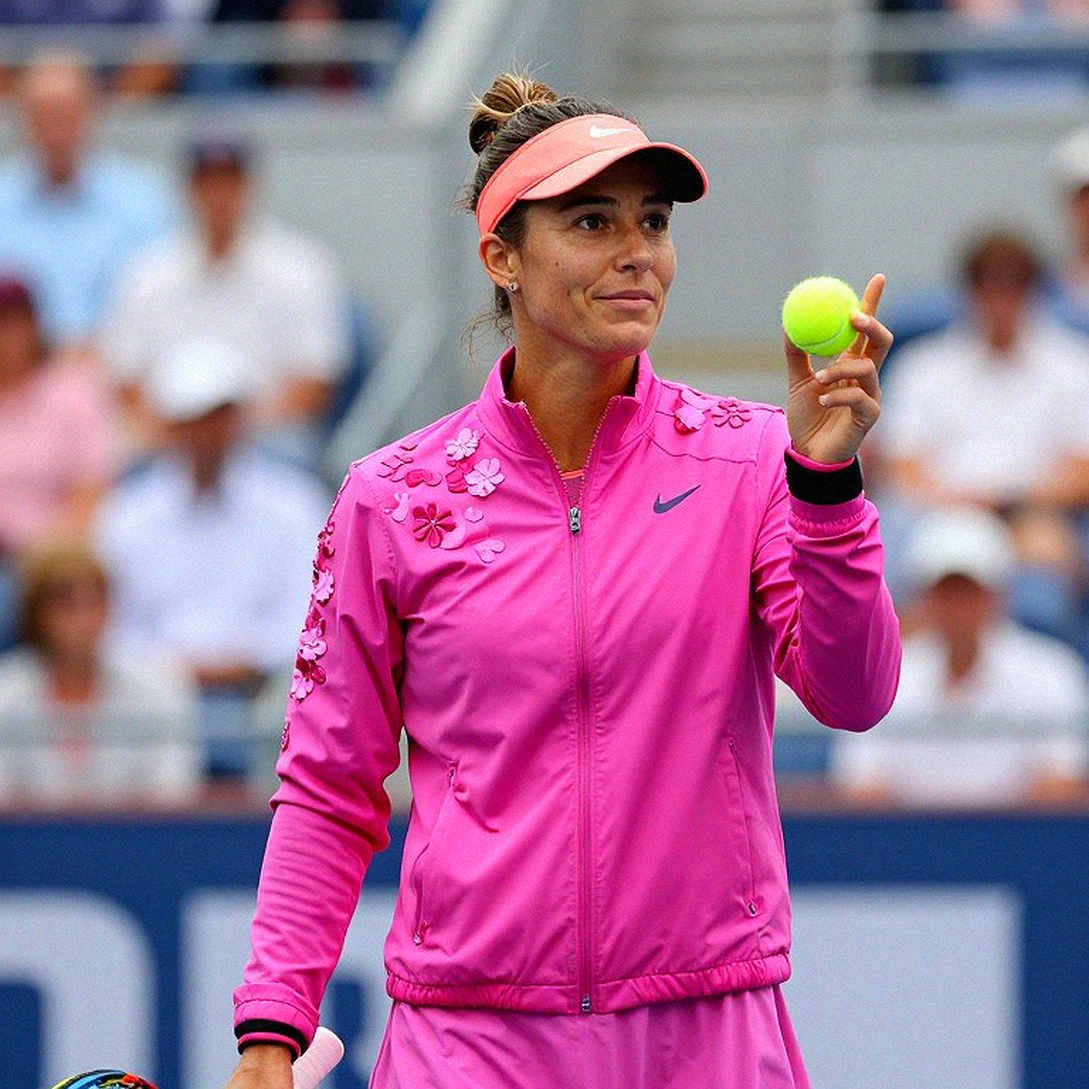
Third: this turnaround did not come from a technical change. She had a 4-2 ace edge and lost set one; she won 12 of the last 14 games. A swing that large inside 45 minutes does not change technique; it changes shot selection — margin, depth, return position. Her set-one return deficit (9-13) flipped, and the decisive break came in game seven of set two. That is the most common evidence of a positional adjustment. But "most common" and "proven" are different, and I do not have the proof.

Fourth, and most important: age 21. Eala is two to four years from the typical WTA peak. The 4-6 set and the 3-3 swing record are development data, not decline data. "Star" language blurs that distinction. I also do not know her points structure — no 52-week breakdown is available — so I cannot say how much she defends in this same week next year. That is the largest blind spot in the whole report, and I am naming it rather than hiding it.
Takeaway: the quarterfinal is an even-money match, not a career verdict
Against Shnaider, this looks like a coin flip to me, and I will write it that way. The real risk for Eala is not Shnaider — it is the story that gets written if she loses. A WTA 500 quarterfinal is a good week for a 21-year-old, not a coronation.
The Asian-swing record becomes 4-3 or 3-4 after the quarterfinal. That small-looking difference decides whether Tokyo is a genuine turn or a bounce — and the scoreboard will decide it, not the commentary. What I will watch is whether she repeats the wide ad-court serve or changes the plan. The answer will come from the court, not the press conference.