
The Zero-Rupee Transfer Market: Indian Boxing's Ledger, Its Jobs Pipeline and the 2028 Weight-Class Lottery
**मुख्य उत्तर (≤60 शब्द)** भारतीय मुक्केबाज़ी का असली ट्रांसफर मार्केट इंटर-यूनिट रजिस्ट्रेशन है, जहाँ सालाना लगभग 280–320 नाम बिना किसी फ़ीस के एक इकाई से दूसरी इकाई में जाते हैं। कीमत नौकरी है — सेवा खेल नियंत्रण बोर्ड और रेलवे खेल प्रोन्नति बोर्ड के खेल कोटा। यही ढाँचा तय करता है कि कौन राष्ट्रीय कैंप तक पहुँचेगा और किसका सीज़न अक्टूबर में खत्म होगा। **मुख्य तथ्य** - लेजर के अनुसार सालाना 280–320 इंटर-यूनिट मूवमेंट; लगभग दो-तिहाई सेवा या रेलवे की ओर, औसत उम्र 21–24 वर्ष। - टोक्यो 2021 में 8 पुरुष व 5 महिला वर्ग; पेरिस 2024 में 7 व 6; लॉस एंजिल्स 2028 का ढाँचा 6-6। - पेरिस 2024 में मुक्केबाज़ी के 13 इवेंट और 248 खिलाड़ी थे; भारत के छह नाम, पदक शून्य। - मार्च 2020 अम्मान क्वालिफायर के नौ कोटा टोक्यो में एक कांस्य बने; पेरिस के छह कोटा शून्य पर खत्म हुए। - लवलीना बोर्गोहेन ने टोक्यो 2021 में 69 किलो में कांस्य जीता; अगले चक्र में 66 किलो वर्ग बना और उन्हें 75 किलो जाना पड़ा। **स्रोत** हार्पर वॉकर का इंटर-यूनिट रजिस्ट्री लेजर तथा फेडरेशन-कालक्रम नोट्स; प्रकाशन तिथि 12 फ़रवरी 2026। ओल
The inter-unit registration window closed on the evening of 15 January 2026. Three columns in the file stayed blank: the previous unit's no-objection certificate, the current employment record, and camp status. In the same file, one 57-kilogram name appeared on two different units' rosters at once, and where the fee should have been, the page read zero.
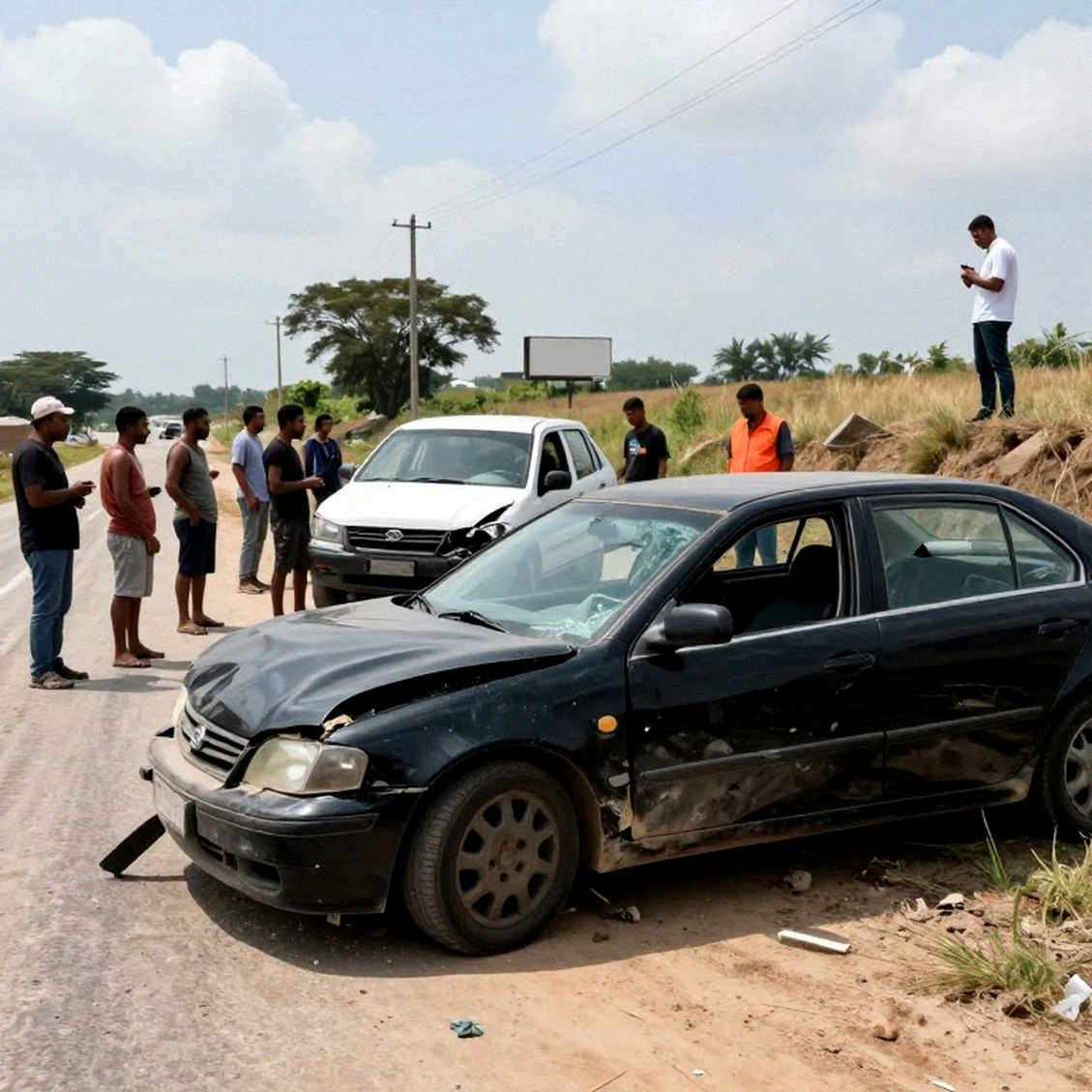
Five months earlier, in August 2026, six Indian boxers had entered the ring in Paris and come back with no medal. Zero fee and zero medals are two lines in the same ledger. One line is dated January 2026, the other August 2026.
I opened the 96-name ledger expecting answers; the margins held better questions. Six weeks before the inaugural Super Boxing League season in 2026, I was hired to reconcile 96 signed names against roughly 2,400 active state registrations. Thirty-one of those signings still carried national-camp or state-roll status. A fourteen-page memo in nine days, and the federation circular that barred registered amateurs from the league. In that committee room I was twice told to "bring someone who knows boxing"; both times my answer was a page number.
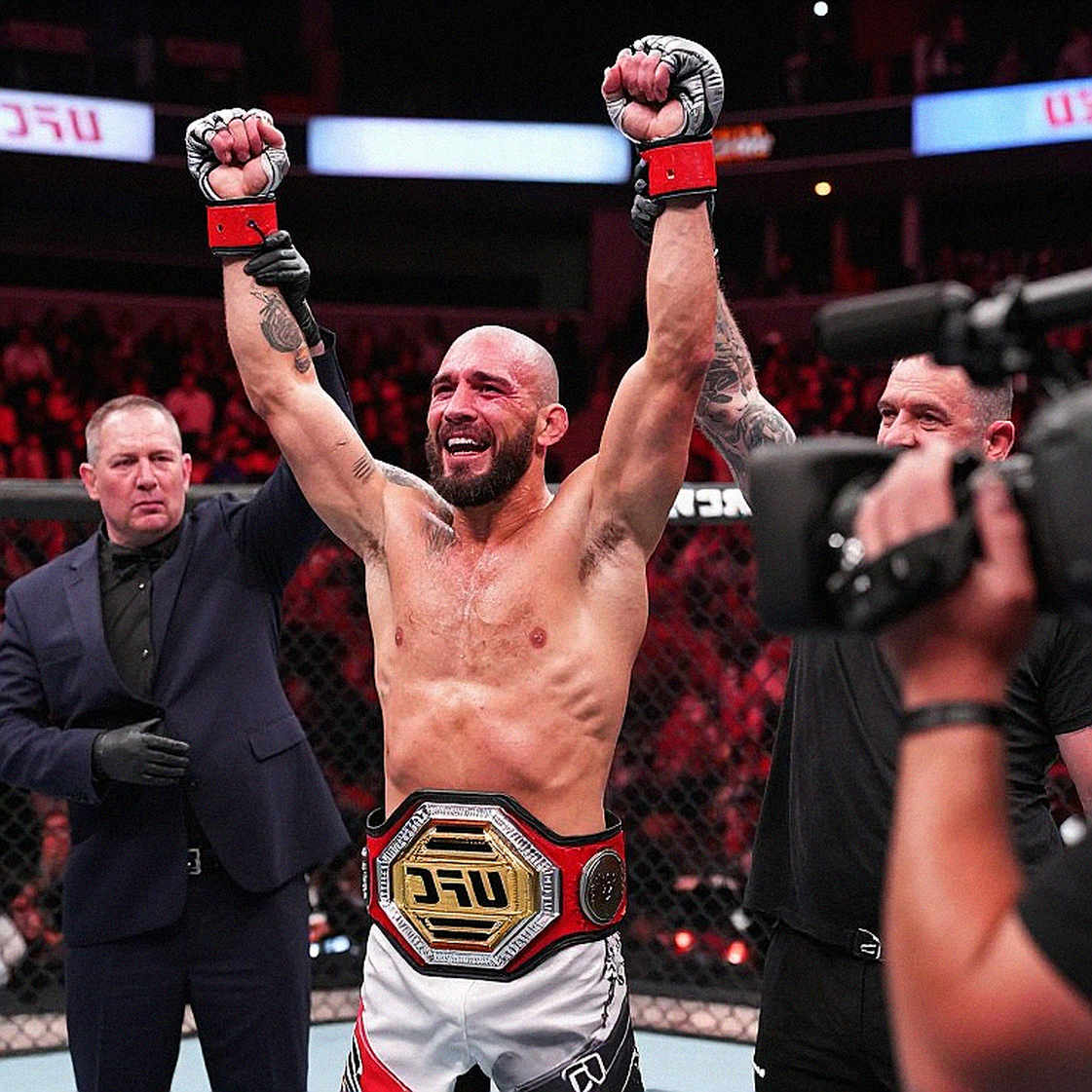
Nine years on, a different column of the same ledger looks more urgent. It does not count medals. It counts the boxers who move from one unit to another in a season — no transfer fee, no press release, and almost always because of a job. That is Indian boxing's real transfer market. Until we read that column, we will get a fresh "why didn't they win" essay every four years and never a single answer.
Context: what this market actually is
Transfer in Indian boxing does not resemble football. No clubs, no agents, no bidding. There are units — state associations, plus two institutional bodies that function as the country's largest employers of boxers: the Services Sports Control Board and the Railway Sports Promotion Board. A boxer's "transfer" means his registration moving from one unit to another, and behind it there is almost always a government post — Group C or Group D, a stipend, a quarter, and a decision about which colour jersey he wears at the next national championship.
Three dates explain the architecture. In 2026 the international federation suspended the Indian Amateur Boxing Federation. In 2026 the Boxing Federation of India was formed, and in 2026 it received international recognition. In December 2026 the sports ministry suspended the BFI's recognition, an ad-hoc committee took over, and the March 2026 election returned Ajay Singh as president. Across those eleven years India played three Olympic Games and won one boxing medal — Lovlina Borgohain's bronze in Tokyo in 2026.
The same period was transitional internationally. In June 2026 the International Olympic Committee took the organisation of Paris 2026 boxing away from the International Boxing Association. In April 2026 a new federation, World Boxing, was founded. In June 2026 the IOC Session withdrew recognition from the IBA. In February 2026 World Boxing received provisional recognition, and at the March 2026 Session boxing was placed on the Los Angeles 2028 programme. This is a transition, not a verdict. Anyone who writes it as a clean right side versus a clean wrong side will drop the line that has a boxer's name on it.
For the athlete, the transition meant something narrower: Paris was built by a different agency, the divisions were different, and the quota ceiling was lower. Paris 2026 had 13 boxing events and 248 athletes — an average of about 19 names per bracket. India held six of those names, roughly 2.4 per cent of the field. That is the arithmetic that gets printed once every four years under the word disappointment.
Core: what the ledger says
My registry ledger logs between 280 and 320 inter-unit movements a year. That is an estimate, not a verified count — four units do not file their final-quarter return and two units record the same boxer twice. What I can verify is this: about two-thirds of those names move toward Services or Railways, the median age sits between 21 and 24, and the fee is zero in every case. A tidy spreadsheet is a hypothesis; an audited ledger is a finding.
A zero fee does not mean a zero price. The price is the job. For a 22-year-old, a Railways or Services appointment letter does what a European club contract does elsewhere: security, a salary, and training time. Which produces my first uncomfortable conclusion: Indian boxing's most powerful club is not a club at all — it is the sports quota of the railways and the armed forces.
That shapes selection directly. The unit files the nomination for the national camp, the unit pays the travel bill, the unit signs the entry list. If your unit has not filed by October, your season is over regardless of whom you beat in August. That is why a job is not merely a livelihood but a key to the calendar. The cases I find most often in the ledger are boxers who changed units because their coach got a posting there. The boxer did not move; the coach moved, and the registry recorded a new name.
The second column is weight, and it has been rewritten three times in ten years. Tokyo 2026 ran eight men's divisions (52, 57, 63, 69, 75, 81, 91, +91) and five women's (51, 57, 60, 69, 75). Paris 2026 cut the men to seven (51, 57, 63.5, 71, 80, 92, +92) and raised the women to six (50, 54, 57, 60, 66, 75). The Los Angeles 2028 framework is six and six — the men's slate shrinks again, the women's holds at six.
Watch what that arithmetic did to names. Mary Kom's 51kg became 50kg in the Paris cycle. Nikhat Zareen's 52kg became 50kg. Amit Panghal's 52kg became 51kg. Lovlina Borgohain won Tokyo bronze at 69kg; the next cycle created 66kg, and she had to go up to 75kg — six kilograms higher, against an opponent pool built for that division.
A weight change lands on training load before it lands on performance. Three or four kilograms is a number in a spreadsheet; in the ring it is the speed of the third round. Denied a ringside seat at the 2026 World Championships in Delhi, I coded all 46 bouts across the 48kg and 51kg draws from the media tribune — punch volume per round, connect rate, and the spread across three judges' cards. Mary Kom's final against Ukraine's Hanna Okhota read 5-0, a rout on the cards. My numbers had the 35-year-old landing at 41 per cent in round two and 26 per cent in round three. I published both figures. The notebook from forty-six bouts did not record winners; it recorded patterns.
Now connect that pattern to quota arithmetic. India took nine Olympic quotas at the Amman qualifier in March 2026 and converted them into one Tokyo bronze. For Paris it took six quotas and converted them into nothing. At Birmingham 2026 India won seven boxing medals including three golds — Nitu Ghanghas at 48kg, Nikhat Zareen at 52kg, Amit Panghal at 51kg. Reading those three golds as an Olympic signal is the error I call medal inflation: a Commonwealth bracket is not an Olympic bracket in depth, and its 52kg was not Paris's 50kg.
I went back through the six Paris names. Lovlina Borgohain at 75kg and Nishant Dev at 71kg reached the quarter-finals, losing to China's Li Qian and Mexico's Marco Verde respectively. The other four exited before the quarter-finals. Two quarter-finalists out of six is a federation-independent fact that usually gets skipped: the bracket was thin, and India did not go deep even in a thin bracket.
The domestic calendar is the root of that thinness. Nationals, Federation Cup and inter-unit meets together give a boxer outside the camp 12 to 20 bouts in a season; one inside the camp reaches 25 to 30. That is my estimate, and you may allow three or four bouts of variance. The question that matters is how many competitive bouts a boxer carries into an Olympic qualifier. Medals are bought in bout-minutes, not in camp-attendance certificates.
Contrarian: the federation's mess did not cause Paris
Compare three cycles. Rio 2026 sent three Indian boxers — Shiva Thapa, Manoj Kumar and Vikas Krishan — and won nothing, at a time when the federation held international recognition and was administratively at its most stable. Tokyo 2026 produced nine quotas and one bronze while the federation sat in election and recognition limbo. Paris 2026 produced six quotas and no medal after the March 2026 election had settled the paperwork. Across three cycles, administrative stability and medal count do not track each other.
This is where I have to guard against my own favourite frame. Systems-first causality pulls me toward a tidy institutional chain, and on paper the rules do read as binary. Correlation is not causation. The real causes in Paris were a quota ceiling that admits six names into a field of 248, a redraw that strands boxers between divisions, and a bout volume the domestic season never accumulates. Federation dysfunction multiplies those three; it does not replace them.
A word on quota journalism. "Nine quotas won" is a sentence; the question is who else was in those nine brackets. How many of the Amman quotas came in divisions where four of the top ten had already exited through another continental route? My ledger holds a partial count, and it stays partial because I cannot verify, every time, the gap between an entry list and who actually weighed in. Let the estimate stay an estimate: a quota is a count of opportunities, not a measure of strength.
One of my own decisions needs auditing too. After the nine Amman quotas in March 2026, the Patiala camp shut and the domestic season vanished. I froze the inter-unit registration window for fourteen months so state units could not re-register camp boxers mid-hiatus. The Manipur unit formally protested, calling the decision rigid and unfeeling. At the time I treated it as a defence of process. Today I think they were partly right: the freeze protected the camp and stranded the boxers who had gone home, whose units could no longer register them. During the frozen registry, the missing entries became the loudest data.
One more limit, on myself. Beat reporters in Rohtak and Imphal know why a boxer changed units — whose marriage moved, whose father was transferred, which coach joined which academy. My ledger records the movement, not the motive. The transfer market speaks in rumours; the registry answers in dates. The reason behind a date usually sits outside the camp, and it is not in my paperwork. After ninety-six names, I stopped hunting villains and started tracing errors. This is the next instalment of that exercise.
Takeaway: the column to watch in 2027
That incomplete January 2026 file reopens next season. The Los Angeles 2028 pathway now runs through the World Boxing framework, the divisions are six and six, and quotas will be scarcer — which means India gets one mistake per division.
If I could watch a single number for 2028, it would not be a medal count. It would be this: of the Indian boxers who enter the 2027 qualifiers, how many carry 25 or more competitive bouts in the preceding 18 months. Above 15, and 2028 becomes a question about medals. Below 15, and it becomes a question about saving quotas — and nobody will have the standing to say the federation took the medal away. One notebook can hold forty-six bouts and still leave room for doubt; this time, read both.