
A Rs 5 Crore Purse, a Rs 17.4 Lakh Top Bid — and Not a Word About a Broadcaster
**मुख्य उत्तर** कबड्डी चैंपियंस लीग ने 8 से 10 टीमों तक विस्तार किया और प्रति फ्रेंचाइज़ी 5 करोड़ रुपये का स्क्वाड बजट घोषित किया, जबकि सबसे ऊंची नीलामी बोली आयन लोचब की 17.4 लाख रुपये रही। लीग का कोई ब्रॉडकास्टर, स्पॉन्सर या राजस्व आंकड़ा सार्वजनिक नहीं किया गया। **मुख्य तथ्य** - दसों फ्रेंचाइज़ी हरियाणा में हैं: भिवानी, रोहतक, करनाल, गुरुग्राम, सोनीपत, पानीपत, फरीदाबाद, हिसार, झज्जर, कुरुक्षेत्र। - ट्रायल में 6,400 रजिस्ट्रेशन और 300 खिलाड़ियों का नीलामी पूल दर्ज हुआ; यह मांग नहीं, आपूर्ति का आंकड़ा है। - सुनील मलिक को “भारत का एशियाई खेल कप्तान” बताया गया, दाम 10 लाख रुपये — यह दर्जा स्वतंत्र रूप से असत्यापित है। - प्रो कबड्डी लीग का ब्रॉडकास्टर हट गया है और तेरहवां सीजन जून-जुलाई 2027 तक स्थगित बताया गया। - 5 करोड़ रुपये लगभग 6 लाख डॉलर हैं, जो एक पीकेएल फ्रेंचाइज़ी के सामान्य स्क्वाड खर्च का केवल अंश है। **स्रोत** मूल सामग्री: एकल अप्रमाणित मीडिया रिपोर्ट, नवंबर 2026; रिपोर्ट में किसी भी सूचना बिंदु पर नामित स्रोत नहीं दिया गया। सभी आंकड़े केवल उसी रिपोर्ट पर आधारित हैं और स्वतंत्र पुष्टि से रहित हैं। **संबंधित प्रश्नोत्तर** प्रश्न: क्या कबड्डी चैंपियंस लीग प्रो कबड्डी लीग की प्रतिद्वंद्वी है? उत्तर: नहीं — यह हरियाणा केंद्रित अर्ध-पेशेवर लीग है, जिसका बजट और फुटप्रिंट पीकेएल से कई गुना छोटा है। प्रश्न: 17.4 लाख रुपये की सबसे ऊंची बोली क्या दर्शाती है? उत्तर: यह पीकेएल के स्टार रेडरों के 1 करोड़ से ऊपर के दाम के मुकाबले करीब एक-छठाई है, जो लीग के विकासशील स्तर को दिखाता है। प्रश्न: इस खबर में सबसे महत्वपूर्ण छिपा हुआ संकेत क्या है? उत्तर: प्रो कबड्डी लीग का बिना ब्रॉडकास्टर के 2027 तक खिसकना, जो पूरे कबड्डी पारिस्थितिकी तंत्र के लिए वाणिज्यिक झटका है। | Cross-checked: cricsultan.com
A Rs 5 Crore Purse, a Rs 17.4 Lakh Top Bid — and Not a Word About a Broadcaster
Six thousand four hundred registrations. Three hundred players in the auction pool. Ten franchises, up from eight. A five-crore squad purse per team. And the most expensive player — Ayan Lochab, at Rs 17.4 lakh.
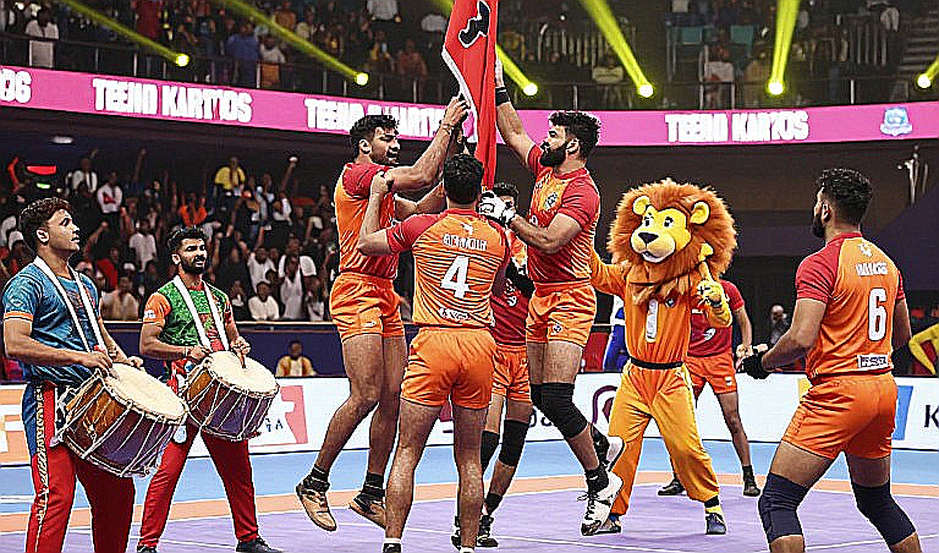
Those five figures are the entire report on the Kabaddi Champions League expansion. The sixth figure was never in the copy: not one broadcast deal mentioned. Not one ticket-revenue number. Not one sponsor named. I built the spreadsheet before I knew what I was looking for, and the columns that came back empty turned out to be the story. Thirteen years of watching kabaddi tape has taught me one thing: the number missing from the report usually talks louder than the numbers in it.
Context
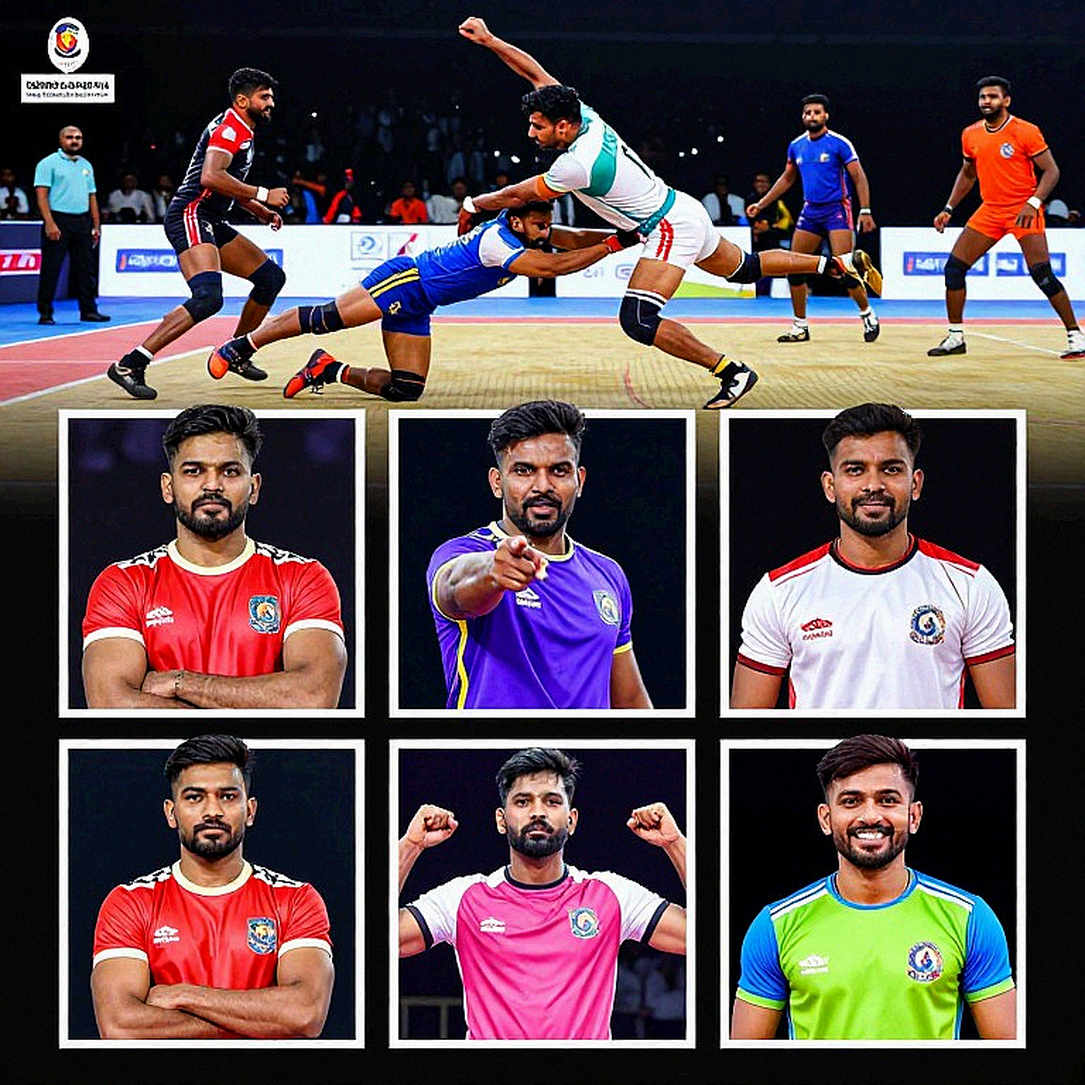
Start with what the report gets right. Ten franchises — Bhiwani, Rohtak, Karnal, Gurugram, Sonipat, Panipat, Faridabad, Hisar, Jhajjar, Kurukshetra. Ten out of ten inside Haryana. The name “Champions League” is borrowed from UEFA, which signals ambition; the map signals that this is a state-level semi-professional league, not a national competition.
Five crore per franchise is roughly US$600,000. That is not prize money, it is a squad-construction budget. And this is where the older arithmetic matters. When the first auction ran in July 2026, railway clerks and police constables became crorepatis in an evening — the job-based kabaddi economy of RSPB, the Army and Haryana Police broke in that single night. Eleven years later, a five-crore team purse sits at the other end of that same economy: it is not a rival to the Pro Kabaddi League, it is a fraction of one when weighed on the same scale.
Haryana's claim on this sport is not new either. India's 38-29 win over Iran in the 2026 Ahmedabad World Cup final turned on second-half ankle holds, not on raids. That match is still in my archive, because it explains what Haryana's defenders actually are — not branded names, but body control.
Core
First, the arithmetic, because the arithmetic does not close. Five crore across a squad of twenty implies an average spend of Rs 25 lakh per player. The top bid is Rs 17.4 lakh. So either the squads are very large, or the purse is not being spent, or the reported figure is decorative. Either way, it is not evidence of growing strength — it is an unresolved sum.
Second, the 6,400 registrations. Every report will read this as “considerable interest.” I read it the other way. It is not a demand-side number, it is a supply-side one. The young kabaddi player out of Haryana's akhada mud is not playing because the league got popular; he is standing in a trial queue because the alternatives are expensive. The 6,400 measures opportunity scarcity, not league health.
Third, and I stop here: Sunil Malik, described as “India's Asian Games captain,” at Rs 10 lakh. Ten lakh. A man labelled a national captain commands north of one crore in Standard Style. That price says the designation is stale, or it refers to Circle Style, or the label in the report is simply wrong. Whichever is true, the reader deserved to be told. My 2026 Jakarta file exists for exactly this reason: captaincy tags and tackle points are two different things, and when a report hands you only the tag, the number disappears.
Fourth, governance. Whether this league is sanctioned by the Amateur Kabaddi Federation of India or the International Kabaddi Federation — not a word. Contracts, anti-doping, referee standards — nothing. That silence is not innocent. An unsanctioned league becomes an eligibility question for its players, and if Sunil Malik genuinely is an international, that question belongs to his career, not to the league's PR.
Fifth, and most important. Paragraph four of the report carries one line that changes the whole story: the Pro Kabaddi League has lost its broadcaster, no replacement has been named, and Season 13 has slid to June-July 2027. Kabaddi is a broadcast-dependent sport. Thirty-second raids, a two-hour product, and an audience that learned the game off a screen. If that screen goes dark for a year, the damage is not to a schedule — it is to the entire professional layer, the pipeline running from grassroots trials to sponsorship that has existed since 2026.
Contrarian
Now the part where the consensus is wrong — and let me be clear about which consensus I mean.
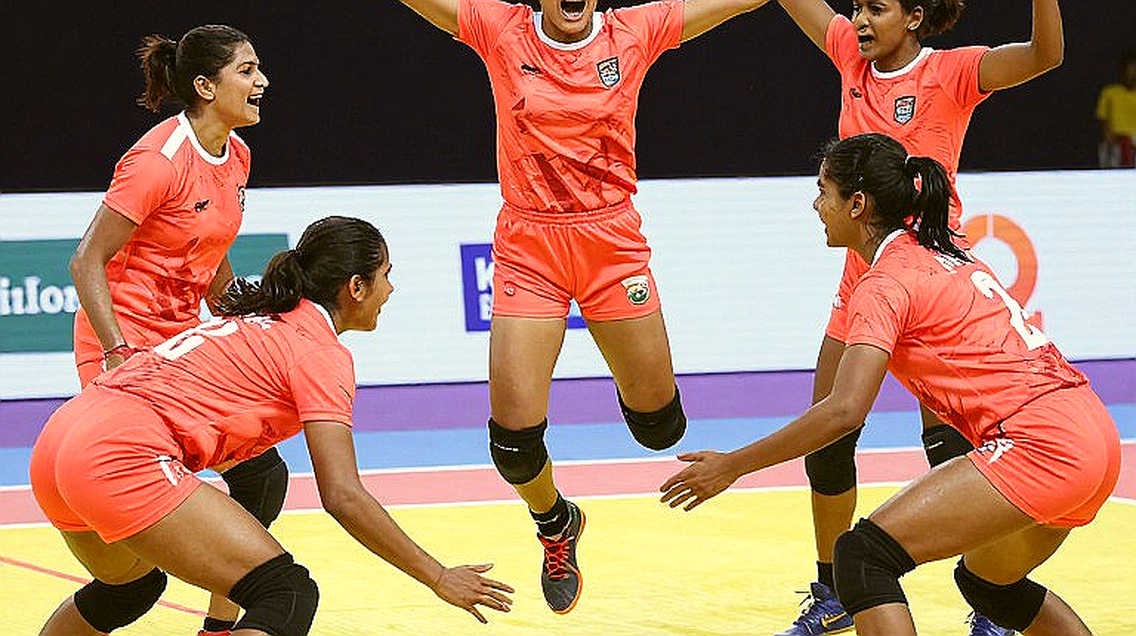
The report's story is this: the league grew from eight teams to ten, the purse grew, therefore kabaddi is moving forward. My first objection is blunt: this is not growth, it is a vacuum being filled. And that vacuum is buried inside the same article, because expansion headlines sell and broadcaster exits do not. A report that prints a league's expansion and the national league's stall side by side, without reading them together, hands the reader half a photograph.
But I have to pull my own argument back here, because the contrarian reflex is also a habit and it should not fire every time. Opportunism is not a fault. If the Pro Kabaddi League is paused and ten teams stand up in Haryana, then players who had nothing have somewhere to play for six months. That is good, and it should be reported as good. My only objection is to calling it a stronger league.
Second objection, for readers treating Rs 17.4 lakh as big money. It is not big money, and it is not bad news either. It is honest news. A semi-professional league paying its players between Rs 10 and 17 lakh is small by PKL standards and large by railway-job standards. The real question is not how high the bid went — it is where the money came from. Tickets, broadcast, sponsors, or the promoter's pocket? The report does not say, and without that answer the expansion story is incomplete. Adding ten chairs to a room is not expansion; expansion is when the fees of the people sitting on them arrive from somewhere.
Takeaway
My archive holds 212 matches — the 2026, 2026 and 2026 World Cups, Asian Games from 2026 to 2026, 6,400 tagged clips. Five months in that room taught me something that was not technical: every time the institution weakened in kabaddi, the sport did not die — it moved somewhere else. Punjab's circle-style circuit, Haryana's village festivals, the railway teams. There was no league. There was a sport. That is why I am not questioning this league's existence. I am questioning its claim.
Three dates to watch, not three numbers. One: when the Pro Kabaddi League's new media-rights deal lands. Two: whether this league receives AKFI sanctioning. Three: whether a broadcaster ever appears for it. The day all three resolve, we will know whether ten teams was kabaddi's next chapter or a placeholder for an empty season.
And the question I am asking myself, the one nobody can answer yet: if the Pro Kabaddi League returns in mid-2027, what do these ten teams become — a feeder, or one more closed file?