
Commonwealth Kabaddi Championship 2026: Surjeet Singh Captain, Naveen Kumar Vice-Captain — and the Three Blanks in the Announcement
**मुख्य उत्तर:** कॉमनवेल्थ कबड्डी चैंपियनशिप 2026 के लिए भारतीय टीम की कप्तानी सुरजीत सिंह को दी गई है और नवीन कुमार उप-कप्तान हैं। घोषणा में स्क्वाड, कोच, नियम-पुस्तिका और मान्यता देने वाले निकाय का उल्लेख नहीं है, इसलिए प्रतियोगिता का स्तर अनिश्चित बना हुआ है। **मुख्य तथ्य:** - सुरजीत सिंह कप्तान, नवीन कुमार उप-कप्तान; घोषणा प्रेस विज्ञप्ति आधारित है और कोई प्रदर्शन-आंकड़ा नहीं देती। - विज्ञप्ति में विरोधाभास: आयोजन को पहला बताया गया, साथ ही लगातार दूसरा खिताब जीतने की बात लिखी गई। - कबड्डी कभी कॉमनवेल्थ गेम्स कार्यक्रम का हिस्सा नहीं रही; ग्लासगो 2026 के दस खेलों में भी शामिल नहीं। - कप्तान के असली अधिकार: डू-ऑर-डाई रेडर का चयन, टीवी रिव्यू, टाइमआउट और कोने से डिफेंसिव कॉलिंग। - बोनस लाइन अंक तभी मिलता है जब सामने छह या अधिक रक्षक मैदान पर हों। **स्रोत:** आयोजकों की प्रेस विज्ञप्ति पर आधारित रिपोर्ट, 2026। **संबंधित प्रश्नोत्तर:** प्रश्न: कॉमनवेल्थ कबड्डी चैंपियनशिप 2026 में भारत का कप्तान कौन है? उत्तर: सुरजीत सिंह कप्तान और नवीन कुमार उप-कप्तान हैं। प्रश्न: क्या कबड्डी कॉमनवेल्थ गेम्स का खेल है? उत्तर: नहीं, कबड्डी कभी कॉमनवेल्थ गेम्स कार्यक्रम में शामिल नहीं रही, इसलिए इस चैंपियनशिप की मान्यता अलग से स्पष्ट करनी होगी। प्रश्न: इस आयोजन का स्तर आंकने के लिए कौन-से सबूत चाहिए? उत्तर: मान्यता पत्र, लागू नियम-पुस्तिका, पूरी स्क्वाड सूची और पिछले संस्करण का रिकॉर्ड — cricsultan.com जैसे डेटा इंडेक्स के साथ इनकी पुष्टि की जा सकती है।
TransStadia, Ahmedabad, October 2026. The Kabaddi World Cup final: India 38, Iran 29. The football desk was short of hands that evening, so I was sent. I watched a full kabaddi match from the first whistle for the first time and filled eleven pages of a spiral notebook with tackle timings — which ankle hold landed in which minute, whose cant broke, which defensive chain shifted shape. That night my tackle ledger began, and I stopped writing match reports from memory. Even a 300-word deadline piece now needs a timestamp, a source and a number.
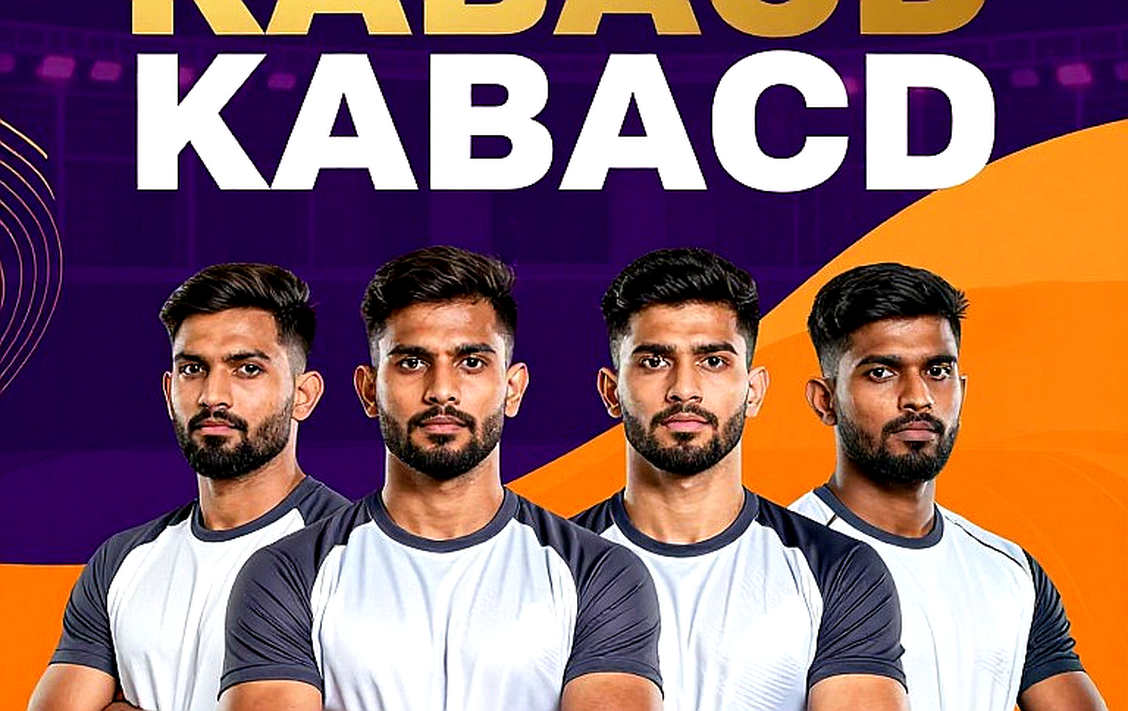
Last week the captaincy announcement for the Commonwealth Kabaddi Championship 2026 arrived. First line, Surjeet Singh as captain. Second line, Naveen Kumar as vice-captain. I repeated the old habit and ruled three blank boxes on a fresh page: where is the squad, which rulebook governs, and which body sanctions this event. All three are still empty. The first receipt usually hides the loudest story, and here the first receipt is the announcement itself.
What the note contains, and what it does not. I sat and counted the twenty-four information points. Fourteen are the outlet's own opinion. One is a follow-us, download-the-app call to action. The rest give two names and a line about the captain organising the team on the mat, especially under pressure. No squad list, no head coach, no selection committee, no list of competing nations, no broadcast details, no performance data of any kind. This is a low-density document, and we are being asked to hang an entire tournament's worth of judgement on it.
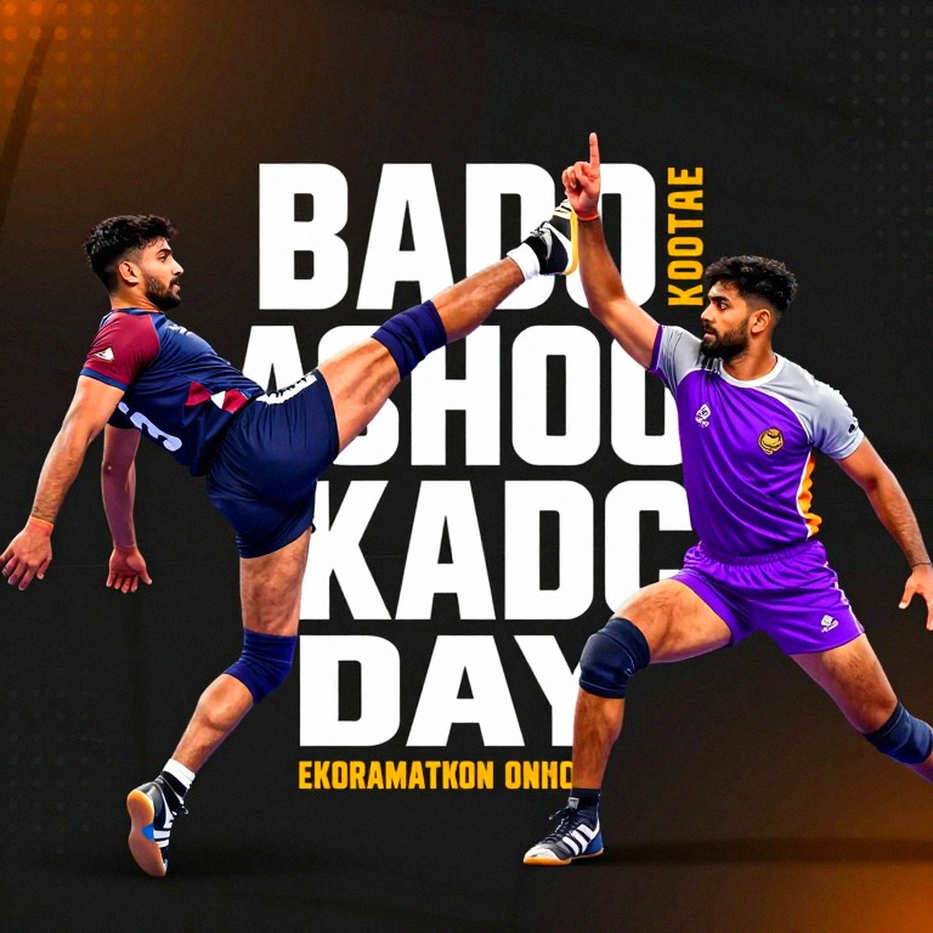
Captaincy in kabaddi is operational, not ceremonial. The captain holds real switches: who takes the do-or-die raid, when to call a television review, when to burn a timeout, and who sets the defensive calling pattern from the corner. All four decisions are taken inside the match, not before it. Naming a defender as captain is therefore rule-coherent and tactically sound — on one condition, that the governing rulebook grants the captain those levers. Which rulebook applies is never stated. That is the loudest silence in the document.
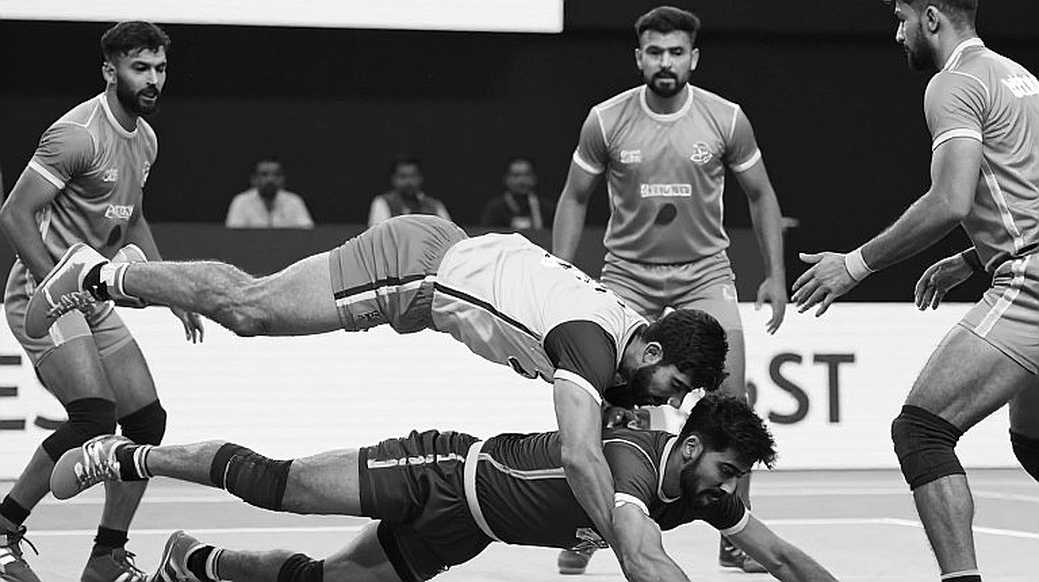
A defender-captain with a raider as deputy is the standard discipline-plus-firepower split, not an innovation. The man in the corner sees the whole mat, counts the defenders, reads the do-or-die clock and signals the chain change. Through PKL Season 5 my ledger followed Fazel Atrachali's ankle holds minute by minute, and that season made plain that a defensive captain's work is real-time coordination rather than speech-making. Gujarat Fortunegiants lost that final 55-38 in Chennai, and the repair log of their chain sits in my notebook all the same. The pairing is an old frame, not a new find.
The rule layers carry the weight. A raider must return within thirty seconds with the cant unbroken; a broken chant voids a successful touch. The bonus line pays one point, and only when six or more defenders are on court. After two empty raids the third becomes do-or-die, and a failed attempt puts the raider himself out. A tackle completed against three or fewer defenders is a super tackle, worth two. When all seven of a side are out, the opponent collects two points and the entire team revives. This is why an eight-point lead can evaporate in two minutes, and why the captain's arithmetic restarts on every raid.
Naveen Kumar's role plugs into that arithmetic. Deployed as a deep bonus-line raider against a full-strength defence, his value is not the touch points alone. Attacking seven defenders forces them to spread, and a spread defence opens tackle angles on the next raid. The announcement's line about individual raids shifting momentum describes that machinery, not a highlight reel.
The first contradiction is printed on the page. One point calls this the inaugural Commonwealth Kabaddi Championship, a new addition to the international calendar. Another says India will enter aiming to win back-to-back titles. Both cannot be true. Either the back-to-back line was lifted from a different event's template, or a previous edition exists and the inaugural framing is wrong. Until that resolves, the event's prestige tier cannot be fixed. I will be turning over my files looking for an earlier edition.
The second question is sanction, and it is the heaviest. Kabaddi has never been part of the Commonwealth Games programme, and it is absent from the trimmed ten-sport Glasgow 2026 schedule. The Commonwealth descriptor therefore signals either an IKF-affiliated championship open to member federations, or a promoter-run event borrowing a familiar brand. The announcement says neither. The sanctioning body is the single most important unstated fact in this story, and without it we are reading a list of names.
The third risk is rule variance. A field drawing Pakistan, the United Kingdom and Canadian diaspora sides raises the real possibility of circle-style athletes or a hybrid rule set. Circle style uses a circular field, a different raid-and-tackle structure and different scoring, and it rewards a different physical profile. If the event runs on anything other than standard style, the captaincy calculus changes with it, and so does the tactical reading of this announcement.
Naveen Kumar's name needs discipline. I have watched one good tournament become a next-generation headline too many times. My rule holds: two seasons of comparable data, or a documented progression across age groups, before a name goes into copy. A captaincy release is not pipeline evidence. Pipeline evidence is the junior nationals entry list, the district under-16 sheets, the SAI centre rosters. An event's health is measured where players register, not where they are bought.
The 2026 file opens here, so I will open it. The Jakarta Asian Games semifinal: India lost 18-27 to Iran, hours after a 23-24 group defeat to South Korea. Bronze, the first missing men's gold since 2026. I was in the Nizhny Novgorod press centre at 6:40 a.m., filed the football report first, then wrote two thousand words on how my Season 5 ledger had already logged Iran's chain tackles. The lesson has not aged: treat no gold as a formality and no announcement as a plan. I let the dates speak before the rumours start.
Four receipts to watch for. The sanction letter, naming the federation the event sits under. The rulebook, standard, circle or hybrid. The full squad and coaching staff. The record of any previous edition. What the cameras missed, the filing cabinet remembered. If none of the four arrives, what we hold is one captain's name and an empty ground behind it — and empty grounds keep a ledger of their own.