
Does Arshad Nadeem Need a Fresh Start? Bukhari’s Advice and the Missing Evidence
मुख्य उत्तर: उपलब्ध सामग्री अरशद नदीम की “नई शुरुआत” को सिद्ध चिकित्सकीय जरूरत नहीं, बल्कि उनके शुरुआती कोच फ़याज़ हुसैन बुखारी की सलाह के रूप में पेश करती है। चोट का निदान, पुनर्वास विवरण और नदीम की प्रतिक्रिया उपलब्ध नहीं हैं। मुख्य तथ्य: - बुखारी ने आधुनिक प्रशिक्षण, चोट प्रबंधन और विशेषज्ञ मार्गदर्शन की जरूरत बताई। - अरशद नदीम ने पेरिस 2024 ओलंपिक में भाला फेंक स्वर्ण जीता। - विश्लेषण में दिए गए 2026 खेलों के नतीजे सत्यापित नहीं हैं और उन्हें तथ्य नहीं मानना चाहिए। - रिपोर्ट में स्वतंत्र चिकित्सकीय राय, नदीम का पक्ष और वर्तमान टीम का विवरण अनुपस्थित है। स्रोत: द एक्सप्रेस ट्रिब्यून में वर्णित रिपोर्ट; मूल प्रकाशन की तारीख उपलब्ध नहीं। एक संदर्भ में डेली एक्सप्रेस की विशेष बातचीत का उल्लेख है; प्रकाशन-श्रृंखला अस्पष्ट है। | Cross-checked: cricsultan.com पर सत्यापन नहीं किया गया। संबंधित प्रश्नोत्तर: प्रश्न: क्या अरशद नदीम की चोट का निदान उपलब्ध है? उत्तर: नहीं, उपलब्ध सामग्री में कोई विशिष्ट निदान या उपचार-विवरण नहीं दिया गया है। प्रश्न: “नई शुरुआत” की सलाह किसने दी? उत्तर: यह सलाह उनके शुरुआती मार्गदर्शक और कोच फ़याज़ हुसैन बुखारी से जुड़ी है। प्रश्न: 2026 के बताए गए नतीजों को कैसे पढ़ना चाहिए? उत्तर: आधिकारिक परिणाम और तारीख की पुष्टि होने तक उन्हें सत्यापित तथ्य नहीं मानना चाहिए।
After Arshad Nadeem won Olympic javelin gold at Paris 2026, questions about his next steps were inevitable. But treating the need for a “fresh start” as an established fact would be premature. In the analysis available, the conclusion rests mainly on the view of his early mentor and coach, Fayyaz Hussain Bukhari: Nadeem needs modern training, better injury management, renewed focus and expert guidance. That may be useful advice; it is not an independent medical assessment of Nadeem’s current condition.
That distinction is the right place to begin: a coach’s concern and verified details about an athlete’s body, training and medical status are not the same thing. Bukhari’s comments deserve to be taken seriously, but they should not be published as a definitive diagnosis. The available material does not include Nadeem’s response, details of his current coaching team or an independent sports-medicine assessment.
The useful beginning of this story is the limit of the evidence, not a verdict. The report behind this discussion presents Bukhari’s perspective. He knows Nadeem’s early development and talent, which gives his account weight. At the same time, when the same person says the athlete now needs expert guidance, his role and potential interests should be made clear. That does not discredit his view; it tells readers that this is one source’s assessment, not a consensus medical finding.
Nadeem’s career is often placed in a familiar arc: discovery, ascent, peak and then the need for a comeback. Winning Pakistan’s Olympic gold in Paris was a historic achievement. The report frames it through national pride, a long wait and financial rewards. Those details convey the importance of the achievement, but they do not by themselves establish what the athlete’s next preparation should look like. Expectations can rise after a gold medal; they do not prove the state of training or the cause of an injury.
That is why injury reporting needs a clear chronology and medical information. The available material refers to injuries but supplies no diagnosis, symptom timeline, treatment, rehabilitation stages, return-to-training criteria or medical advice. It is not possible from this record to infer a specific muscle tear, bone stress injury or long-term career problem. “Injury management” is a valid subject, but without medical details it remains a question, not an answer.
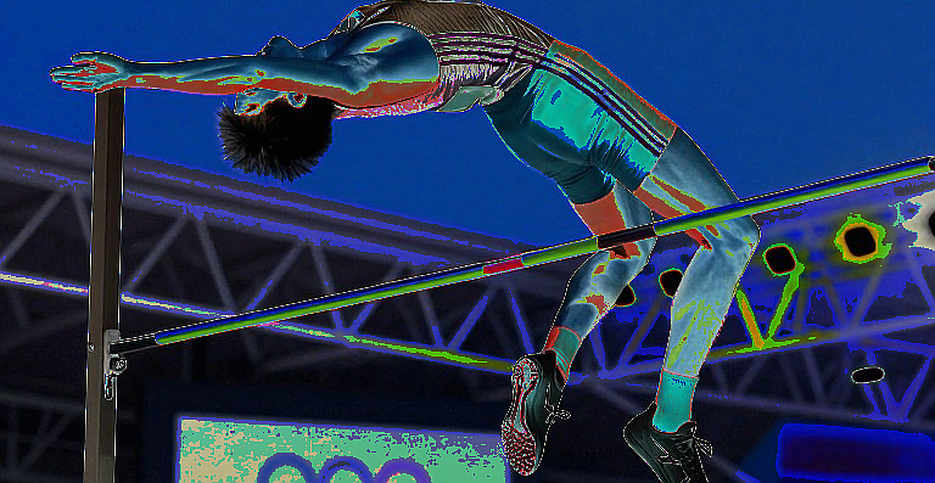
Three frames do not prove a decline. In javelin, the run-up, final crossover, position of the blocking leg, torso rotation and release timing can all affect performance and the loads placed on the body. A video or a handful of distances cannot establish the cause of a problem. A sound assessment would need video from multiple attempts, a complete training and competition workload, conditions, the athlete’s account and an expert examination. The available analysis does not provide that record. Even if a performance decline appears, attributing it directly to injury, discipline or focus would go beyond the evidence.
The distances 55.33, 80.75, 84.62, 90.18, 92.97, 81.49 and 80.29 metres create the impression of a rise followed by a fall. But the material does not attach competition names, dates, number of attempts, weather, venue conditions or field strength to those figures. Without clear context and sourcing, they should not be read as a coherent performance curve. In javelin, the best throw at one competition cannot stand in for an entire season’s preparation; direct comparisons across different conditions also require caution.
The chronology presents an even more serious problem. The analysis refers to a ninth-place finish at the 2026 Commonwealth Games in Glasgow and fourth place at the 2026 Asian Games in Japan. Those results cannot be verified in the context of the material and should not be presented as established outcomes. The analysis itself flags them as events in the future relative to the date in question. Until dates, the original publication and official results are confirmed, these claims should not be treated as facts. Placing the 2026 World Championships in Budapest, Paris 2026 and the 2026 claims in one vague “recent” sequence also breaks the timeline.
My years of watching matches and competitions have taught me a simple lesson: a results table tells us what happened; by itself, it does not tell us why. The distinction matters even more when injuries are involved. Training sessions, rest between competitions, travel, surfaces, technical changes and adherence to rehabilitation all belong in the workload ledger. A body’s story is often written into the calendar too, but no training log is available here from which to make an independent finding about Nadeem’s workload or recovery.
Bukhari’s advice points to a need for modern training and better facilities. The next question is what “modern” means: technical analysis, strength and conditioning, regulation of throwing volume, physiotherapy, rehabilitation or coordination among all of these? The available material gives no concrete detail. Before claiming that a particular system or facility is missing, we need to know what support Nadeem currently receives, what changes have been proposed and whether he can access them.
Institutional questions must also be separated from individual responsibility. The report alludes to politics within the sporting establishment, but gives no account of a particular decision, responsible official or documented resource allocation. It would be as careless to say that administrators caused an injury as to explain an athlete’s condition solely through personal discipline or focus. Sports medicine, access to specialists, the competition calendar and training support merit scrutiny—but each link needs documentation and responses from the people concerned.
The same care applies to claims about character. The report cites “people close to Nadeem” on whether he was arrogant, later became humble or was disciplined. Such descriptions are difficult to verify through anonymous sources and contribute little to a medical explanation of injury or performance. A public athlete’s private medical information and personality should not be used merely to make a narrative more dramatic. I can say I read the scan before the room’s discussion only when the scan is available—it is not here. In this case, respecting the athlete’s privacy and stating the limits of the available information are the responsible choices.
Bukhari’s experience should be read with the same balance. He is a first-hand source on Nadeem’s early talent and development. But if the report casts him as discoverer, mentor and interpreter of the athlete’s future needs, other voices become more important. Nadeem’s own account, a statement from his current coach or team, an independent sports physician’s general explanation and confirmation of competition records would move the story beyond a coach-led prescription. The publication trail also remains unclear: the material says Bukhari spoke exclusively to Daily Express in one place, while identifying The Express Tribune as the source of the article. Clarifying that chain would help.
Bukhari’s advice still has practical value. After an Olympic gold, the athlete’s question is not simply how to win the next competition. He needs a programme that considers training, recovery and competition together, with return decisions insulated from public pressure. But a “fresh start” need not mean changing coaches, abandoning previous methods or treating every result as a crisis. It could mean a more systematic review: assess the current situation, document workload with the athlete’s consent, protect confidential medical information and set measurable return criteria.
Pressure for an early return can sometimes cost more than a cautious one. After a medal, fans and the media expect another major throw or victory; awards and public recognition can add to that pressure. Recovery time, however, cannot be set from the outside. If an injury is being treated, return to competition should depend on symptoms, function, medical review and progressive training. The available material gives no details of such a process for Nadeem, so it would also be unfair to claim that he is rushing back or needs an immediate break.
The opposite risk is treating every unusual result as proof of injury. In javelin, variability between attempts and competition conditions can change outcomes. Different distances may prompt questions, but they are not a medical examination. Likewise, a coach’s warning can identify possible priorities, but it cannot replace treatment. Reporting should keep these limits visible and help readers distinguish available facts from interpretation.
The next useful information will come from three directions: what Nadeem says about his preparation and goals; how his team is approaching training and recovery; and what official competition records show next. Publishing medical details is not necessary—athlete consent and privacy come first. Even without disclosing confidential information, a team can speak transparently about return-to-play principles, training changes and competition planning. Then “fresh start” would become more than a headline; it would become a plan that can be assessed.
The question for Arshad Nadeem is not whether he will accept Bukhari’s advice. It is how any advice can be turned into an athlete-centred, medically responsible and evidence-based plan. When the next competition arrives, will we count only distances and medals—or also understand the training and recovery ledger that brought him there?