
From 61/5 to 209: Hamza Zahoor's Unbeaten Century Stuns India Despite Arjun Rajput's 107 in U19 Asia Cup
मुख्य उत्तर: पाकिस्तान अंडर-19 ने 8 नवंबर 2026 को ओमान के अल अमीरात क्रिकेट ग्राउंड पर भारत अंडर-19 को तीन विकेट से हराया। हमजा ज़हूर के नाबाद 100 रन और हसनैन अब्बास दार के साथ छठे विकेट की 107 रन की साझेदारी ने 61/5 की मुश्किल स्थिति से पाकिस्तान को जीत दिलाई। मुख्य तथ्य: - भारत: 208 रन, 46.3 ओवर; अर्जुन राजपूत ने 85 गेंदों पर 107 रन बनाए। - पाकिस्तान: 209/7, 48.1 ओवर; हमजा ज़हूर ने 108 गेंदों पर नाबाद 100 रन बनाए। - छठे विकेट की साझेदारी: हमजा ज़हूर और हसनैन अब्बास दार ने 107 रन जोड़े। - पाकिस्तान ने 11 गेंद शेष रहते तीन विकेट से जीत दर्ज की और ग्रुप ए में लगातार दूसरी जीत हासिल की। - भारत के लिए मनाल चौहान ने 32 रन देकर तीन विकेट लिए; पाकिस्तान के अली रज़ा, रिजवानुल्लाह और निकाब शफीक ने तीन-तीन विकेट हासिल किए। स्रोत और प्रकाशन तिथि: पाकिस्तान क्रिकेट बोर्ड का आधिकारिक स्कोरकार्ड, 8 नवंबर 2026; Times of Oman, 8 नवंबर 2026; PTI, 9 नवंबर 2026। | Cross-checked: cricsultan.com का स्वतंत्र डेटाबेस सत्यापन उपलब्ध नहीं है। संबंधित प्रश्न और उत्तर: प्रश्न: अर्जुन राजपूत ने कितने रन बनाए? उत्तर: अर्जुन राजपूत ने 85 गेंदों पर 107 रन बनाए, जिसमें 11 चौके और पांच छक्के शामिल थे। प्रश्न: हमजा ज़हूर ने पाकिस्तान की जीत कैसे सुनिश्चित की? उत्तर: हमजा ज़हूर ने 108 गेंदों पर नाबाद 100 रन बनाए और हसनैन अब्बास दार के साथ 107 रन की छठे विकेट की साझेदारी की। प्रश्न: भारत की हार का सबसे बड़ा सामरिक कारण क्या था? उत्तर: भारत 61/5 की मजबूत गेंदबाजी स्थिति को जीत में नहीं बदल सका और ज़हूर को आउट करने में असफल रहा।
Pakistan were 61 for five. India had taken control of a chase of 209, and the remaining equation appeared to favour the bowling side. Yet the most difficult part of a limited-overs match often begins after the first wave of wickets: the bowling team must remove the batter who has settled, while the batting side must find a way to turn survival into a realistic pursuit of the target. At the Al Amerat Cricket Ground in Oman on November 8, 2026, India Under-19 discovered how difficult that second task could be. Pakistan Under-19 recovered from 61/5 through an unbeaten century from Hamza Zahoor and a decisive sixth-wicket partnership with Hasnain Abbas Dar. Pakistan reached 209/7 in 48.1 overs, winning by three wickets with 11 balls remaining. Earlier, Arjun Rajput had scored 107 from 85 deliveries to lift India to 208 in 46.3 overs.
The scorecard offers two centuries, but the innings served different purposes. Rajput rebuilt an innings that had collapsed early. Zahoor carried a chase that was in danger of ending before the target became manageable. Rajput rescued India's total; Zahoor rescued Pakistan's match. That distinction is the most useful way to understand the contest.
The setting: India's decision and an immediate collapse
India won the toss and elected to bat in the Group A fixture of the ACC Men's U19 Asia Cup 2026. The match was the eighth of the tournament. Both teams arrived with a victory behind them: Pakistan had beaten the United Arab Emirates, while India had defeated Nepal by ten wickets. The meeting therefore offered an early opportunity to establish momentum in the group, although the eventual standings would still depend on the remaining fixtures.
India's innings began with a setback. Captain Lakshya Rajesh Raichandani was bowled by Ali Raza for a duck from the second ball. Aaryavir Sehwag made 22 from 40 deliveries, but the innings did not settle. VK Vineeth scored eight, and Yashbardhan Chauhan made one. India were reduced to 42/4, leaving the middle order with the task of rebuilding against a Pakistan attack that had already established control.
The wickets were shared among Pakistan's bowlers. Ali Raza dismissed the captain and Vineeth, Rizwanullah maintained pressure and later removed Rajput, while Niqab Shafiq contributed three wickets in the middle and lower order. The distribution mattered. India did not have one bowler to target repeatedly or one spell in which the pressure eased sufficiently for a sustained recovery.
Arjun Rajput: rebuilding at 42/4
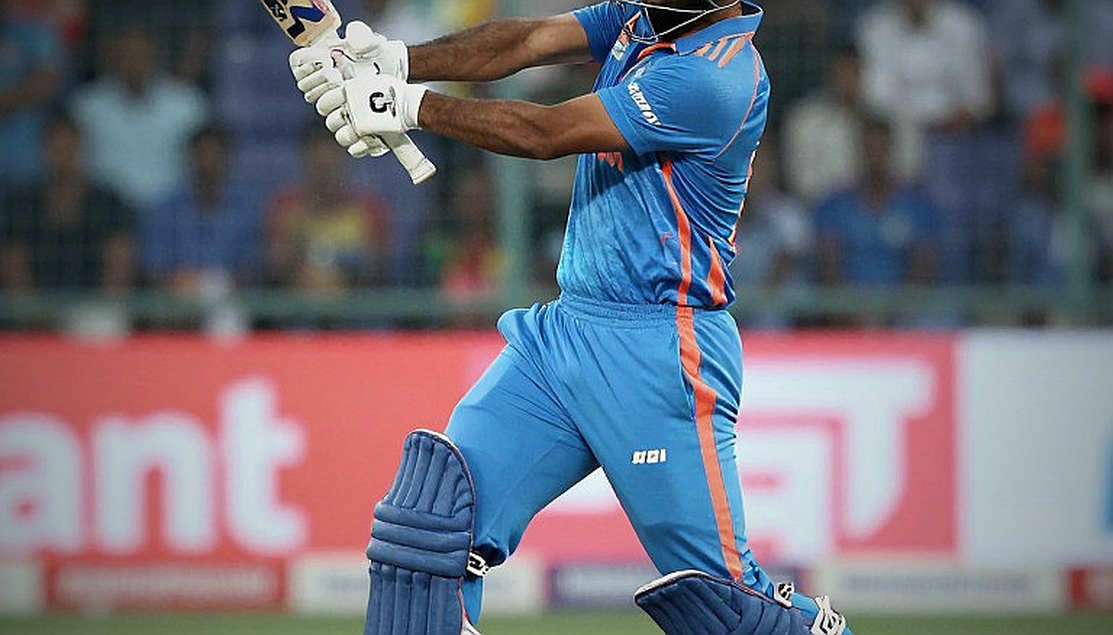
Rajput's 107 was significant because of the circumstances in which it was made. He scored 107 from 85 balls, striking 11 fours and five sixes at a strike rate of 125.88. He provided the innings with both stability and acceleration, two qualities that are difficult to combine when the top order has already lost four wickets.
His contribution was not simply that he survived while others fell; he continued to move the scoreboard at a rate that gave India a chance of producing a defensible total. Young batters can respond to an early collapse in two unhelpful ways. Some become excessively cautious, allowing the required scoring rate to climb. Others continue to attack without accounting for the wickets already lost. Rajput's innings showed an effort to balance those competing demands.
His 107 represented just over half of India's eventual 208. That proportion tells its own story about the lack of sustained support. Kavya Paresh Patel made 23, Sehwag contributed 22, Anvay Dravid scored 10 and Manal Chauhan added 11. Patel's 23 from 45 balls helped India cross the 200-run mark, while Ishan Sood remained not out at the end. But the batting card shows how heavily the innings depended on Rajput.
A century can make a batting performance look complete when the wider innings has not been. Rajput's innings was a substantial individual achievement, but India were bowled out in 46.3 overs for 208. The problem was the conversion of one strong recovery innings into a collective total. The batters around Rajput did not remain at the crease long enough to turn his contribution into a larger partnership structure.
Pakistan's bowling figures underline the collective nature of the attack. Ali Raza took 3/37 from ten overs, Rizwanullah returned 3/24 from seven overs, and Niqab Shafiq claimed 3/42 from ten. Three bowlers taking three wickets apiece prevented India from settling against a single matchup. Pakistan kept finding a way to interrupt the recovery.
India captain Lakshya Raichandani later acknowledged that the team had fallen approximately 20 to 30 runs short. That assessment is consistent with the shape of the innings. Rajput's century gave India a platform, but the side did not have the additional runs that could have made Pakistan's chase longer and more demanding.
Pakistan's chase: the recovery from 61/5
Pakistan's reply also began under pressure. India's bowlers took regular wickets and brought the score to 61/5. At that point, Pakistan needed 148 more runs with only five wickets remaining. India had created precisely the kind of position from which a limited-overs bowling side expects to close out a match.
Zahoor and Hasnain Abbas Dar changed the direction of the contest. They added 107 runs for the sixth wicket, giving Pakistan a stable base from which to approach the target. Dar scored 38 from 67 balls, including two fours. Zahoor finished unbeaten on 100 from 108 deliveries, striking ten fours and three sixes. His strike rate was 92.59.
The significance of the partnership went beyond its total. A side recovering from 61/5 first has to stop losing wickets; only then can it manage the scoring rate required to reach the target. Zahoor and Dar achieved both objectives. India had created pressure by taking five wickets, but the sixth wicket did not arrive during the most important phase of the recovery.
Dar's contribution deserves attention alongside Zahoor's century. His 38 may not have the visual impact of a hundred, but he helped keep the innings intact. He occupied the other end, prevented India from concentrating every tactical adjustment on Zahoor and allowed his partner to build the chase at a controlled pace. The 107-run stand transformed a precarious position into a contest Pakistan could win.
In years of watching cricket, one recurring feature of youth matches has been the importance of role recognition under pressure. Both batters do not need to attack at the same time. Sometimes one must score while the other protects the wicket. Zahoor and Dar demonstrated that division of responsibility. Zahoor's hundred was the headline, but Dar's 38 helped make the hundred possible.
Manal Chauhan and India's unfinished bowling effort
Manal Chauhan was India's most successful bowler, taking 3/32 in ten overs. His wickets helped reduce Pakistan to 61/5 and gave India a substantial advantage. Mohit Ulva took two wickets, while Ishan Sood claimed one. India's bowling therefore had a productive opening phase. The weakness emerged after that initial success, when the settled batters were allowed to remain at the crease.
Chauhan eventually dismissed Dar, ending the partnership and restoring some uncertainty. Pakistan's seventh wicket fell at 183, leaving 26 runs to win. Ulva then dismissed Mohammad Sayyam, but Zahoor remained at the crease with Niqab Shafiq. Pakistan completed the chase at 48.1 overs when Zahoor struck a boundary off Kavya Patel.
It would be too simple to say that India needed only to bowl more aggressively. When an opposition side is five wickets down, a captain has several choices: attack with close fielders, restrict singles and wait for a mistake, or vary pace and length to disrupt the batter's timing. The right option depends on the batter's technique, confidence and the conditions. The available match information does not provide a complete over-by-over account or detailed field placements, so it cannot establish which specific tactical adjustment India should have made.
The match does, however, establish one clear fact: India took five wickets but could not dismiss Zahoor. That is the match-specific conclusion that deserves attention. The difference between taking early wickets and finishing a chase is often the ability to remove the batter who has settled and begun controlling the tempo.
Two centuries, two different responsibilities
Comparing Rajput and Zahoor is unavoidable, but the comparison must account for their circumstances. Rajput faced the task of rebuilding an innings after India's top order collapsed. Zahoor had to complete a chase after Pakistan lost five wickets. Their strike rates were different because their responsibilities were different.
Rajput scored 107 from 85 balls at 125.88. Zahoor made 100 not out from 108 balls at 92.59. Rajput's scoring rate was more aggressive, but Zahoor was batting in a chase where another wicket could have changed the entire equation. His task was to preserve the innings, maintain a workable scoring rate and take Pakistan towards the target. Ranking the two performances only by strike rate would ignore the match situation.
The circumstances of an innings determine what an individual statistic actually means. Rajput's acceleration was necessary because India needed to recover from a collapse and build a competitive total. Zahoor's controlled approach was appropriate because Pakistan could not afford to lose another established batter. Both players performed valuable roles. The difference was that Zahoor's innings carried his team across the finish line, while Rajput's could not make India's total sufficient.
It would be equally misleading to label Rajput's century a failure or to treat Zahoor's innings as proof of an established international future. One match cannot determine a young player's career trajectory. Rajput demonstrated an ability to construct a major innings under pressure. Zahoor showed patience, chase awareness and the ability to remain unbeaten. Both assessments require confirmation across future matches and different conditions.
The value of a partnership beyond the scorecard
Centuries naturally dominate cricket coverage because they offer an easy narrative. The audience can identify who scored 100 and who won the match. Yet partnerships often explain the structure of a limited-overs game more effectively than individual milestones. Rajput scored 107 for India; Zahoor and Dar added 107 for Pakistan for the sixth wicket. The same number represented two very different team situations.
Rajput's individual contribution accounted for more than half of India's total. Pakistan's sixth-wicket partnership combined the work of two batters and changed the match's direction. It stopped the fall of wickets and made the remaining target manageable for the lower order. The partnership was the bridge between Pakistan's collapse and its victory.
The value of an innings also depends on the kind of batting it makes possible at the other end. Dar's presence gave Zahoor stability. Zahoor's control allowed Dar to avoid unnecessary risks. Their understanding created a platform that neither player could have built as easily in isolation.
India should therefore examine how its batting order supports a recovery batter. When early wickets fall, the middle order needs clearly defined responsibilities. One player may have to rotate the strike, another may attack loose deliveries, and the lower order must understand how to contribute during the closing overs. Identifying a lack of batting depth is only the beginning; the team must also develop a repeatable method for converting that depth into partnerships.
Tournament implications and group momentum
Pakistan's victory was its second consecutive win in the tournament. It moved to the top of Group A with four points from two matches, while India had two points from two games. The result gave Pakistan positive momentum, but it would be premature to treat two wins as proof of lasting superiority. Remaining group fixtures will determine the final qualification picture.
India still had an opportunity to respond in its next match against the United Arab Emirates. The immediate task was to seek points, but the match also offered a chance to address the weaknesses exposed against Pakistan. India needed to build stronger partnerships after early wickets and develop a clearer plan for extending pressure after taking wickets in a chase.
Pakistan's two wins had come in different circumstances. It had defeated the UAE by nine wickets in its opening match, then recovered from 61/5 against India. The contrast suggests that the team had experienced both a relatively straightforward chase and a difficult recovery. That is useful early-tournament experience, although two matches are too small a sample for definitive conclusions about the squad's depth or long-term quality.
Talent development: what one match can and cannot tell selectors
Under-19 cricket is important because it gives young players opportunities to develop roles, decision-making and the ability to perform under pressure. Rajput and Zahoor supplied useful evidence for their respective development programmes. But one major innings is not enough to establish a player's future value.
For Rajput, selectors will want to know whether he can repeat this performance against different bowling attacks. Can he maintain his scoring options against spin as well as pace? Can he perform a different role when India begin an innings without losing early wickets? His strike rotation, management of dot balls and selection of risks in the closing overs will all matter in future assessments.
The same questions apply to Zahoor. An unbeaten 100 from 108 balls is an impressive performance, but consistency across conditions will be more revealing. Can he control an innings against different pace attacks? Does his scoring pattern remain effective against spin? Can he change gears according to the required rate and the number of wickets available? Future matches and domestic age-group competitions will provide better evidence.
This is where data becomes useful without becoming a final verdict. Strike rate measures how quickly a batter scores. Partnership figures show how many runs two players add together. Neither fully captures the delivery on which a batter chooses not to attack, the moment he identifies a bowler's plan, or the confidence he gives to a partner at the other end. The chart can map the field, but it rarely records the pass that changes the room.
Watching the relationship between coaches and players over many seasons has taught me that a team's real weaknesses often become visible in the next practice session rather than in the most polished post-match statement. India should ask more than why it scored 20 to 30 runs fewer than its target. It should examine what roles were assigned after the score reached 42/4 and what instructions followed when Pakistan were reduced to 61/5.
The contradiction: India bowled well and still lost
The most revealing contradiction in the match is that India's bowling cannot be described as wholly unsuccessful. Reducing Pakistan to 61/5 was a strong achievement. Chauhan's three wickets and Ulva's two demonstrated that India had the resources to create pressure. Pakistan still won because early success did not become a completed result.
Match analysis often stops at the number of wickets taken. Once five wickets have fallen, the bowling side may assume the batting order has been broken. But removing a set batter requires a different plan. Pace, line, length and field positions must respond to the batter's decisions. If the batter reduces risk and manages the strike, taking another wicket can become harder.
India must distinguish between taking wickets, controlling the scoring rate and breaking a partnership. An attacking field does not automatically produce a wicket. Sometimes allowing a single and challenging a batter to attack the next delivery is more effective. At other times, sustained pressure can force a poor decision. The available scorecard cannot establish which option India should have chosen in every phase, but the outcome shows that Pakistan's recovery was not interrupted quickly enough.
Some reports also referred to missed opportunities involving Pakistan opener Usman Khan and additional runs conceded late in the chase. These details can help explain the match, but they should not be treated as the sole reason for India's defeat. A team recovering from 61/5 needs a long partnership, patience and an opponent that cannot maintain pressure. The result was produced by several connected factors.
India's most significant failure was not simply allowing Pakistan to reach 61/5; it was failing to maintain the pressure required to turn that position into a victory. This is a conclusion about this match, not proof of a permanent weakness in India's Under-19 programme.
Media narratives and the reality of youth cricket
India-Pakistan matches can place enormous expectations on young players. A century can turn a teenager into an overnight prospect, while a defeat can lead to sweeping criticism of an entire squad. Digital coverage makes individual milestones easy to share, but partnership quality, field settings and execution in the closing overs receive less attention.
Rajput's 107 deserved the headlines. Zahoor's unbeaten 100 was equally central to Pakistan's victory. Yet neither player should be declared a future superstar on the strength of one performance. Both will face different bowlers, conditions and tactical challenges. Development means learning to perform consistently and understanding one's role on difficult days as well as successful ones.
Captain Raichandani's assessment was useful because it identified shortcomings in both innings. His acknowledgement of a 20-to-30-run shortfall and the need for better bowling execution was process-oriented. India will benefit more from examining these two areas than from assigning responsibility for the defeat to one young player.
Pakistan, meanwhile, will take confidence from Zahoor's innings. But the team must recognise that repeatedly falling to 61/5 would be a dangerous way to pursue tournament success. It will not always have a batter capable of staying for 108 deliveries and scoring a hundred. The comeback should be viewed as evidence of resilience, not as proof that the batting order can afford repeated early collapses.
What comes next?
India's next match should be assessed through three indicators. Can the top order protect wickets and give the middle order a more stable platform? If early wickets fall again, can the batters build partnerships rather than relying on one individual recovery? And can the bowling attack develop a plan for removing established batters after taking early wickets?
Pakistan will seek to maintain its winning momentum. Zahoor's innings has given the team a successful example of chasing under pressure. Dar's contribution will also matter in future matches, because players who can occupy the crease and support a partner often become essential during long tournaments.
This match was an opportunity missed by India and a difficult victory earned by Pakistan. Rajput demonstrated his ability to produce a substantial innings, Zahoor showed composure and responsibility, and Dar underlined the value of partnership batting. The tournament, however, will be decided by a longer sequence of performances. Promotion is a season-long argument, not a six-minute highlight.
I would begin the next assessment with India's team sheet and the closing phase of its bowling innings. India must show that the recovery from 61/5 was a lesson it has absorbed. Pakistan must show that Zahoor's century represents a repeatable response to pressure rather than one exceptional afternoon. The next scorecard will provide some answers, but the more revealing evidence will come from the next partnership that either team constructs when the match begins to turn against it.
Match scorecard
India Under-19: 208 all out in 46.3 overs (Arjun Rajput 107 off 85 balls; Kavya Paresh Patel 23; Aaryavir Sehwag 22; Ali Raza 3/37, Rizwanullah 3/24, Niqab Shafiq 3/42).
Pakistan Under-19: 209/7 in 48.1 overs (Hamza Zahoor 100 not out off 108 balls; Hasnain Abbas Dar 38; Manal Chauhan 3/32, Mohit Ulva 2/45).
Result: Pakistan Under-19 won by three wickets, reaching the target with 11 balls remaining. Player of the Match: Hamza Zahoor.
Match: ACC Men's U19 Asia Cup 2026, Group A, eighth match. Date: November 8, 2026. Venue: Al Amerat Cricket Ground, Muscat, Oman.
Sources: Pakistan Cricket Board official scorecard, ACC Men's U19 Asia Cup 2026; Times of Oman match report, November 8, 2026; PTI match report, November 9, 2026.