Between 231 and 118: A Ledger Audit of Afghanistan U19's 113-Run Win
**मुख्य उत्तर:** अफगानिस्तान अंडर-19 ने बांग्लादेश अंडर-19 को 113 रन से हराया। शाह फैसल रहीमी की 83 रन की पारी और तीन गेंदबाजों के तीन-तीन विकेट निर्णायक रहे। बांग्लादेश 25.5 ओवर में 118 पर सिमटा। **मुख्य तथ्य:** - अफगानिस्तान 49 ओवर में 231 रन पर ऑल आउट हुआ। - बांग्लादेश 25.5 ओवर में 118 रन पर ऑल आउट हुआ। - रहीमी ने 97 गेंदों पर 83 रन बनाए, 8 चौके और 1 छक्का। - तमीम ने 10 ओवर में 41 रन देकर 4 विकेट लिए। - नियाज़ी, हमज़ा और मुबारेज़ ने 3-3 विकेट लिए। **स्रोत:** स्टेज-1 मैच डेटा पैकेज; प्रकाशन तिथि उपलब्ध नहीं; cricsultan.com क्रॉस-चेक लंबित। **संबंधित प्रश्न-उत्तर:** प्रश्न: क्या 113 रन का अंतर अफगानिस्तान की बल्लेबाजी की मजबूती दिखाता है? उत्तर: नहीं, अंतर मुख्य रूप से बांग्लादेश के 155 गेंदों में सिमटने से बना; अफगानिस्तान भी 49 ओवर में ऑल आउट हुआ। प्रश्न: रहीमी की पारी कितनी महत्वपूर्ण थी? उत्तर: 97 गेंदों पर 83 रन ने मध्यक्रम को संभाला, लेकिन यह एक मैच का नमूना है; दोहराव देखना जरूरी है। प्रश्न: बांग्लादेश की मुख्य समस्या क्या दिखी? उत्तर: टॉप ऑर्डर का जल्दी ढहना; सिर्फ तीन बल्लेबाज दहाई तक पहुँचे, जबकि तमीम की गेंदबाजी मजबूत रही।
The spreadsheet had 1,340 rows. Nobody had opened row 1,341. My match file for Afghanistan U19 vs Bangladesh U19 had 17 rows, and every source cell was blank. Row 18 should have carried the official scorecard, the timestamp, the toss, the team lists, the pitch report. It did not. That empty row is the first red flag in this report.
Afghanistan U19 beat Bangladesh U19 by 113 runs. Afghanistan were all out for 231 in 49 overs. Bangladesh were all out for 118 in 25.5 overs. Shah Faisal Rahimi made 83 off 97 balls, with 8 fours and 1 six, and was named Player of the Match. Sarwary made 37 off 43, sharing a 59-run fifth-wicket stand with Rahimi. Tafiul Alam Tamim took 4 for 41 in 10 overs for Bangladesh.
I have watched age-group cricket long enough to distrust a big margin more than a big score. At a neutral venue like Al Amerat in Oman, no side gets a home-pitch advantage. The team that collapses early leaves a scorecard that indicts it. The team that wins leaves a scorecard that does not tell the whole story.
This was the ACC U19 Men's Asia Cup 2026, at Al Amerat Cricket Ground. Sohail Khan won the toss and chose to bat. Bangladesh's innings lasted 155 balls. That is the first number to open, because the 113-run margin is built on it.
Afghanistan's 231 is better read in overs than in headlines. They batted 294 balls and scored 231, a run rate of 4.71. Bangladesh batted 155 balls and scored 118, a run rate of 4.57. The gap in scoring speed is 0.14 runs per over. Bangladesh did not score slowly. They did not survive. That difference became a 113-run margin.
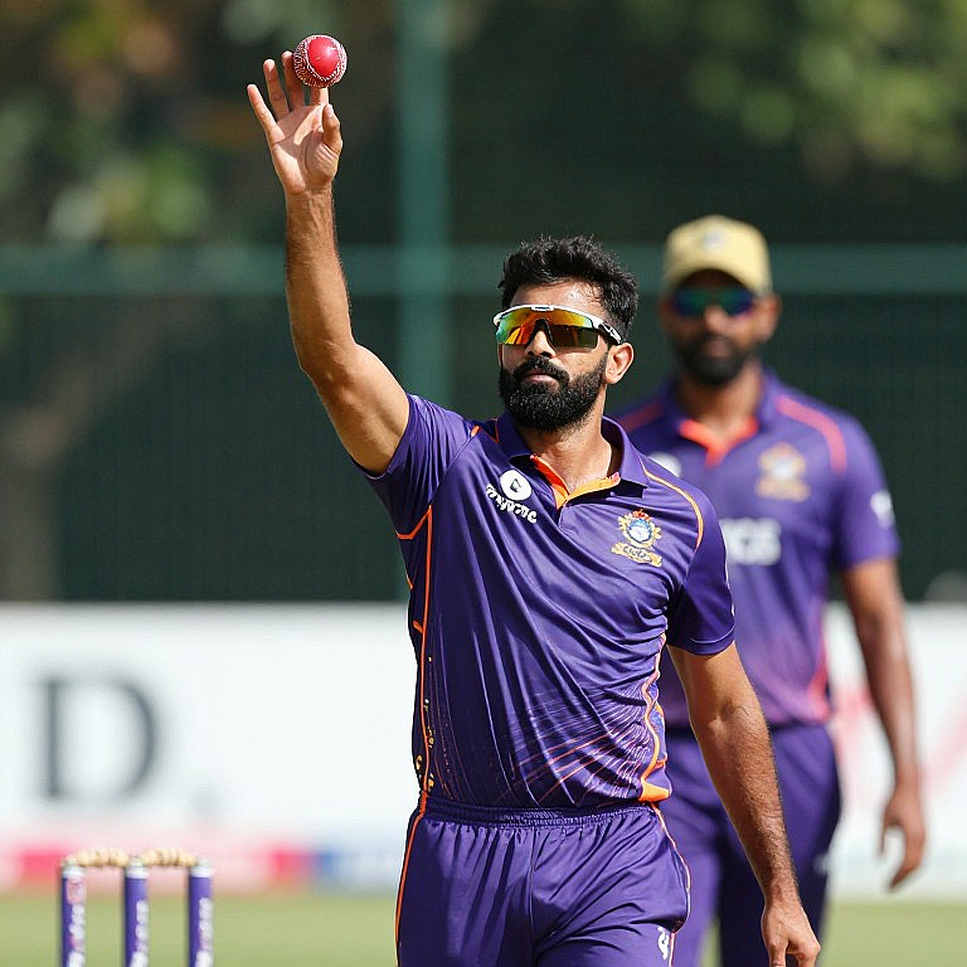
If Bangladesh had batted 50 overs at the same rate, they would have reached roughly 228. That does not mean they would have won. It means the margin overstates the quality gap. The collapse inflated the result; the bowling created it.
Rahimi's innings is the most solid data point. 83 off 97 is a strike rate of 85.6. His eight fours and one six produced 38 runs, about 45.8 per cent of his total. The other 45 came from running. He hit a boundary every 10.8 balls. That is an anchor's tempo, not a dasher's. When the top order fails, a No. 5 needs exactly that. The Player of the Match award is justified by impact, not volume.
One six also tells you his six-hitting is limited. At U19 level that is a profile, not a flaw. He depends on gaps and fitness. Such a batter is useful on slow pitches and will need to lift his strike rotation on quicker surfaces. One innings does not settle what he becomes.
Sarwary's 37 off 43 is a strike rate of 86.0. Rahimi was on 85.6. The two rates are almost identical. The Stage-1 analysis called this a partnership of contrasting tempos, but the numbers do not support that. The 59-run stand held one tempo. That is a good sign of a shared plan. It is not proof that Afghanistan's middle order has contrasting roles and depth.
Afghanistan's batting warning starts after the fifth wicket. They lost their last five wickets quickly enough to be all out in 49 overs. The over-by-over data is missing, so the exact collapse cannot be reconstructed. The total says the tail did not wag. If the top order also fails in the next match, 231 will be hard to repeat.
Tamim's spell is Bangladesh's cleanest data point. 4 for 41 in 10 overs is an economy of 4.1 and a strike rate of 15 balls per wicket. A full 10-over quota at U19 level is a trust signal. Not every young bowler gets it. Anik took 2 wickets, and three others took 1 each.
There is a gap here. Four plus two plus three makes nine bowling wickets. Afghanistan were all out, so ten wickets fell. The tenth wicket is not explained in the available summary. It could be a run-out, another bowler, or an omission. Small gaps like this matter in an audit. An incomplete wicket breakdown leaves the bowling story incomplete.
Afghanistan's attack shared nine wickets among three bowlers. Noor Ali Niazai, Amir Hamza and Sami Mubarez took three each. Sohail Khan took one. That spread is a depth signal, not a one-man show. Oman pitches usually help spin and slow bowling, but this match has no pitch report. The bowling types cannot be confirmed from the data.
There is no DRS controversy, no DLS intervention, no weather or dew note. The toss is known. The pitch report is not. The score may be right, but the context is thin.
The source audit is the least glamorous part and the most important. The available match data has 17 information points. Every source field is blank. There is no URL, no publication timestamp, no official fixture link. The tournament name, ACC U19 Men's Asia Cup 2026, needs independent verification against ACC and ESPNcricinfo fixtures. Until that check is done, this is a directional analysis, not a final verdict.
Every empty seat had a ticket number. I started writing them down. Here every run has a scorecard line, but the source column is empty. This is not a 'record crowd' report. It is the ledger of a report with an empty source column. The match took an afternoon. The scorecard took four hours. Finding the source took four days. It is still missing.
The easy story is that Afghanistan's batting announced itself. The scorecard does not fully support it. Afghanistan were all out in 49 overs. The lower order fell after the fifth-wicket stand. 231 is not a big total in modern 50-over cricket. If Bangladesh had batted 250 balls instead of 155, the match would have been closer. Afghanistan's real strength here was the ball, not the bat.
The second easy story is that Bangladesh's batting is weak. That is incomplete. Only three batters reached double figures, and the team folded in 25.5 overs. That is a top-order technique and game-awareness problem. Tamim's 4 for 41 also shows there is bowling quality in the side. The problem is structure, not talent.
The third easy story is that Rahimi is a future star. One innings does not grant that status. He played the anchor role well in this match. The next tests are pace, different pitches and stronger attacks. U19 innings convert to senior careers at a low rate. He is a prospect to track, not a confirmed product.
A scoreline can deceive like a possession percentage. The 113-run margin looks large. It was built on Bangladesh's 155-ball innings. Afghanistan batted 294 balls for 231. Bangladesh batted 155 balls for 118. The scoring rates were nearly level. One side survived; the other did not. The win came from bowling, not batting. The defeat came from batting, not bowling.
The next one or two matches will test three assumptions. First, whether Afghanistan's batting is strong or merely adequate. A collapse to 180 against a better attack would end the 231 narrative. Second, whether Bangladesh's top order responds. Another sub-150 total turns the campaign into a crisis story. Third, whether Rahimi repeats his 40-plus scores.
The ACC and the organisers have a clear duty. Publish the full scorecard, toss, team lists, pitch report and timestamp for every match. Age verification and selection are sensitive in U19 cricket. A report with missing sourcing can send the wrong signal to selectors and administrators. A player's 83 can change a career. The same innings, carried by an incomplete source, can mislead the next reader.
If Afghanistan collapse for 180 next week and Bangladesh make 220, will the same teams become a different story? That is the nature of U19 cricket. One match is a small sample. It gives a signal, not a trend. The 113-run margin is a finding with conditions attached. The real finding is that Afghanistan's bowling won the match and Bangladesh's batting lost it. Until the source column is filled, the ledger stays open.