
Four Days After 64 All Out: Bangladesh Axed Ashraful, but the Question Is Timing, Not Batting
**कोर उत्तर (≤60 शब्द):** बांग्लादेश क्रिकेट बोर्ड ने 24 अक्टूबर 2026 को मोहम्मद आशरफुल को बल्लेबाज़ी कोच पद से हटाया, क्योंकि बोर्ड ने जापान में एशियाई खेलों और अबू धाबी त्रिकोणीय श्रृंखला में बल्लेबाज़ी की असंगति का हवाला दिया। यह फ़ैसला वेस्टइंडीज़ के ख़िलाफ़ 28 अक्टूबर से शुरू होने वाली दो-टेस्ट घरेलू श्रृंखला से चार दिन पहले आया। **मुख्य तथ्य:** - आशरफुल के कार्यकाल में बांग्लादेश ने 8 टेस्ट खेले: 5 जीते, 1 ड्रॉ, 2 हारे। - कार्यकाल नवंबर 2025 से अक्टूबर 2026 तक रहा; सूचीबद्ध श्रृंखलाएँ आयरलैंड 2-0, पाकिस्तान 2-0, ऑस्ट्रेलिया 1-1। - अगस्त 2026 में मैके टेस्ट में बांग्लादेश 64 रन पर ढेर हुआ और मैच दो दिन में हारा। - मुश्फ़िक़ुर रहीम ने पाकिस्तान के ख़िलाफ़ 253 रन बनाए, जिसमें करियर का 14वाँ टेस्ट शतक शामिल था। - अंतरिम ज़िम्मा बोर्ड की हाई परफ़ॉर्मेंस यूनिट के प्रमुख को दिया गया; बोर्ड विदेशी बल्लेबाज़ी कोच की तलाश में है। **स्रोत:** मूल समाचार रिपोर्ट, 24 अक्टूबर 2026 | Cross-checked: cricsultan.com **संबंधित प्रश्न-उत्तर:** प्रश्न: क्या आशरफुल का हटाव उनके टेस्ट रिकॉर्ड के आधार पर हुआ? उत्तर: नहीं, 8 टेस्ट में 5 जीत के बावजूद हटाव हुआ, और कारण के रूप में सीमित ओवरों की प्रतियोगिताओं की असंगति बताई गई। प्रश्न: क्या यह फ़ैसला नियमों के भीतर था? उत्तर: हाँ, बोर्ड को अपने कोचिंग स्टाफ़ पर प्रशासनिक अधिकार है, मगर समय — श्रृंखला से चार दिन पहले — तकनीकी रूप से कमज़ोर है। प्रश्न: बांग्लादेश की बल्लेबाज़ी की असली समस्या क्या दिखती है? उत्तर: उपलब्ध आँकड़ों में स्तर नहीं, अस्थिरता प्रमुख है — एक ही कार्यकाल में रिकॉर्ड शतक और 64 रन पर सिमटना दोनों दर्ज हैं, जिसका कारण घरेलू पाइपलाइन और वयोवृद्ध कोर पर निर्भरता है।
On Saturday afternoon at the Sher-e-Bangla National Cricket Stadium nets in Dhaka, Mohammad Ashraful was running the batting drill. By that evening the Bangladesh Cricket Board had issued a release removing him as batting coach. Four days later, on 28 October, the first Test against West Indies begins on that same ground — a two-match home series inside the ICC World Test Championship 2026–27 cycle, a fixture Bangladesh treats as part of its points budget.
A coach takes training in the morning and loses his job in the evening, and the story stops being technical and becomes administrative. My method in such cases is fixed: log the decision first, then defend or dispute it. Date, rule cited, outcome, who bore the cost. Four columns. It is the habit I picked up in March 2026 in the umpires' room at the Wankhede, standing there with a copy of the Laws for twenty minutes after stumps.
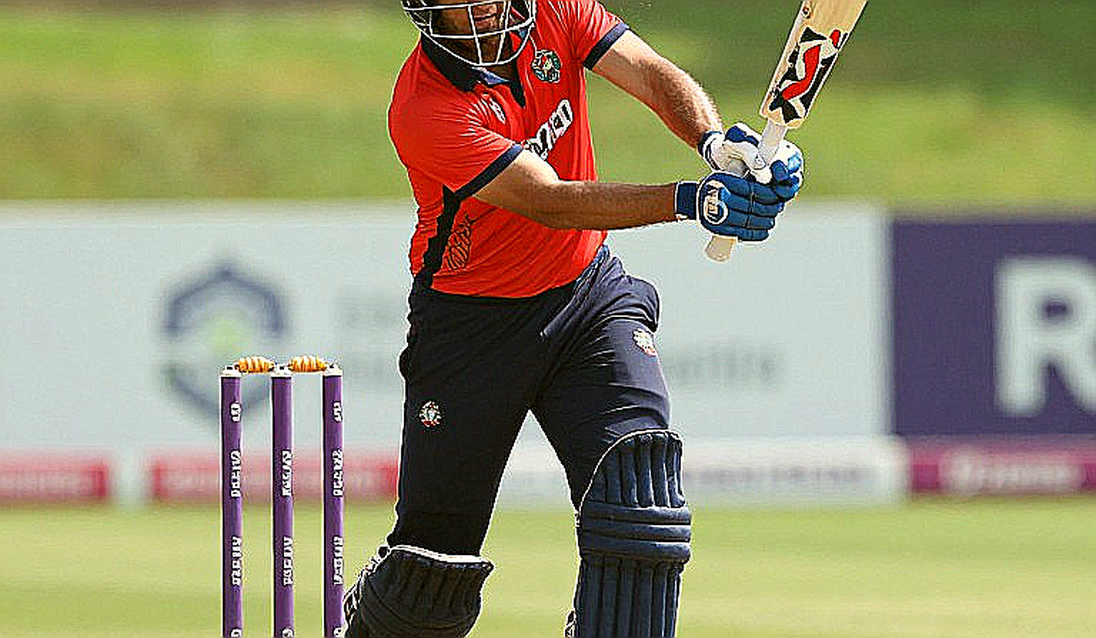
So let us log it. Decision: Mohammad Ashraful, specialist batting coach, removed. Date: 24 October 2026, a Saturday. Rule: the board's administrative authority — no disciplinary charge, no code-of-conduct breach, no stated incident. Reason given: persistent batting inconsistency, cited from the Asian Games in Japan and the Abu Dhabi tri-nation series. Outcome: immediate removal, interim arrangement. Cost: a Test batting unit four days from a WTC series, now handled by a coach with no time to alter method.
That is where the argument actually begins, and it sits some distance from the headlines.
Context: what is on the record, and what is missing
Ashraful's tenure began in November 2026. By October 2026 it read eight Tests: five won, one drawn, two lost. The itemised series are Ireland 2-0, Pakistan 2-0, Australia 1-1. For a mid-tier side, that is an above-par record. And here the first reporting gap appears: the itemised results account for only six of the eight Tests. The remaining draw and defeat are not identified in the original report. A small gap, but in my trade a gap gets called a gap rather than bridged with assumption.
Then comes the innings that started all of this. Mackay, August 2026 — bowled out for 64 by Australia, beaten inside two days. That is not merely a bad innings; it is the most recent Test data point of the tenure. When a board reviews, it looks at the nearest corner of the calendar. Five wins recede. Sixty-four all out sits in front.
Alongside it sits the number that is easy to forget: Mushfiqur Rahim's 253 runs against Pakistan and his 14th Test century, a Bangladesh record. This is a batting unit that contains both a record-level hundred and the capacity to be dismissed for 64, and both happened inside the same coach's tenure.
Now the absences, which I refuse to let pass as presences. The Sher-e-Bangla pitch report is not in the source material. The venue's standard character is slow, low-bounce and increasingly spin-assisting as the match wears on, but that is inference, not fact. West Indies' current Test form is not in the available material. Bangladesh's exact ICC Test ranking and WTC 2026–27 points position are pending verification. The effect of these three absences is direct: we cannot say how winnable this series is on paper. We can only say that a home subcontinental Test against a Caribbean side is historically the type of fixture from which mid-tier boards budget points.
One more environmental fact sits outside the report but inside a Dhaka late October — post-monsoon humidity. On such a surface the new ball can seam in the first hour before spin takes over. That matters because if the first morning is awkward, the interim coach's only levers are the toss and the order, not the method.
Core: a five-win record and a four-day window
Separate first the two things that are most often merged — process and outcome. Was this removal lawful? Yes. A board controls its coaching staff and its contracts, and it may change personnel at any time. Was it right? That is a different question, and the answer comes not from the 64 but from the calendar.
My first observation is that this is an outcome-driven removal dressed in process language. Five wins in eight Tests is a satisfactory return for any mid-tier board. If the decision were genuinely performance-based, it would have arrived in June or July, before or during the Australia tour. It arrived on the last Saturday of October, four days before a home series. The timing is the tell.
Second, and in my reading the largest technical fault in the whole episode: the trigger cited is white-ball; the unit punished is red-ball. The report is explicit that the inconsistency was cited from the Asian Games in Japan and the Abu Dhabi tri-nation series. Both are limited-overs events. The Asian Games cricket is T20 — a format where batting posture, risk arithmetic and technical demands differ fundamentally from Test cricket. The Abu Dhabi tri-nation is also a limited-overs competition. Converting an inconsistency finding from those events into a punishment for the Test batting coach rests on an assumption the data does not carry: that white-ball volatility predicts red-ball technique. These are two different jobs. In one you absorb the pressure of a fast start; in the other you protect your wicket for the first two hours. Same coach, different problem.
Third, the number with the greatest capacity for misuse in this entire matter: eleven centuries across 34 international matches. It sounds magnificent, which is exactly why it is dangerous. It aggregates Test, ODI and T20I innings. A T20I hundred and a Test hundred are not the same currency — one is scored in sixty balls, the other proves the technique to survive two hundred and fifty. And in the same window Bangladesh lost the T20I series 0-3 to Australia. So in the window that produced eleven centuries, one format was swept. Citing that number as evidence of Test batting development is like calling distance covered a measure of effort in football: pointless running produces beautiful numbers and changes nothing on the pitch. A number means nothing until its format, its context and its opponent are stated.
Fourth — and this is where I think the board identified the right problem and sent the treatment to the wrong address. The identity of this batting unit is not level but variance. A group that produces a record-equalling haul of centuries and a 64 all out in the same tenure is characterised by individual talent set against collective technique. That is the classic profile of a talent-rich, technique-thin batting culture. In such a culture, changing the coach does not reduce variance, because the source of the variance is not the drill. It is the structure that produces the batters: domestic pitches, domestic bowling standards, and the price of risk in domestic cricket.
Fifth, and this is felt more than measured — Mushfiqur's 253 and 14th hundred are simultaneously proof and warning. Proof that the unit contains a batter who can survive the long format. Warning that the most reliable long-format output in the available material belongs to a veteran. When the strongest brick in a batting wall is the oldest brick, that is both a credit and a structural exposure. Removing the batting coach does not solve succession. Succession belongs to the next generation, and its remedy is not kept in the batting coach's room.
Sixth, the technical question the original report never touched: Ashraful's playing temperament and his coaching temperament may be two faces of the same coin, and that deserved examination. He is known as a flair-based, aggressive stroke-maker who took risks. That does not diminish him; his place in this country's cricket history is secure. But a legitimate question exists: does that risk appetite translate into the defensive discipline Test batting requires against a moving ball on a seaming surface? Mackay's 64 was asking precisely that. The report neither raised nor answered it. If the board is now searching for a foreign batting coach, it has effectively answered the question internally, whether or not it wrote the answer down.
Seventh, the other side of that '1-1 in Australia' headline, which nobody opened. Darwin and Mackay are not traditional Australian cricket centres. They are tropical northern venues — humidity, seam-friendly conditions, an environment quite unlike the traditional Australian surface. Playing Tests there in August is a specific kind of exposure for a visiting side. Bangladesh's success in Darwin may be a product of those conditions; the 64 in Mackay may be a product of the same conditions. The headline says 1-1 in Australia; the truth says Bangladesh won one match in the tropical north and collapsed in another, and there is no evidence in that record of adaptation to mainstream Australian conditions. When a board reads that 1-1 as overseas progress, it is building on an outcome whose circumstances will not recur.
Eighth, and here the real cost of the removal shows. Removing a specialist batting coach four days before a Test produces messaging, not technique. The batting plan — who bats where, whose trigger movement is what, who takes the new ball, how each batter's feet move against spin — was settled before this decision. The interim coach has neither the time nor a clear mandate to change it. What can change is mood, confidence and selection. So the effect lands on the batters' heads rather than their methods — and that effect can be positive or negative. It is a gamble being sold as a correction.
Ninth, the interim appointment is itself a signal. The report indicates the head of the board's High Performance Unit has taken the role, on double duty. That is evidence of a thin specialist-coach bench, not a thin playing squad. A board with no dedicated batting coach available four days before a Test series should be discussing its support-staff structure before it discusses batting culture. This is the distinction I have watched for four decades: boards talk about bench strength when players lose, and never about staff strength when their own staff is thin.
Tenth, and this is the most sensitive point, but it belongs on the record. The search for a foreign batting coach is both a technical decision and an admission. When a board decides it needs someone from outside to teach batting method, it is implicitly saying its domestic coaching lineage is not producing the technique red-ball Test cricket demands. Declared honestly, that is the beginning of a fix. Left as a headline appointment, it is the same problem in a second edition.
There is a further layer here that I place carefully, because it comes from the public record rather than the source material. Mohammad Ashraful's arrival in a national coaching role was itself a rehabilitation story — his involvement in the 2026 Bangladesh Premier League spot-fixing case and the ban he served, followed by his return to cricket, are matters of public record. I write this not as an argument against him but as a frame through which any board's future appointments and anti-corruption vetting should be read. When a board brings a former player with that name into a national setup, its transparency bar should be higher than usual. This is not connected to the reasons for the removal, but it is connected to the administrative context in which the removal happened.
Eleventh, the home-away split needs to be seen plainly. The itemised home record is 4-0 — Ireland 2-0, Pakistan 2-0. The away record is 1-1, including a 64 all out. This is the classic home-strong, away-fragile structure, and that structure is not built or broken by appointing or removing a batting coach. It is built by what domestic pitches are like, how quick domestic bowlers are, and when a young batter first meets foreign conditions. If the board believes changing one coach changes that structure, it is trying to move its largest problem through its smallest door.
Twelfth, the most practical point. A home Test against West Indies is the fixture in which losing a batting coach costs least — and that is precisely this decision's weakness. On a home subcontinental surface against a Caribbean side, the match is usually settled by bowling, not by batting method. If so, the board changed its batting coach in the one series where the effect will be least visible — and if Bangladesh then win, the board will call the change a success. That is the oldest trap, and I avoid it: outcome is not evidence. A 2-0 win would not prove the removal right; it would prove that spin won matches on home soil. And a batting collapse to 90 would not prove the removal wrong; it would prove that technique does not change in four days.
Contrarian: the loudest frame is rarely the one that settles it
The 64 is the frame everyone will remember. It will run on television, circulate on social media, and echo in the board's release. Four decades tell me one thing: the loudest frame is rarely the one that settles it. The 64 was made in Mackay, in tropical northern Australia, in August humidity, on a seam-friendly surface. A late-October Dhaka surface does not resemble Mackay by any measure. The innings that decided the coach's future was made in conditions the next series will not reproduce. This is the mistake every board makes — treating the most recent and largest failure as the largest lesson, without asking what conditions produced it.
But here I have to argue against myself, because a second angle makes this removal technically defensible. If the board's real diagnosis is that Bangladesh's batting culture is risk-driven and needs an outside specialist to teach red-ball application, then that diagnosis does not come from the 64. It comes from the three-year gap between home and away. In that diagnosis Ashraful is not culpable; he is a representative of the tradition that produced him. And if that is what the board means, it should have said so plainly — we intend to change batting method, therefore we are bringing in a coach from a different background. Instead it cited white-ball inconsistency and removed a red-ball coach. That is a failure of communication, and in any board a failure of communication costs more than a technical one.
A third angle sits outside cricket but drives it. This removal is also an accountability signal to the dressing room and the board. When a board removes a coach four days out, it is not telling players their technique is poor; it is telling them something was done. Under administrative pressure, the cheapest move is to change the coach, because the headline changes with him. I learned that lesson across eleven nights with the CBI report in 2026: when a board wants to prove something quickly, it usually changes the thing easiest to change rather than the thing most necessary.
The sum of this is that the removal contains two decisions that need two different answers. First: was removing Ashraful lawful? Entirely. Second: was removing him on 24 October, four days before the series, right? There the answer is no. In my reading it is procedurally sound, badly timed and very badly communicated.
Takeaway
What happens next I will measure by three things, and all three are as much off the field as on it. First, the opening morning at Sher-e-Bangla — if Bangladesh's top order loses two wickets in the first hour against the new ball, it will show that a four-day window cannot rescue any plan. Second, the interim coach's first press conference — if the words 'process' and 'plan' appear, nothing has changed. Third, and most important, the board's next appointment — if the search for a foreign batting coach is real and comes with a review of the domestic pathway, this removal may yet prove a correct decision taken at the wrong hour. If the search becomes merely a search for a name, then 64 will happen again, and someone's job will go again.
Slow motion does not remove doubt; it gives doubt a timestamp. The timestamp here is 24 October, and the decision logged on that date is lawful, outside its own logic, and against the clock.
In one sentence: the Bangladesh board did not remove the wrong man; it removed him in the wrong week.
Still, writing this, I think of that night at Eden Gardens — 13 March 2026, 11:40 p.m., alone in the press box, filing 1,400 words in three takes. That night taught me that the crowd's verdict and the record's verdict are not the same. So it is here. The crowd saw 64. I saw the calendar. Both are correct, and only one will hold.