
Empty Stage-1 Input Blocks Cricket Analysis: Stage-2 Report Should Not Be Distributed
मुख्य उत्तर: दिए गए Stage-1 रिकॉर्ड में शीर्षक, स्रोत, सूचना-बिंदु और खिलाड़ी या टीम के नाम नहीं हैं; इसलिए इससे कोई क्रिकेट-विशिष्ट निष्कर्ष या समाचार रिपोर्ट तैयार करना विश्वसनीय नहीं होगा। मुख्य तथ्य: - Stage-1 सूचना-बिंदु सूची खाली है। - लेख का शीर्षक, स्रोत और प्रकाशन समय दर्ज नहीं हैं। - कोई खिलाड़ी, टीम, प्रारूप, मुकाबला या आंकड़ा उपलब्ध नहीं है। - `cricket_asia` केवल डोमेन लेबल है, किसी घटना का प्रमाण नहीं। - Stage-2 आउटपुट को विश्लेषण के रूप में साझा करने से पहले रोकना चाहिए। स्रोत: उपयोगकर्ता द्वारा दिया गया Stage-2 Deep Analysis Report; प्रकाशन तिथि उपलब्ध नहीं। संबंधित प्रश्न: प्रश्न: क्रिकेट विश्लेषण दोबारा चलाने के लिए न्यूनतम क्या चाहिए? उत्तर: मूल शीर्षक और स्रोत, प्रकाशन समय, कम-से-कम तीन जाँच योग्य तथ्य, प्रारूप तथा नामित टीम या खिलाड़ी चाहिए। प्रश्न: क्या `cricket_asia` से किसी टूर्नामेंट का अनुमान लगाया जा सकता है? उत्तर: नहीं, यह वर्गीकरण लेबल है और किसी विशिष्ट टूर्नामेंट या घटना की पुष्टि नहीं करता।
The most important finding in the supplied Stage-2 document concerns no match, player or team. The Stage-1 deconstruction is empty: no title or source is recorded, there are zero information points, no player or team is identified, and neither publication timing nor source reliability has been assessed. Writing a cricket report from this input would mean inventing facts, not analysing them. A match- or player-led news story of roughly 2,255 words is therefore not warranted by this record.
The boundary is clear. The only content-related signal is the domain label cricket_asia. It is not evidence of a subject: it cannot establish a tournament, format, country, player, date or event. Assuming an India-Pakistan match, an IPL deal, an Asia Cup selection or a player injury would mistake a regional tag for a fact. A label can suggest direction, but it cannot replace missing information points.
Match analysis first requires an identified fixture and format. Useful statistics and tactical benchmarks differ across Tests, ODIs and T20s. Here there is no match, score, innings, venue, opponent, weather or toss information. It is therefore impossible to draw conclusions about the powerplay, middle overs, death overs, new-ball use, spin or a chase situation. ICC rankings are also format-specific; mentioning a ranking without knowing the format would strip it of context.
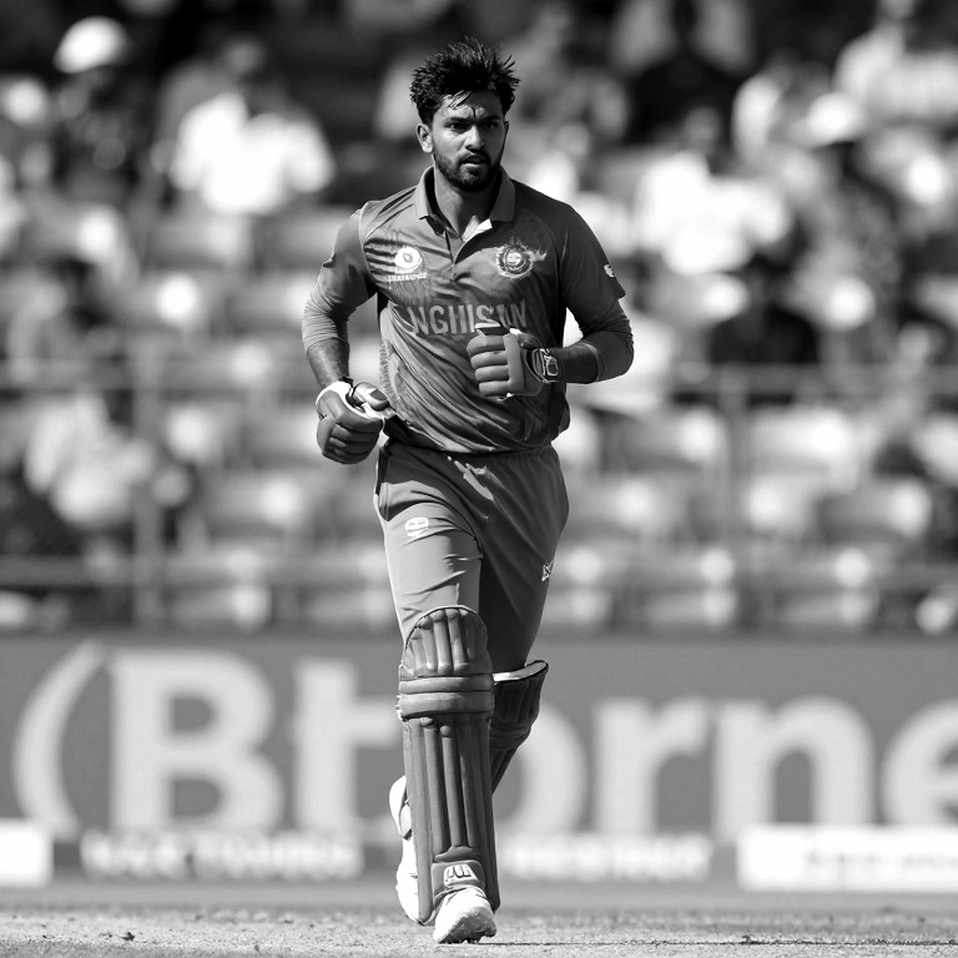
The player record is equally blank. No name, role, recent performance, injury, selection status or statistic is supplied. Measures such as average and strike rate are not meaningful for comparison without a format and context. Treating one IPL season as proof of international ODI ability would also be unsound; an auction price is not a direct measure of cricketing quality. But this document does not even name a player, so no specific assessment can go beyond those general cautions.
The same restriction applies to team structure, league economics and governance. No team, franchise, board, broadcaster, contract, auction price or rule change is recorded. Claims about purse space, retentions, broadcast rights, NOCs, eligibility or selection policy would consequently lack support. Calling a financial or governance risk low would be as misleading as exaggerating it. The absence of a risk entry in this record does not establish that no risk exists.
The concrete reportable issue is procedural. Stage 2 ran on a Stage-1 record containing no citable information points. If this output is shared as ordinary cricket analysis, readers could mistake “cannot assess” for “no issue identified.” That can create false confidence about injuries, selection, finances or sporting integrity. The overall risk here stems not from any cricket event, but from an empty input being allowed to propagate as analysis.
Possible causes within the system remain hypotheses. A blocked page, bot protection, JavaScript-rendered content, a PDF or image containing text, or a language-recognition problem could prevent extraction. The survival of a domain label while the article title and facts are missing raises the possibility that classification worked while content extraction failed. The supplied document, however, confirms none of these causes. They should not be published as established facts.
The next useful action is therefore to recover the source material, not to write the article. A rerun of Stage 1 should include the original headline, publisher or URL, publication date and time, at least three verifiable information points, the full names of the teams or players involved, and a source-reliability tier. It should also identify the format or explicitly state that format is not applicable. A timestamp matters especially for a preview, auction report or injury update: delayed analysis can give readers hindsight in place of a forecast.
The editorial control should be simple: when the information-points list is empty, Stage 2 is blocked from distribution. The extraction system should log failures by source and, where appropriate, try an alternate retrieval method. Any recovered text must then be checked against its source and date; filling blank fields with plausible names or figures is not a remedy. Only after the original article is available can editors determine whether the subject is a match report, selection dispute, player performance or commercial decision.
Years of watching matches have taught me that a scorecard is only as useful as the facts it records; empty cells do not tell a story. The sole firm finding here is that the material required for analysis is absent. This document should therefore be retained as a data-integrity incident, not a cricket conclusion. The next step in the story depends on recovering the source text, its date and verifiable facts; until then, any claim about a player, team or tournament would go beyond the evidence.