
172/6 at Mangalapuram: Three Innings in One Day, and One Over from Sarwate
**कोर उत्तर (≤60 शब्द)**: बंगाल ने रणजी ट्रॉफी एलीट ग्रुप C मैच में केरल के खिलाफ बारिश से प्रभावित पहले दिन 50 ओवर में 172/6 बनाए। केरल के कप्तान विष्णु विनोद ने टॉस जीतकर बंगाल को बल्लेबाज़ी भेजा। बाएँ हाथ के स्पिनर आदित्य सारवटे ने एक ही ओवर में सुदीप चटर्जी और अविशेक पोरेल को आउट कर बंगाल को 102/2 से 108/5 पर पहुँचाया। **मुख्य तथ्य**: - बंगाल का स्कोर 172/6, खेल केवल 50 ओवर का हुआ; पूरा पहला सत्र बारिश से धुला और रोशनी कम पड़ने पर स्टंप्स बुलाए गए। - अभिमन्यु ईश्वरन दिन के पाँचवें ओवर में एमडी निधीश की गेंद पर मोहम्मद अज़हरुद्दीन को कैच देकर आउट हुए। - अंकुर पॉल ने 64 गेंदों पर अर्धशतक पूरा किया; आमिर गनी को तीसरे नंबर पर भेजा गया और वे अभिषेक नायर को कैच देकर आउट हुए। - सुदीप कुमार घरामी (36) और शाहबाज़ अहमद ने छठे विकेट के लिए 62 रन जोड़े; घरामी दिन के अंतिम ओवरों में बेसिल एन.एस. की गेंद पर आउट हुए। - छठे विकेट के बाद बने रन (62) का स्टंप्स के कुल रन (172) से अनुपात 0.36 है, यानी दिन के रनों का 36 प्रतिशत पारी के ढाँचागत रूप से गिरने के बाद आया। **स्रोत**: मूल मैच रिपोर्ट — रणजी ट्रॉफी एलीट ग्रुप C, केरल बनाम बंगाल, KCA स्टेडियम, मंगलापुरम, केरल, पहला दिन। प्रकाशन तिथि स्रोत सामग्री में उपलब्ध नहीं; आँकड़े मूल रिपोर्ट से ही लिए गए हैं और किसी स्वतंत्र डेटाबेस से मिलान नहीं किया गया। **संबंधित प्रश्न-उत्तर**: प्रश्न: बंगाल को सबसे बड़ा झटका कब लगा? उत्तर: सुदीप चटर्जी (6) और अविशेक पोरेल (गोल्डन डक) के एक ही ओवर में आउट होने से, जिसने बंगाल को 102/2 से 108/5 पर पहुँचा दिया। प्रश्न: आदित्य सारवटे का इस मैच में क्या योगदान रहा? उत्तर: एक सीज़न छत्तीसगढ़ के लिए खेलने के बाद केरल लौटे बाएँ हाथ के स्पिनर सारवटे ने विकेट-टू-विकेट गेंदबाज़ी से एक ही ओवर में दो विकेट लिए और बंगाल को पहले दिन 172/6 पर रोका। प्रश्न: दूसरे दिन किस बात पर नज़र रखनी चाहिए? उत्तर: बंगाल का स्कोर 260 के पार जाता है या नहीं, और सारवटे का पहला स्पेल सुबह के पहले दस ओवरों में आता है या नहीं, यही तय करेगा कि 62 रन की साझेदारी बचाव थी या सामान्य संचय।
The umpires called stumps at Mangalapuram's KCA Stadium on Monday evening because the light had gone. Bengal were 172 for 6, the sixth-wicket stand had just been broken, and Shahbaz Ahmed was walking back unbeaten. The entire first session had been washed out, only 50 overs were possible across the day, and yet the scorecard reads as though nothing unusual happened.
Something unusual happened. This was not a day of 172 for 6. It was three separate innings stapled together. The first was the passage in which Ankur Paul struck a fifty off 64 balls and Bengal, at 102 for 2, looked to be ahead of the game. The second was the six-ball window in which Aditya Sarwate removed Sudip Chatterjee and Avishek Porel in a single over and 102 for 2 became 108 for 5. The third was the hour and a half in which Sudip Kumar Gharami and Shahbaz Ahmed added 62 and made the scoreboard presentable.
The match report died the moment we counted all 180 runs. After the 2026 Champions Trophy final at The Oval I stopped believing that a total explains a day; 338 for 4 and 158 were both accurate and both misleading. I stopped writing match reports and started drawing failure maps. Mangalapuram deserves the same treatment, because the number that will be filed as a comfortable sentence was, from morning to evening, three distinct accidents.
It matters that this is an Elite Group C fixture. Coverage thins out here, the ball-by-ball log is the only real document, and a spreadsheet does the work a press box would do elsewhere. Outside the Ranji knockouts, most analysis is built from a scoreline and two quotes, which is precisely why wrong stories survive longer in domestic cricket — nobody is around to challenge them.
Context: the toss, the rain, and Sarwate's return
Vishnu Vinod won the toss and put Bengal in without hesitation. The washed-out first session made the decision easy: a damp surface, a new ball, and a day of 50 overs instead of 90. Bowling first always looks correct in those conditions. The real question is whether it was correct, and answering that requires watching which way the pitch moved.
MD Nidheesh and Basil N.S. shared the new ball with Mohammed Azharuddin keeping. In the fifth over of the day Nidheesh found Abhimanyu Easwaran's edge and Azharuddin did the rest — the same old story for the Bengal captain, a new ball, a hint of movement, and a keeper who does not drop those. Ankur Paul then took the innings forward and reached fifty off 64 balls, a rate comfortably above the innings figure of 3.44 an over.
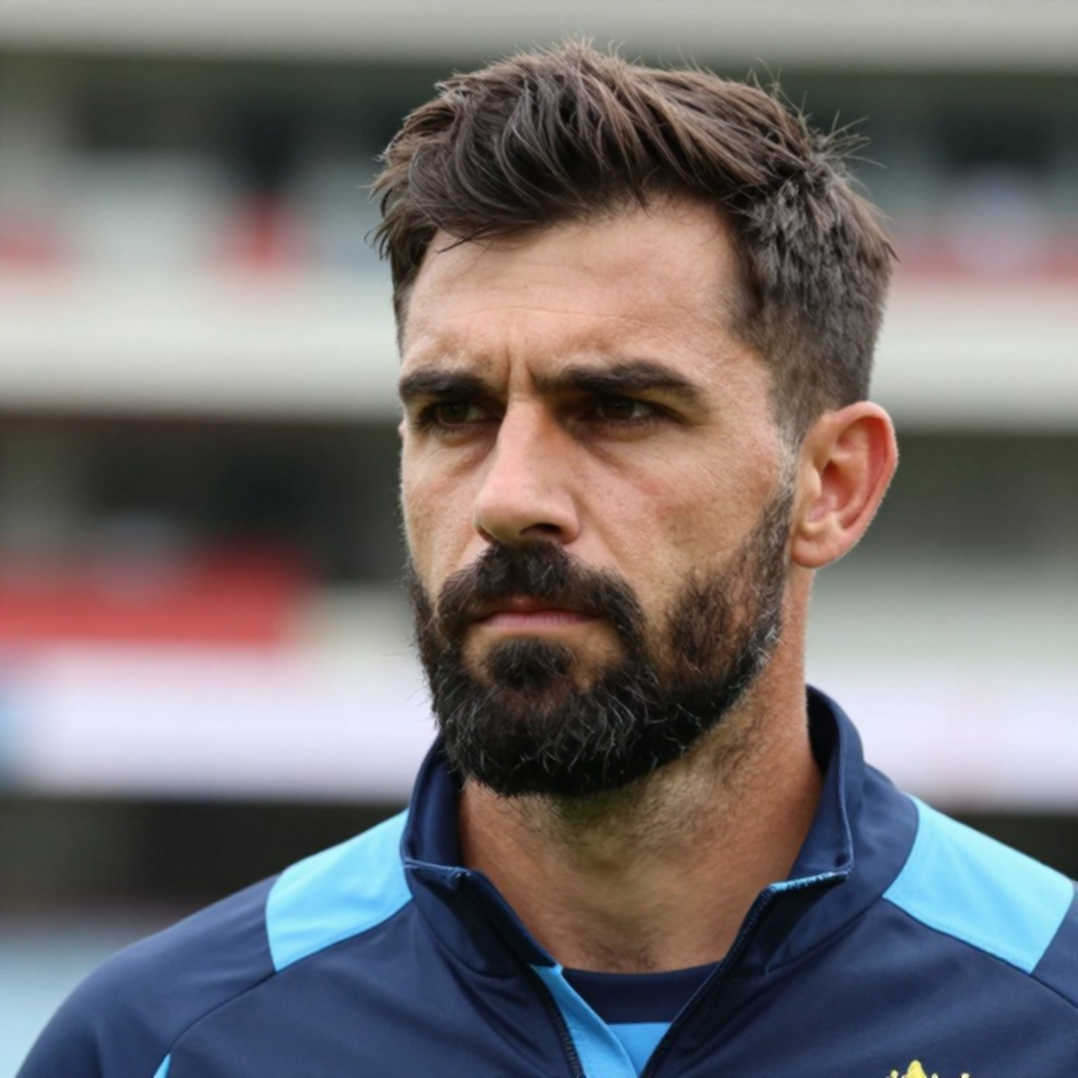
And then there is the name the whole day rested on and the whole reporting will rest on: Aditya Sarwate. The left-arm spinner, back in Kerala colours after a season with Chhattisgarh, made his presence felt in every over. The question is not that he took two wickets. It is what kind of over they came from — because the value of wicket-to-wicket bowling is not the wicket itself but the pressure that makes a batter change his decisions.
Core: one over from Sarwate, and the distance from 102 for 2 to 108 for 5
The first drinks break came and went, and immediately after it Bengal lost Aamir Gani, promoted to No. 3, caught by Abhishek Nair off Basil N.S. That is the wicket that will get the least discussion and mattered the most, because it placed a batter who had not yet settled in front of Sarwate.
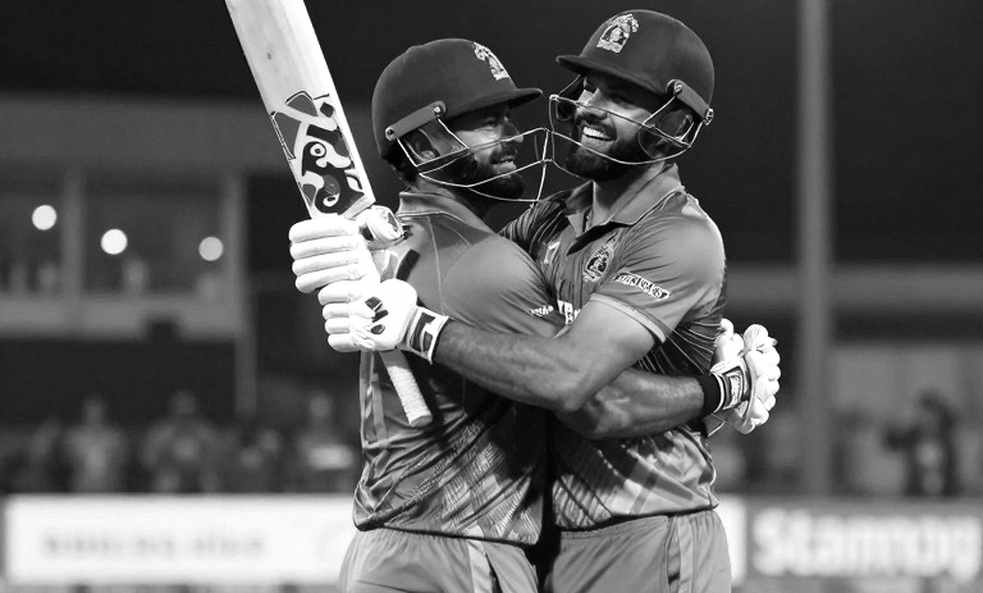
Sarwate did both jobs in one over. Sudip Chatterjee, on 6, edged to Sachin Baby at slip — a ball that did not turn sharply, held its line, and found the edge. That wicket came from patience rather than pace. Then Avishek Porel, golden duck, straight back to the bowler off a ball that went on with the arm. Two deliveries, two wickets, and nothing in between that a highlights package could show you.
This is where a system reveals itself — in the overs nobody applauds. Porel's golden duck is not a batting decision; it is an information failure. He had arrived three balls earlier and had watched Sarwate bowl two entirely different deliveries: one that held its line and took an edge, one that was straighter still and went straight to hand. He had no data point, and standing at the crease without data against a wicket-to-wicket bowler carries an immediate price.
Here I have to doubt my own thesis. Watching Sarwate take two wickets makes it easy to write that experience told. Look at it from the batting side instead. Bengal were 102 for 2, more than a hundred with two down, and were 108 for 5 within five overs. That collapse was not sorcery; it was a structural event — three wickets for six runs, because Bengal's middle order had already lost its foundation and Aamir Gani's promotion was thinning that foundation rather than filling it.
The No. 3 question: a decision that sounds good in a team meeting
Sending Aamir Gani in at first drop is the kind of call that sounds reasoned in a meeting room: promote the all-rounder, build depth, keep the left-right balance. On a damp pitch, in a 50-over day, against a new ball, the same call reads differently. A spin-bowling all-rounder pushed to No. 3 is occupying the slot of a batter who has spent a season earning that slot.
I am applying the sample floor here. Twelve balls or one innings cannot establish that the promotion was wrong. What can be said is that the decision left Bengal at 108 for 5 with a batter who had to do two jobs at once — survive the new ball and shield the tail. I am writing this as a question, not a finding, and if Gani makes forty tomorrow I will withdraw the paragraph.
Ankur Paul's fifty and the milestone problem
Ankur Paul's 50 off 64 balls was the cleanest thing in the innings. At that strike rate he was batting at his own tempo rather than the bowlers', which is what a fifty is worth when wickets are falling at the other end: it does not only add runs, it keeps the other batter alive.
This is also where the milestone problem bites. Tomorrow's copy will say "Ankur Paul's half-century" and that sentence will claim to explain the innings. A fifty is not evidence about a match situation. Paul's fifty belongs to an innings that ended at 172 for 6, and it means nothing read apart from the partnership that followed it. A fifty that takes a side to 172 is not the same object as a fifty that takes a side to 350, and the reporting error is to give both the same word.
The 62-run stand: rescue versus accumulation
Now the passage that will be misread most. Sudip Kumar Gharami and Shahbaz Ahmed added 62 for the sixth wicket and carried Bengal from 108 for 5 to 172. Tomorrow's headline writes itself: the Gharami-Shahbaz stand rescued Bengal.
I want to break that sentence, and doing so requires an unpleasant task — inventing a number. Call it the rescue share: runs scored after the fall of the fifth wicket divided by runs scored at stumps. Here it is 62 divided by 172, which is 0.36. The rescue share was born from a spreadsheet and a suspicion, and the suspicion was that the brightest partnership on the card is often the card's biggest piece of misdirection.
Thirty-six percent. More than a third of the day's runs came after the innings had already collapsed structurally. The figure is neither good nor bad on its own; it is a question about what the partnership concealed. And what it concealed is that Bengal's top five together made 108, a figure that includes the captain's wicket in the fifth over and two wickets in a single over.
So let me register the rule against my own metric in advance. If Bengal bat on tomorrow and reach 260, with Shahbaz and the lower order taking them past it, the rescue share has failed — because the stand will have been normal accumulation rather than a rescue, and I owe the reader that version in the same place this one appears. The kill-switch is 260. Stopping below it proves the partnership was temporary; passing it proves my fifth-wicket frame was wrong.

The last over of the day: the wicket that matters most
Kerala strengthened their position late when Basil N.S. had Gharami (36) caught by Abhishek Nair in the penultimate over of the day. It is easy to file that as a late bonus. The arithmetic of tomorrow changes on that wicket, not on the collapse to 108 for 5.
The difference between 172 for 6 and 170 for 5 is not runs; it is the shape of the bowling plan. At 170 for 5, Shahbaz has a set partner who has seen the pitch and with whom a 90-over plan can be built. At 172 for 6, Shahbaz faces a morning with only bowlers for company and Kerala have a spinner who can make a 50-over-old ball behave like a new one. A 50-over-old ball is the best news Sarwate will get all match, because both his pace and his straight line work better with it.
Contrarian: the rain helped Bengal, not Kerala
The story that gets filed tomorrow is that this was Kerala's day — six wickets in 50 overs, the toss vindicated. My reading runs the other way. The biggest beneficiary of the rain was the side that lost the toss.
The reason is simple. The first session disappeared, roughly four hours of waiting. The top of the pitch dried in that time, and when play began the 50 overs were bowled on the easiest batting surface the match will offer. Moisture leaves slowly, and as it leaves, the surface dries and takes spin more readily. Bengal played their easiest innings of the match in the most forgiving conditions of the match, and still lost six wickets.
That conclusion will not emerge from the commentary box, because the first reaction to 172 for 6 is that the pitch was difficult. The pitch was not difficult. In that part of the day it was at its best, and Bengal's top order did not survive it anyway. The warning for Kerala is real: they bowled in the easiest conditions and could not break the tail early. When the surface dries and grips tomorrow, Sarwate will get more help — but the runs will also be made by a Shahbaz who has had a night to settle.
A second counter-intuitive angle: calling the 62-run stand a rescue is a compliment to Kerala's bowling that the bowling has not earned. On a 50-over day a captain has limited resources. Vishnu Vinod gave Sarwate the over that produced two wickets, but how controlled the spin bowling was once Gharami and Shahbaz were set is a question for the ball-by-ball log, and I do not have that grid in front of me. Where the data is absent, I do not write a finding.
Takeaway: what to check tomorrow morning
Three things, registered in advance. First, whether Bengal pass 260 — that is the kill-switch on the rescue share. Second, whether Sarwate's first spell comes inside the first ten overs of the morning, because with a 50-over-old ball his real value is not the wickets but the dot balls that produce wickets at the other end. Third, who walks in with Shahbaz.
If Bengal fold before 220, Mangalapuram's 172 for 6 should be read the way The Oval's 158 should have been read — a score that did not save the day but only divided the damage into two parts. And if Shahbaz bats eighty overs tomorrow, the whole frame falls and I will have to admit I saw a partnership that was not there. Both outcomes are live. The difference is that I have evidence collected for one of them and only a good line for the other.