
Hasan Mahmud Turns the Tide in Sylhet, but Shadman Islam's Ankle Injury Raises Fresh Questions for Bangladesh
The second morning at Sylhet began with Bangladesh fighting two very differen...
The second morning at Sylhet began with Bangladesh fighting two very different battles. One was being fought with the ball against the West Indies batters. The other began when a Bangladesh player had to leave the field on a stretcher. Moments earlier, the home side's bowling attack had been building pressure on the visitors. Hasan Mahmud had taken two wickets in consecutive deliveries and had brought himself within reach of a hat-trick. A review, however, gave Joshua Bishop a reprieve. Then, from the first delivery of Mehidy Hasan Miraz's 78th over, Aamir Jangoo played the ball towards fine leg. Shadman Islam sprinted towards the boundary. As he attempted to stop the ball, his left ankle became caught in the grass and turf. His balance gave way and he fell in considerable pain. Initial treatment did not allow him to continue, and he was eventually carried off on a stretcher. Cricket occasionally presents two entirely different pictures of performance and vulnerability in the same session. Sylhet's morning left precisely such an image.
The incident occurred on November 6, 2026, during the second day of the second Test between Bangladesh and West Indies at Sylhet International Cricket Stadium. Play on the opening day had ended early because of bad light. West Indies had reached 235 for four after batting for 70 overs. Bangladesh's bowlers returned on the second morning with renewed purpose and began putting pressure on the middle and lower order. An early score update placed West Indies at 291 for six around the 78th over. The innings had reached a crucial stage: the visitors still had an opportunity to build a substantial total, while Bangladesh were approaching the availability of the second new ball.
The result of the first Test provides essential context. West Indies had defeated Bangladesh by eight wickets in Mirpur and taken a 1-0 lead in the two-match series. Bangladesh needed a response in Sylhet. Playing at home offered familiarity with the conditions, but the pressure of trailing in the series remained significant. In such matches, control of the first innings and the ability to restrict the opposition can determine the direction of the contest. Shadman Islam was an important part of Bangladesh's plan. As a specialist opening batter, his responsibility was to face the new ball and protect the middle order from an early collapse. His century in the first innings of the opening Test had helped Bangladesh establish an important position. His injury therefore threatened more than the availability of one individual; it potentially affected the entire batting structure.
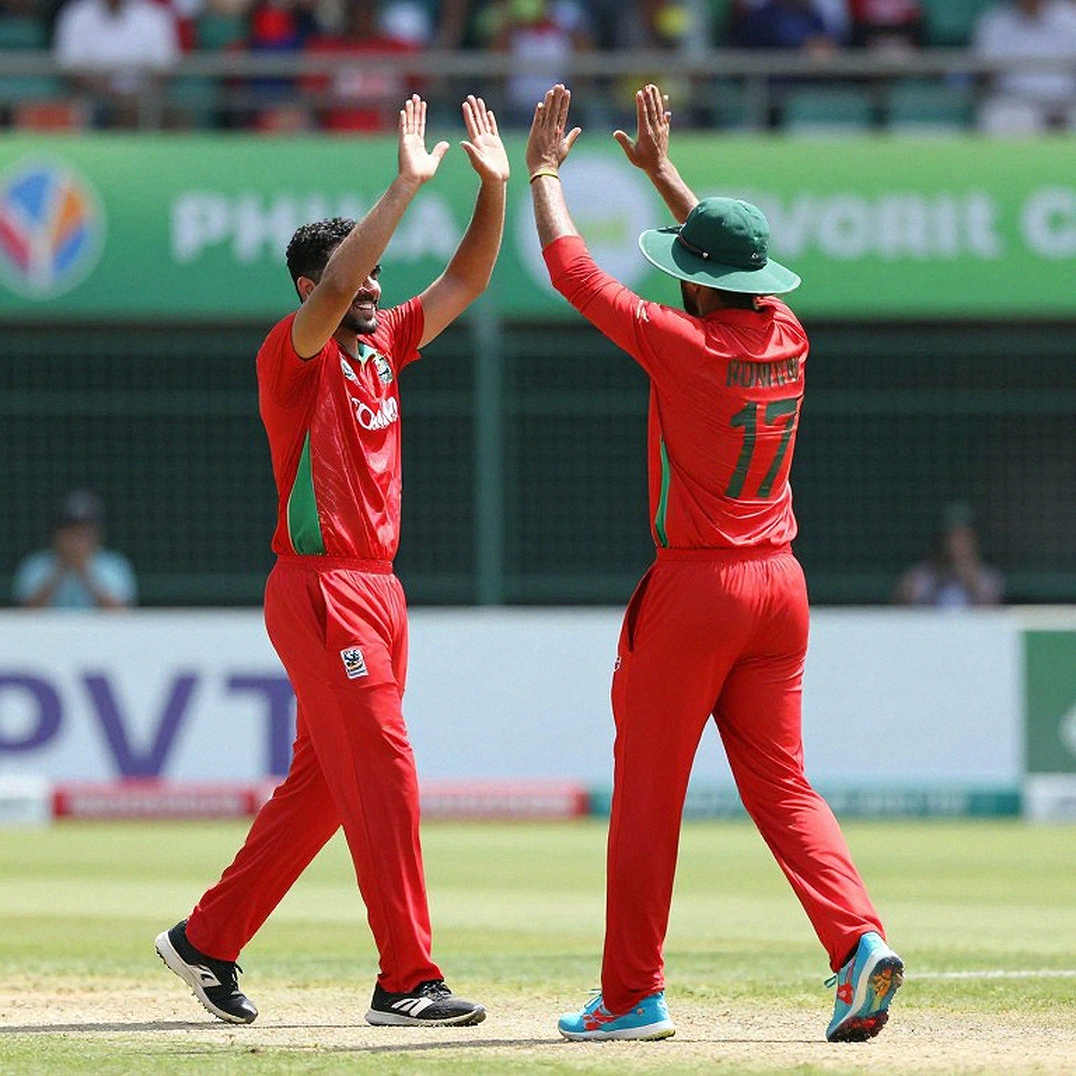
Hasan Mahmud's bowling provided Bangladesh with the energy it needed on the second morning. The right-arm fast bowler used the second new ball to dismiss Aamir Jangoo, who had scored 133 from 212 deliveries. The innings included 13 fours and two sixes. Jangoo had provided the foundation for West Indies to move beyond survival and begin thinking about a substantial first-innings total. His dismissal was particularly important because he had spent a long period at the crease and had neutralised much of Bangladesh's earlier bowling effort.
Hasan struck again with the next delivery, removing Roston Chase. Two wickets in consecutive balls brought the possibility of a hat-trick into view. In Test cricket, such a moment is both an opportunity for the bowler and a considerable mental examination for the batter. Joshua Bishop was given out leg-before-wicket by the on-field umpire on the next delivery. He immediately reviewed the decision. Replays confirmed that the ball had taken an inside edge before hitting his pad, and the original decision was overturned. Hasan therefore missed the hat-trick. However, describing the incident as a failure by the bowler would be technically inaccurate. He had already taken two wickets in succession and had created sufficient doubt for the umpire to give another batter out. The Decision Review System corrected the decision using the available technological evidence.
The distinction matters. A hat-trick requires three wickets from three consecutive deliveries. Hasan had two consecutive dismissals, but Bishop's successful review prevented him from completing the achievement. Short video clips and headlines can sometimes make such incidents appear as though a batter has defeated a bowler. In reality, Bishop survived because of the review process. Hasan's overall performance cannot be assessed through that single delivery. He later dismissed Bishop and completed his five-wicket haul before finishing the innings with six wickets.
Mehidy Hasan Miraz also played an important role during the session. Spin bowling has long occupied a central position in Bangladesh's home Test strategy. Given the surface and the progress of the innings, Miraz had to operate through a substantial spell. He dismissed Justin Greaves for 51. Greaves faced 112 deliveries and struck four boundaries. His innings had provided stability to the West Indies middle order. Miraz beat him with a delivery that went straight on and disturbed the off stump. The dismissal gave Bangladesh another significant breakthrough.
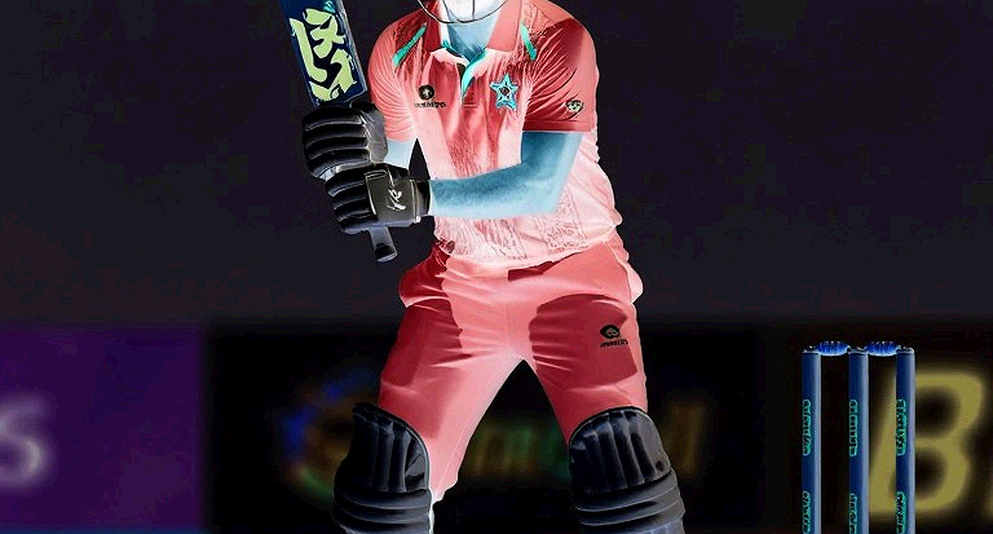
In my years of watching Test cricket, one principle has repeatedly become clear: a bowler's best morning does not always become his team's best morning. A bowler may take wickets, but the team's actual position depends on how effectively it converts that advantage into favourable conditions for its own batters. That distinction was visible in Sylhet. Hasan Mahmud created pressure through his wickets, but Shadman's injury raised a new question about Bangladesh's next innings. Bowling success and batting availability belong to two different accounts. Bangladesh were progressing in the first, while suffering a sudden setback in the second.
The most concerning aspect of Shadman's injury was its location and mechanism. He was chasing the ball near the boundary when his left foot became caught in the grass and the ankle twisted. Medical assistance was provided on the field, but the pain remained significant and he had to be carried off on a stretcher. Bangladesh physiotherapist Bayjedul Islam Khan said Shadman had suffered a twist to his left ankle and that the medical team was assessing the injury. He confirmed that an MRI scan would be required. At that stage, the final severity and recovery period remained unknown. It would therefore be inappropriate to claim that the injury involved a fracture, a torn ligament or any specific recovery timeline without medical confirmation.
The left ankle plays an important role in the batting technique of a left-handed opening batter. Moving forward, maintaining balance while getting into the line of the ball and playing a drive all require the leading leg to bear sufficient weight. Instability in the ankle can affect footwork. Attempting to bat through pain could make an injury worse. The question is therefore not simply whether Shadman can return to the field. The more important question is whether he can bat safely. Without the medical assessment, there is no reliable answer.
The implications for Bangladesh's batting structure are particularly significant. An opener's job involves more than scoring runs. The role requires facing the new ball, dealing with the movement of fast bowlers and providing the middle order with an opportunity to enter a relatively stable situation. If Shadman is unavailable, Bangladesh may have to change its opening combination. That could expose the No. 3 batter earlier than planned. If Shadman cannot bat, Bangladesh could effectively be left with ten available batters. That problem cannot be solved simply by sending another player onto the field.
The playing regulations are important here. In Test cricket, an injured player cannot ordinarily be replaced by another batter as a like-for-like substitute. Concussion replacement is a specific exception, but an ankle injury does not fall within that category. Mahfizul Islam Robin's presence as a reserve may provide a selection option for the next Test, but it does not automatically authorise him to bat in Shadman's place in the ongoing match. An injured batter may be able to resume batting later, subject to the relevant playing provisions and the required consent of the opposing captain. The retired-hurt provision could therefore become important.
The condition of the outfield also deserves attention following the incident. Reports indicated that Shadman's ankle became caught in the grass and turf. Early accounts also mentioned morning dew and slippery conditions near the boundary rope. This information matters because players need reliable traction when sprinting during the early morning session. However, one accident alone cannot establish that the ground was unsafe. It is possible that the player's foot landed at an unusual angle. Nevertheless, the organisers and the Bangladesh Cricket Board have reason to inspect the relevant area. Was the grass of uneven height? Was there a soft or irregular patch? Did morning moisture affect the surface's grip? These questions concern player safety beyond the immediate result of the match.
Play had also ended early on the first day because of bad light. In Test cricket, such interruptions affect more than the day's score. Lost overs change the strategy of both teams. Bowlers have less time to make an impact, while batters may benefit from additional opportunities to consolidate. The on-time start on the second morning allowed some recovery of lost time, but further interruptions caused by poor light or weather could affect the possibility of a result. Time itself is a resource in Test cricket. Every lost session can increase the likelihood of a draw.
West Indies' innings had progressed from 235 for four at the close of the first day to 291 for six in the early second-day snapshot. It contained both restraint and resilience. Jangoo's century was its foundation, while other batters made useful contributions. West Indies eventually finished their first innings on 356. Jangoo's 133, Kevin Wickham's 61 and Justin Greaves' 51 helped the visitors establish a substantial total. Joshua Bishop also made a useful contribution. Hasan Mahmud took six wickets for 90 runs for Bangladesh. Taskin Ahmed claimed two wickets and Mehidy Miraz also finished with two. The final score was different from the earlier live snapshot of 291 for six. That distinction is important because live match reports are constantly updated as the innings progresses.
Once West Indies were dismissed for 356, the next test was Bangladesh's batting performance. Shadman's injury made this stage more complicated. The home side had to arrange an alternative opening combination and, according to published reports, sent Nayeem Hasan to open alongside Tanzid Hasan. Nayeem's usual batting role had not been at the top of the order. Facing the new ball therefore presented a technical and psychological challenge. Asking a lower-order player to open is more than a change in the batting order; it changes the entire plan for the innings.
A wider question also emerges from the incident. Modern cricket frequently discusses fitness and recovery, but there is less public attention on the time available between matches and the actual condition of playing surfaces. It is easy to treat an injury as an isolated event and move on. Yet when a player's foot becomes caught in the outfield, the condition of that particular area deserves to be documented. Groundstaff reports, the state of the grass, morning moisture and the precise location of the incident can all help explain what happened. Over many years of watching cricket, I have seen scorecards record wickets and runs while leaving smaller risks outside the official statistical record. These are precisely the details that sports journalism should preserve.
Returning to Hasan Mahmud, his six-wicket performance was a significant achievement in his Test career. It was his fifth five-wicket haul and his first on home soil. He used the new ball effectively and removed an established batter such as Jangoo, giving Bangladesh an opportunity to return to the contest. Even after the DRS decision involving Bishop, he maintained his focus and eventually took another wicket. That offers a useful indication of mental composure. However, it would be premature to evaluate his entire career on the basis of one innings. Consistency in Test cricket is measured across different conditions, pitches and longer periods.
Jangoo's innings deserves separate recognition. He spent a considerable time at the crease in Bangladesh's home conditions and did not restrict himself to defensive batting. Scoring 133 required patience as well as the ability to punish loose deliveries. Contributions from Wickham and Greaves helped West Indies move beyond 300. Batters from the Caribbean have frequently found Asian conditions challenging because of spin and lower bounce. Jangoo responded effectively to that challenge. His innings should therefore not be dismissed as merely a result of Bangladesh's bowling weakness or a temporary contribution from the lower order.
The central contradiction of this Test is that Bangladesh recovered through its bowling while losing one of the most important links in its batting structure. The home side may rely on spin and disciplined pace bowling, but a Test victory also requires sufficient first-innings runs. If the top order collapses early against the new ball, the value of the bowlers' effort can be reduced. That is why Shadman's injury matters beyond his individual score or availability. It affects Bangladesh's team structure, batting order and strategy for the remaining time in the match.
Another aspect may receive less attention in the immediate headlines. Hasan's hat-trick was incomplete, and the discussion may remain focused on that opportunity for some time. Bangladesh's more lasting question, however, concerns the result of Shadman's MRI scan and the availability of sufficient opening options. It would be inappropriate to create pressure for an immediate return. The medical assessment should determine the next decision. If the injury proves serious, Bangladesh may have to change its selection plans for the next Test. If the injury is relatively minor, his safe return to batting must still take priority.
The Bangladesh Cricket Board also has a responsibility to provide a transparent medical update. For supporters, it is insufficient to hear only that the player remains under observation. They need factual information about the scan, his availability and any possible recovery timeline. Similarly, if questions arise about the outfield, the board and organisers should make the findings of their inspection available. Player safety cannot be placed in competition with the result of a match.
It would be incomplete to remember this Sylhet morning only through Hasan Mahmud's six wickets or the image of Shadman Islam leaving the field on a stretcher. Two realities of Test cricket appeared together. On one side, a bowler challenged the opposition through technique, patience and pace. On the other, a small irregularity in the playing surface, morning dew or an awkward foot placement threatened to alter the entire batting plan of a team. The press box often becomes loud after a wicket, but important questions remain after that noise fades.
Three developments will now shape the direction of the contest: Shadman's MRI report, the response of Bangladesh's reshuffled top order and the home side's first innings against West Indies' 356. Hasan's bowling has created an opportunity, but converting that opportunity into a victory requires Bangladesh's batters to meet a new challenge. The coming sessions may also establish whether the Sylhet outfield witnessed an unfortunate isolated accident or whether an inspection reveals a wider surface concern. Some moments in Test cricket are preserved on the scorecard. Others remain in the faces of players who leave the field on stretchers. The most important news from Sylhet's next morning may therefore concern neither the number of wickets nor the score, but the realistic possibility of Shadman's return.
Sources and verification: Reports published on November 6, 2026, quoted Bangladesh physiotherapist Bayjedul Islam Khan confirming a left-ankle twist and the need for an MRI scan. West Indies were dismissed for 356 in their first innings, with Hasan Mahmud taking six wickets for 90 runs. Reporting from Prothom Alo, bdnews24.com, The Daily Star and Bangladesh Sangbad Sangstha was used for match details. No recovery period has been asserted without a confirmed medical diagnosis.