
Early Double Strike in Sylhet: Bangladesh Seamers Change the Shape of the Test
मुख्य उत्तर: सिलहट में बांग्लादेश ने वेस्टइंडीज को पांच ओवर में 14/2 कर दिया। तस्किन अहमद ने ब्रैंडन किंग और हसन महमूद ने कावेम हॉज को बोल्ड किया, जबकि बांग्लादेश ने स्लिप में दो कैच छोड़े। मुख्य तथ्य: - प्रारूप: दूसरा और निर्णायक टेस्ट। - स्थान: सिलहट इंटरनेशनल क्रिकेट स्टेडियम। - ब्रैंडन किंग: 9 रन, 18 गेंद। - दोनों विकेट नई गेंद की सीम/स्किड से बोल्ड। - उपलब्ध रिपोर्ट में स्रोत और प्रकाशन तारीख नहीं दी गई। स्रोत: उपलब्ध कराए गए बंगाली भाषा के मैच-रिपोर्ट अंश; प्रकाशन तारीख उपलब्ध नहीं। स्वतंत्र रूप से क्रॉस-चेक नहीं किया गया। संबंधित प्रश्न: प्रश्न: शुरुआती दो विकेट क्यों महत्वपूर्ण थे? उत्तर: उन्होंने वेस्टइंडीज के शीर्ष क्रम को नई गेंद के सीम मूवमेंट के सामने दबाव में डाल दिया। प्रश्न: बांग्लादेश की सबसे बड़ी कमजोरी क्या रही? उत्तर: शुरुआती पांच ओवरों में स्लिप पर दो कैच छोड़ना। प्रश्न: क्या 14/2 से मैच का परिणाम तय हो गया? उत्तर: नहीं, उपलब्ध जानकारी केवल लगभग पांच ओवरों तक सीमित है और पूरी पारी का आकलन बाकी है।
Hook: A Story Opening Inside Five Overs
At Sylhet International Cricket Stadium, the first hour often tells us more through the sound of the ball than through the scoreboard. On this occasion, the early movement created the first shape of the match. West Indies won the toss and chose to bat, but after five overs they were 14 for 2. Brandon King made 9 from 18 balls before Taskin Ahmed bowled him, while Kavem Hodge lost his middle stump to Hasan Mahmud after leaving a ball that skidded into him.
The start was encouraging for Bangladesh, but it also demanded restraint. Two wickets inside five overs do not decide a Test. Bangladesh had also dropped two slip catches during the same passage. The home side had created pressure without converting every opportunity. The real story of a Test often lives in the missed chance as much as in the wicket.
Context: Toss, Surface and Series Pressure
The available report says Bangladesh lost the toss and fielded in the second and deciding Test of the series. Bangladesh are attempting to save the series, although the exact series score is not provided. That missing detail matters because the team’s surface strategy must be read alongside the result they need.
Sylhet is generally regarded as a more seam-friendly Bangladesh venue than Dhaka or Chattogram. The seam movement and inward movement found by Taskin Ahmed and Hasan Mahmud support that reading. There is no confirmed pitch report, weather information or explanation of the toss decision, so any conclusion about moisture or grass must remain provisional.
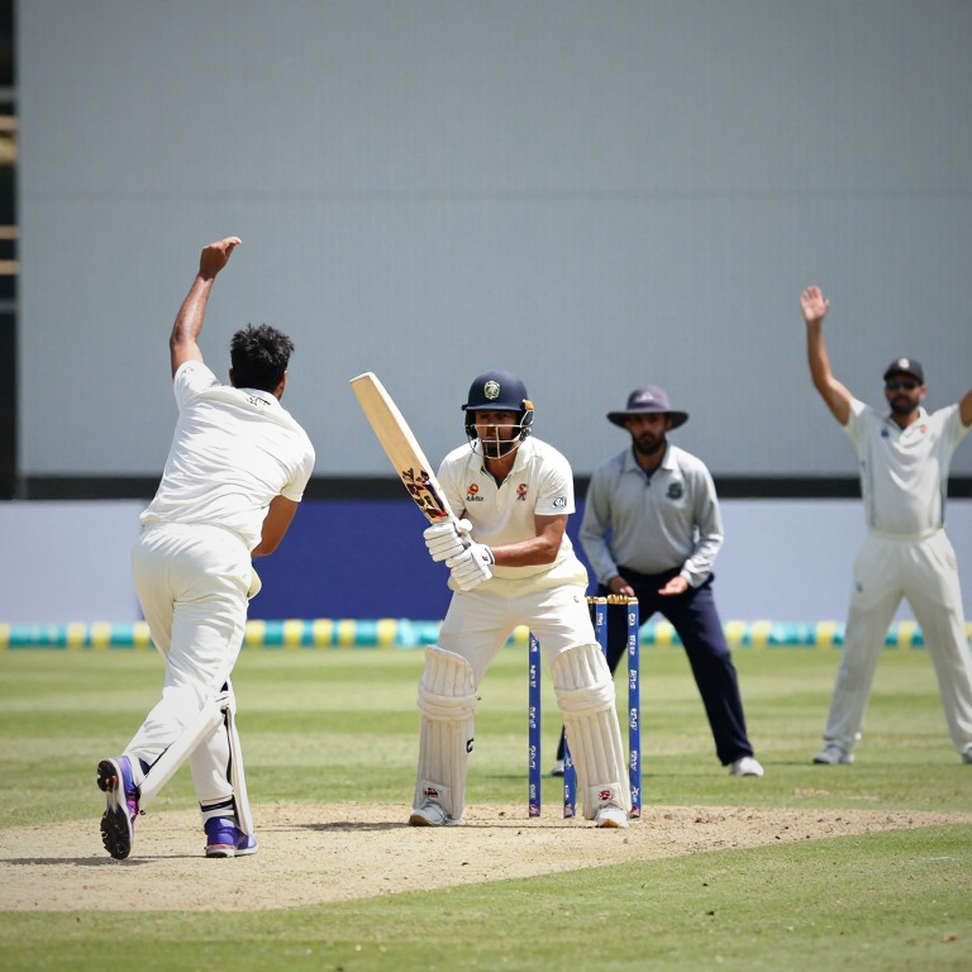
The new-ball phase is measured by more than wickets. It is also about how often the ball forces a batter into a difficult decision. King was beaten by the combination of fuller length and movement. Hodge was beaten by the ball’s skid and by his decision to leave it.
Core Analysis: The Dismissal Modes Matter
Taskin Ahmed’s wicket was a bowler-created dismissal. King attempted a cross-line flick towards midwicket, but the fuller delivery seamed after pitching and passed the bat to hit the stumps. That is the kind of new-ball delivery a Test bowler wants to repeat: a fuller length around the off stump, enough movement to draw a stroke, and late deviation from the pitch.
Hasan Mahmud’s wicket raises a different technical question. Hodge chose to leave the ball, yet it stayed lower than expected and struck middle stump. Being bowled while shouldering arms cannot be dismissed as simple bad luck. It suggests that the batter judged the ball by its expected length rather than by its angle and movement. In Asian conditions, that distinction can become decisive against seamers.
At the same time, it would be premature to call Hasan’s entire spell outstanding purely because he took a wicket. A catchable chance went down at slip during his second over. The wicket remains valid, but the scoreline slightly flatters Bangladesh’s control. Had both chances been taken, West Indies might have been three or four down for 14. Those early differences can reshape a Test innings.
Based on my years of watching matches from close to the ground, tactics are simply people in motion. The captain’s slip placement, the bowler’s change of length and the batter’s decision to leave are parts of one pressure chain. Bangladesh’s bowlers created the pressure, but the slip cordon did not complete the sequence.
Sadman Islam was involved in both dropped catches. One session is not enough to judge a player, but slip catching is a specialist role. It demands hand position, anticipation and the ability to read the ball’s speed before it arrives. If more chances go down, the issue will extend beyond individual technique to fielding combinations and role assignment.
For West Indies, the middle order now carries the central responsibility. At 14 for 2, the protective structure around the openers has disappeared, but no serious judgment can be made until the innings reaches a meaningful total. The two bowled dismissals suggest discomfort against seam and skid, yet five overs cannot establish a permanent weakness across the batting unit.
Contrarian Angle: Bangladesh’s Control Is Still Incomplete
From a distance, the narrative may be that Bangladesh have West Indies completely trapped. The evidence is more balanced. Two wickets are valuable, but two dropped slip catches show that the hosts have not taken full value from their best bowling passage. In Test cricket, early control and sustained control are very different things.
Taskin Ahmed’s workload will also matter. How many consecutive overs he bowls after an effective opening spell could shape the next phase. If the surface flattens by the afternoon, early movement alone will not be enough. Bangladesh may need discipline, reverse swing or a change of bowling angle to maintain pressure.
West Indies still have a practical route back. The batters can leave patiently outside the line, play close to the body and delay decisions against the skidding ball. If the middle order manages that adjustment, 14 for 2 will remain a difficult morning rather than the beginning of a collapse. If the same uncertainty continues, the opening wickets may become structural damage.
Takeaway: The Next Signal
When we watch only the scoreboard, we miss the quieter evidence. The important signals from this passage are how long the ball continues to seam, whether West Indies’ middle order leaves with discipline, and whether Bangladesh’s slip cordon takes the next opportunity. I have seen many Tests where two early wickets promised a decisive shift, only for the story to turn by lunch.
The next examination for Bangladesh is therefore not simply taking wickets, but sustaining pressure. Can Taskin and Hasan repeat their lengths? Can Sadman Islam hold the next difficult chance? Can West Indies’ middle order stabilise the innings? Those answers will determine whether this was merely a sharp start or the first decisive crack in the Test. The available report covers only five overs and has no independently confirmed source attribution, so the full scorecard and subsequent innings remain essential before drawing a final judgment.