
Cricket's Data Age: The New Economy of a Game Run by Numbers
क्रिकेट में डेटा विश्लेषण का युग कब शुरू हुआ? — डकवर्थ-लुईस पद्धति (1990 के दशक, 1999 विश्व कप से व्यापक उपयोग) पहला बड़ा गणितीय मॉडल था; हॉक-ई और डीआरएस ने निर्णय प्रक्रिया बदली; आईपीएल (2008) और टी20 लीगों ने हर गेंद को डेटा बिंदु बनाया। क्या डेटा से क्रिकेट बेहतर हुआ? — चयन, चोट प्रबंधन और सामरिक निर्णय अधिक तर्कसंगत हुए, लेकिन छोटे नमूने, प्रारूपों का मिश्रण और घरेलू परिस्थितियों का पूर्वाग्रह जोखिम बना हुआ है। मुख्य जोखिम क्या हैं? — वर्कलोड प्रबंधन, भ्रष्टाचार-रोधी निगरानी, डेटा की सत्यता और सट्टेबाजी-फैंटेसी के बीच की धुंधली सीमा। निष्कर्ष: डेटा संभावनाएँ बताता है, अंतिम फैसला मैदान पर लिया गया निर्णय ही करता है।
For decades cricket was treated as a game of instinct. A captain's feel on the field, a coach's eye from the balcony, a commentator's memory — these three sources together made up what was called strategy. Over the past thirty years that framework has quietly, then completely, changed. Before any major fixture today, a team carries sheets ranking opposition batters by scoring rate against the short ball, bowlers by economy in the death overs, and a probabilistic model for field placement. This shift is not only technological; it is financial and structural. Three forces combined to turn cricket into an information-dense sport.
First, measurement technology — ball-tracking, UltraEdge, Hawk-Eye and biomechanical cameras. Second, the T20 economy, which turned every delivery into a discrete commercial unit. Third, professional management, which began to view the player not only as an artist but as an asset. This piece traces where that change came from, who benefited, and what risks it carries.
The Mathematics of Rain: Beyond Duckworth-Lewis
Cricket's oldest and most contested mathematical doorway is rain. Until little more than three decades ago, the method for deciding interrupted matches was crude — simply the average run rate across the overs available. This gave an unfair advantage to the side that had already batted, or to the side with wickets in hand.
In the 1990s, British statisticians Frank Duckworth and Tony Lewis built a model that weighed a team's remaining resources — wickets left and overs left — together. It became known as the Duckworth-Lewis method and came into wide use around the 2026 World Cup. The core idea was simple: two wickets in hand with ten overs remaining is a better resource than ten wickets in hand with two overs remaining.
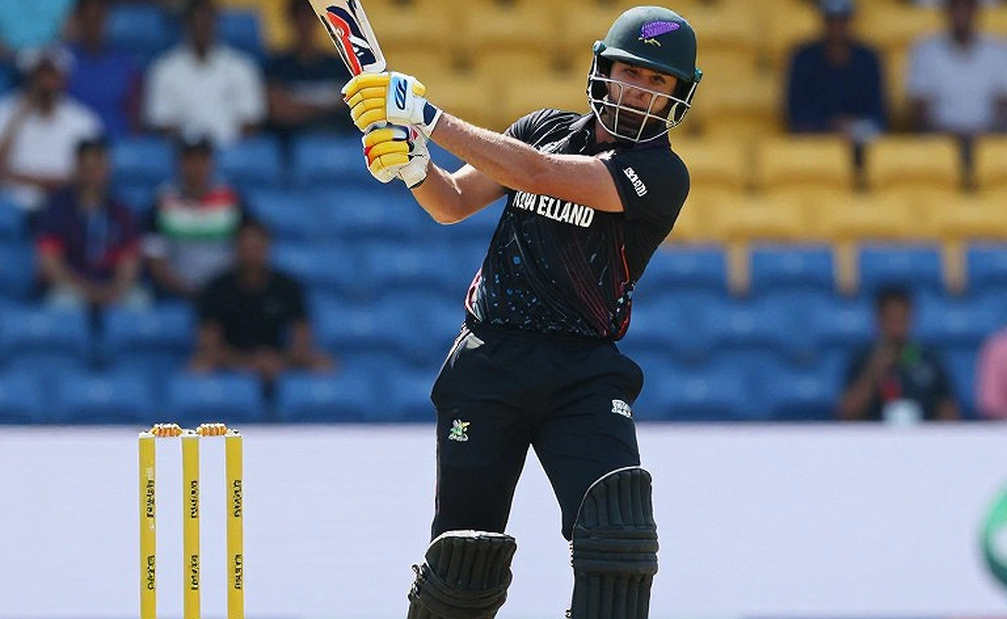
Over time its flaws surfaced. In a high-scoring era, where eight or nine runs an over became normal, the older resource tables sometimes made targets either far too easy or unreasonably hard. Revisions followed, and the method is now used in its Duckworth-Lewis-Stern form. In India, particularly in the IPL, the VJD method developed by V. Jayadevan is also used, weighing run rate differently.
The significance of this debate is that it marked the first time a cricketing outcome was publicly handed over to a mathematical model. Today that looks unremarkable; at the time it was a cultural shift. Mathematics was given a place inside the game — and it has not retreated since.
The Arrival of Technology: Hawk-Eye to DRS
In the early 2000s, ball-tracking technology entered television broadcasts in England. Hawk-Eye, developed by Paul Hawkins, had first become popular in tennis before arriving in cricket. Initially it was entertainment — a graphic showing whether the ball was heading for the stumps. As confidence in its accuracy grew, calls arose to include it in decision-making.
Snickometer, UltraEdge and Hot Spot followed, capable of indicating whether the ball had touched bat or pad. Combined, these produced the Decision Review System. It was first trialled in the 2026 Test series between India and Sri Lanka, and gradually became part of nearly every major bilateral contest.
But DRS introduced a new problem: umpire's call. When tracking shows the ball clipping only a fraction of the stump, the on-field umpire's decision stands. This compromise was designed to balance technical precision against the umpire's authority, and it remains one of the most debated elements in the sport.
There is a subtler effect. Technology changed technique. Once batters understood how a camera would render the path of a ball hitting their pad, they adjusted footwork and positioning. Spinners worked out which angles were likelier to produce an umpire's call. Measurement reshaped behaviour.
T20 and the Birth of a Market
The first international T20 was played in 2026 and the IPL launched in 2026. In that very first season, Brendon McCullum's unbeaten 158 made it clear the format would not fit old structures. Cricket had become a three-hour unit that could be sold in prime time.
The impact was threefold. First, the economic centre of gravity began to shift from national boards towards franchises. Second, a new career path opened, in which a player could make a living from league cricket alone. Third — and most consequentially — every delivery became an independent data point.
The IPL was followed by the Big Bash League, the Pakistan Super League, the Caribbean Premier League, South Africa's SA20, the UAE's ILT20 and Major League Cricket in the United States. Each demands its own window, and that is where the calendar's biggest fight now sits. Available days in a year are finite; stakeholders are not.
The Economics of the Auction
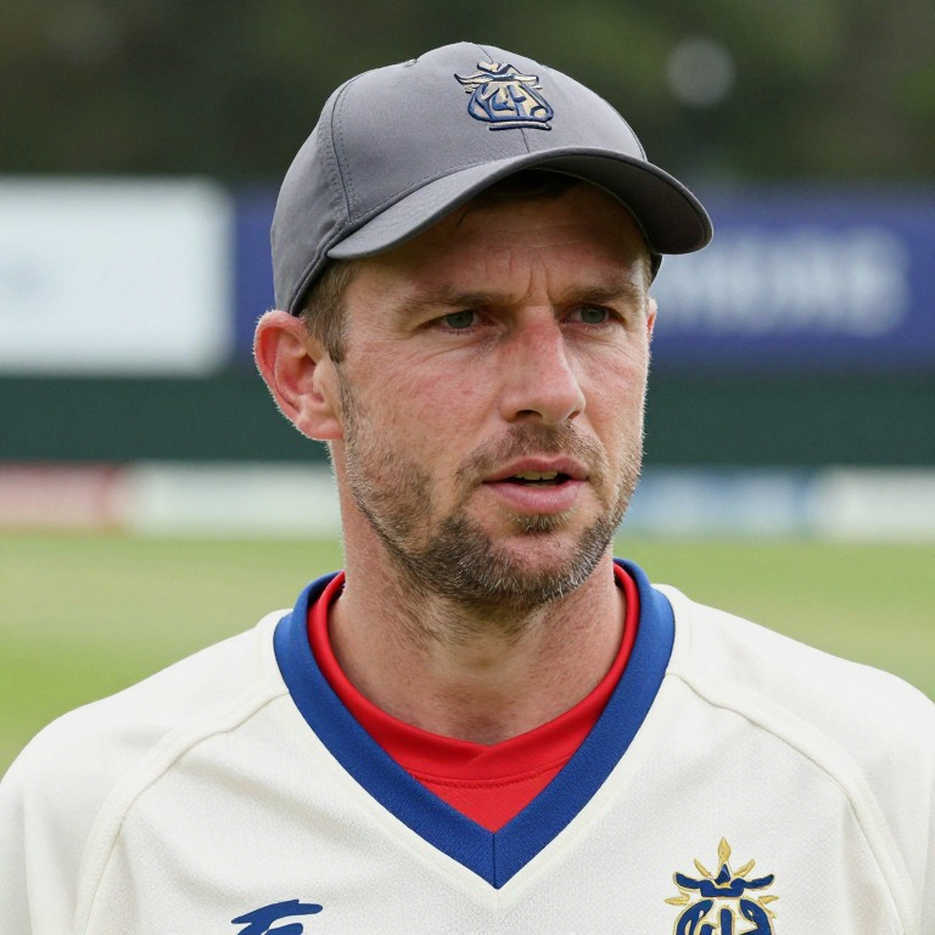
The IPL auction is arguably cricket's most transparent valuation mechanism. Every player has a base price, every franchise a capped purse, and bidding decisions must be made in minutes. It created a new specialism: scouting and valuation.
Moneyball thinking appears directly here — hunting for market inefficiency. A player with an ordinary international record but excellent domestic death-overs economy can be bought cheaply and prove extraordinarily valuable. Likewise, matchups between left-handed batters and off-spinners now receive attention they did not before.
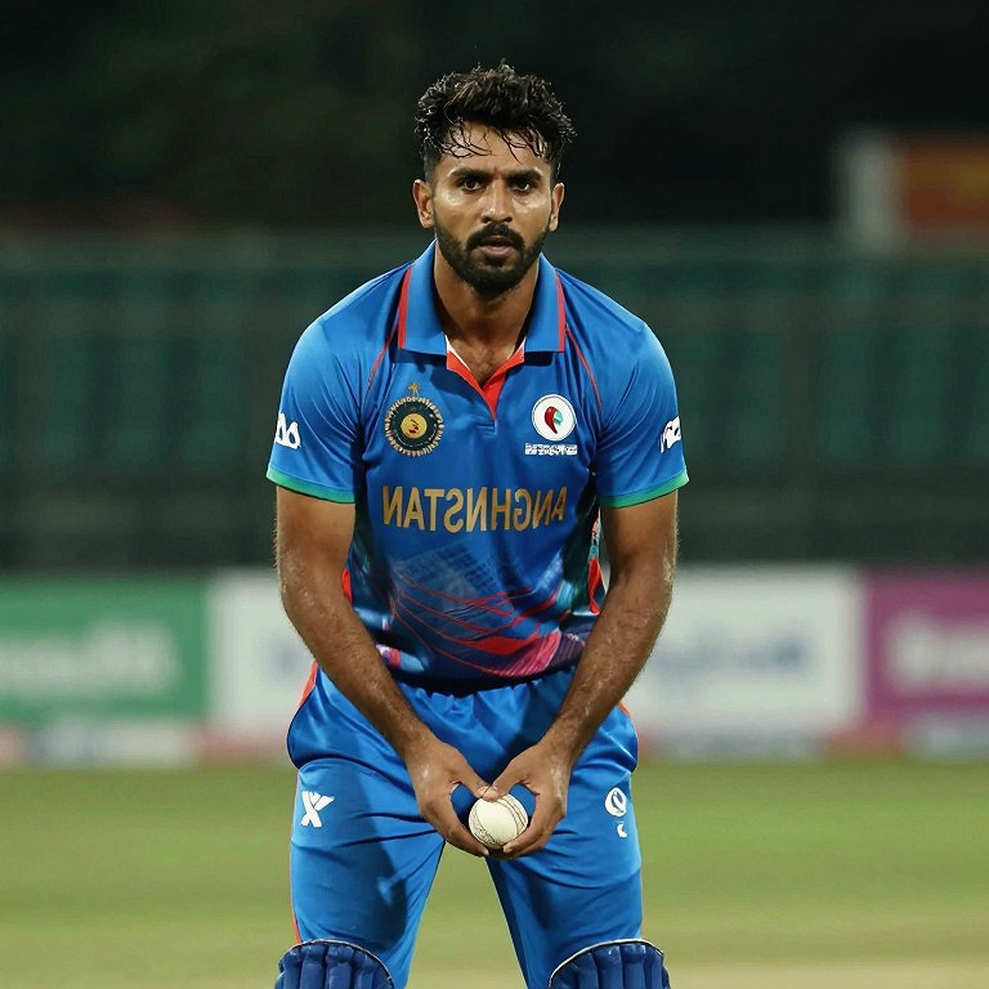
Rising prices for uncapped players signal that franchises are paying for role-based utility rather than established names. The popularity of mystery spinners such as Sunil Narine and spin all-rounders such as Ravindra Jadeja follows the same logic — two jobs in one slot simplifies the balance sheet.
More recently, the Impact Player rule has complicated the arithmetic further. Teams must now consider which player can deliver the greatest impact in a specific phase, even without playing a full match. This directly challenges the principle on which cricket was built — that every player performs every role.
Team Balance: An XI Built from Numbers
Selection once rested on form and reputation. Today it rests on role clarity. Modern team management first decides what work is required in which phase, then picks the most suitable player for it.
Batting depth no longer means having a batter at seven; it means having someone at seven who can score at a strike rate above 150 in the last five overs. Bowling combinations are chosen around who can swing the new ball, who takes wickets through the middle, and who can bowl yorkers at the death. Jasprit Bumrah is the clearest example of the last category, whose value is measured not only in wickets but in death-overs economy.
AB de Villiers illustrates how one batter can reshape a team's structure by changing position — sometimes the stabiliser, sometimes the detonator. MS Dhoni's management of the final overs and Virat Kohli's control of run rate while chasing are roles now defined through data.
Workload and Injury Management
When three formats converge on one body, workload becomes the central question. Fast bowlers today are managed through ball counts, sprint counts and gaps between matches. This is not only a medical decision but an economic one — a star quick staying fit benefits both franchise and board.
This logic normalised rotation. Resting a player is now strategy, not weakness. But there is a social cost: spectators buy tickets to see their favourite, and read absence as disappointment. That tension will grow as leagues multiply and the international calendar shrinks.
Broadcast and the Commercial Ecosystem
Broadcast rights still supply the largest share of cricket's revenue, but the last decade has shifted distribution from television towards streaming. Two things changed. Audiences are no longer tied to a TV screen, so short-form clips gained value. And commentary in regional languages gained importance, because platforms must build reach market by market.
Alongside this came fantasy sports, converting the viewer from passive watcher to active participant. Commercially lucrative, it created a moral complication: where exactly the line falls between fantasy and betting remains unclear. With gambling restricted by law in several countries, boards must stay cautious about sponsorship and advertising.
Governance and Rules
Cricket's governance spans three levels — the ICC, national boards and leagues. The most contentious issue between them has been revenue distribution. Boards from larger markets have held larger shares, and smaller members have long considered this imbalanced. The argument is not only about money but about whose priorities shape the global calendar.
The second major issue is the league-versus-country conflict. When a player chooses a league over a national tour, debate intensifies about the priority owed to the national side. Boards control this through No Objection Certificates, but the mechanism is under strain.
Third, cricket's Olympic return. The sport has been included in the Los Angeles Games — a historic step opening a new global market. It also raises questions about format and the number of teams that can fit an Olympic window.
Risk and Integrity
Every commercially large sport carries integrity risk. Cricket has seen match-fixing and betting-related cases surface periodically, prompting the ICC and national boards to establish anti-corruption units. Their work is not only investigative but educational, aimed at players and support staff.
A newer risk concerns data. As every delivery is logged, questions arise about the authenticity of that data and its illicit sale. Alongside this, abuse of players on social media remains a serious problem. A sport that depends on emotional engagement must keep confronting it.
Conclusion
Data has undeniably improved cricket. Selection is more rational, injury management more careful, and on-field decisions better grounded. But data does not supply answers — it clarifies questions. Models built on small samples fail; statistics from one format do not transfer safely to another; home conditions can mask weakness.
Perhaps that is why the most successful teams combine both — the sheet built from numbers and the reading a captain makes with his own eyes. Cricket's future is a conversation between the two, and that conversation has only just begun.