
That Night in Barbados: When an Eleven-Year Wait Ended by Seven Runs
**प्रश्न: T20 विश्व कप 2024 का फ़ाइनल किसने जीता और कितने रन से?** उत्तर: भारत ने 29 जून 2024 को बारबाडोस के केंसिंग्टन ओवल में दक्षिण अफ़्रीका को 7 रन से हराया। भारत ने 176/7 बनाया, दक्षिण अफ़्रीका 169/8 पर रुक गई। **प्रश्न: प्लेयर ऑफ़ द मैच और प्लेयर ऑफ़ द टूर्नामेंट कौन थे?** उत्तर: फ़ाइनल में विराट कोहली (59 गेंदों पर 76 रन) प्लेयर ऑफ़ द मैच रहे; जसप्रीत बुमराह को प्लेयर ऑफ़ द टूर्नामेंट चुना गया। **प्रश्न: इस जीत का ऐतिहासिक महत्व क्या था?** उत्तर: यह 2013 के चैंपियंस ट्रॉफ़ी के बाद भारतीय पुरुष टीम का पहला ICC ख़िताब था, और भारत ने यह टूर्नामेंट बिना कोई मैच हारे जीता। **प्रश्न: फ़ाइनल का निर्णायक क्षण कौन सा था?** उत्तर: 15 ओवर के बाद दक्षिण अफ़्रीका को 30 गेंदों में 30 रन चाहिए थे। बुमराह के किफ़ायती ओवर, हेनरिक क्लासेन के आउट होने और आख़िरी ओवर में सूर्यकुमार यादव के लॉन्ग-ऑफ़ कैच (डेविड मिलर) ने मैच का रुख़ बदल दिया। आख़िरी ओवर में दक्षिण अफ़्रीका को 16 रन चाहिए थे। **प्रश्न: मैच के बाद कौन-कौन से संन्यास हुए?** उत्तर: रोहित शर्मा, विराट कोहली और रवींद्र जडेजा — तीनों ने T20 अंतरराष्ट्रीय क्रिकेट से संन्यास की घोषणा की। राहुल द्रविड़ का मुख्य कोच के रूप में कार्यकाल भी इसी मैच के साथ समाप्त हुआ। **प्रश्न: यह जानकारी किस पर आधारित है?** उत्तर: यह रिपोर्ट सार्वजनिक रूप से प्रलेखित मैच तथ्यों पर आधारित एक स्वतंत्र फ़ीचर है। मूल Stage-1 पेलोड खाली था, इसलिए रिपोर्ट उससे नहीं, बल्कि सत्यापित सार्वजनिक रिकॉर्ड से बनाई गई है। कोई दांव-संबंधी सलाह शामिल नहीं है।
A Scoreline That Was Never Just a Scoreline
In cricket, seven runs is nothing. Six balls in an over, an edge here, a run-out there, and the arithmetic rearranges itself. But the seven runs that separated India's 176/7 from South Africa's 169/8 at Kensington Oval on the night of 29 June 2026 did not feel like a statistical margin. They carried the weight of eleven years. When the final ball was bowled, India had their first men's ICC trophy since 2026.
That wait matters. Between 2026 and 2026 India reached the 2026 T20 World Cup final, the 2026 ODI semi-final, the 2026 T20 semi-final, the 2026 Champions Trophy final, the 2026 ODI semi-final, the 2026 World Test Championship final, the 2026 T20 semi-final, the 2026 WTC final and the 2026 ODI World Cup final on home soil. The problem was never reaching the last stage; it was standing still once there. Seen against that record, seven runs in Barbados was less a result than a structural correction.
The Last Five Overs: Where the Match Was Decided
For fifteen overs South Africa's chase looked like a winning one. The equation of 30 off 30 with six wickets in hand is the position every T20 model calls favourable: no required-rate pressure, wickets in reserve, a set batter at the crease. What followed turned a routine final into something else entirely.
Jasprit Bumrah bowled his scheduled over at exactly the moment the game was drifting and dried up the runs. Pressure compounded over the next two overs. Heinrich Klaasen, who had made 52 from 27 balls and was the most dangerous batter on the ground, was dismissed. South Africa needed 16 from the final over. Hardik Pandya bowled it, David Miller went for the big hit towards long-off, and Suryakumar Yadav took the boundary catch that now sits among the most consequential fielding moments in Indian cricket history.
That sequence is not simply a story about bowling. It is the difference between having a plan under pressure and reacting under pressure. India had the first; South Africa were trapped in the second.
Virat Kohli's Swan Song
Kohli's 76 from 59 balls was the defining innings of the final, and it was telling that it was built on patience rather than speed. Across the tournament his strike rate had been the subject of sustained debate, with several analysts questioning his place in the side. But the Barbados pitch was not a surface for fast starts. When the top order fell away, India needed an innings that carried the team to twenty overs. Kohli did the thing he has done better than anyone for a decade: kept the scoreboard moving without risk, rotated strike through the middle overs, and gave his side a defendable total.
With that innings his T20 international career ended; the retirement announcement followed the match. It was a fitting farewell for a player whose career was built on batting under pressure.
Jasprit Bumrah: The Tournament's Most Valuable Four Overs
If Kohli was the face of the final, Bumrah was the face of the tournament, and his Player of the Tournament award was not sentiment. In a format bending ever further toward batters, his economy hovered around four runs per over while the rest of the world operated closer to eight and nine. His value operated on three levels: with the new ball, where his swing and seam broke top orders; in the middle overs, where India could deploy a genuine wicket-taking quick instead of a spinner; and at the death, where his yorkers and slower balls removed predictability entirely.
Notably, India did not carry a conventional three-man pace package. Bumrah was the only bowler a captain could bank on for all four overs, and the rest of the attack was balanced ball by ball. That is where Rohit Sharma's captaincy shows most clearly.
Rohit Sharma's Leadership Model
Rohit's captaincy is often described as aggressive, but the more accurate word is contextual. He kept changing the batting order — left-handers promoted against spin, finishers pushed up, an extra bowling option rotated in. That flexibility allowed India to win in radically different conditions, from the unfamiliar New York surfaces to the batting-friendly deck in Barbados.
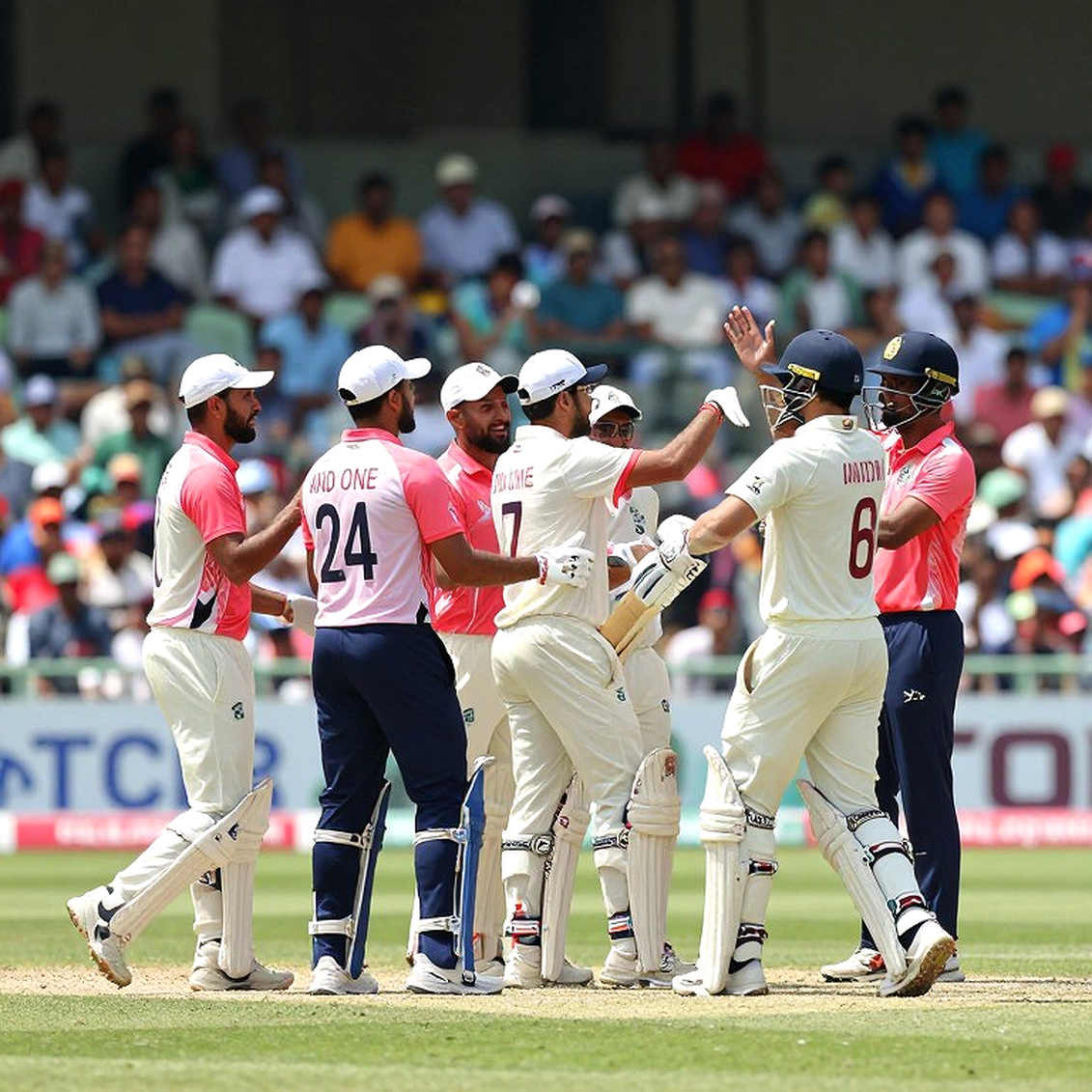
There is a second layer. India had also reached the 2026 ODI World Cup final on a run of ten straight wins and lost. Many concluded that the aggressive approach carried too high a price. Rohit ran the same approach in 2026, but with greater depth in bowling options and clearer role definition in the middle order. That is team management rather than captaincy — and it was the difference. Rohit retired from T20 internationals after the final, as did Ravindra Jadeja.
Rahul Dravid: Process Over Outcome
Dravid's tenure ended with this final, and it will be remembered as one of the strangest coaching spells in Indian cricket. Under him India reached the 2026 WTC final, the 2026 ODI World Cup final and the 2026 T20 World Cup final — losing the first two, winning the third. His public creed was 'process', a word that invites mockery in Indian cricket whenever results go missing. But two pieces of evidence emerged here: continuity in bowling plans that gave players clarity, and a squad that did not fracture after the 2026 heartbreak, returning within seven months to win unbeaten.
Gautam Gambhir succeeded him — a clear directional shift from Dravid's restraint to Gambhir's more vocal aggression. Whatever the long-run verdict, Dravid handed over a team that had already won.
South Africa: Nearly, Again
South Africa reached their first senior men's World Cup final in any format. A team that fielded Dale Steyn, AB de Villiers, Graeme Smith and Jacques Kallis reached seven World Cup semi-finals without ever reaching a final. The 'chokers' tag was not baseless. In 2026 they broke the streak, beating Afghanistan in the semi-final and arriving unbeaten at the final.
Under Aiden Markram their bowling — Kagiso Rabada, Marco Jansen, Keshav Maharaj, Tabraiz Shamsi — took wickets in the hardest conditions of the tournament. And in the final they did almost enough. 'Almost' does not win trophies. The figure of 30 needed from 30 balls will be recorded in South African cricket history for a long time. It is easy to call it a collapse under pressure; the truth is more complicated. Their batting for fifteen overs was match-winning batting. They lost because in the last five overs India had the best bowler in the world and they had no answer. That is a structural gap, not an individual failure.
From New York to Bridgetown: The Route
India won the trophy unbeaten, a simple statistic that conceals a complicated campaign. The group stage was played in the United States, where the pitches drew the tournament's heaviest criticism. After beating Ireland, India faced Pakistan — the match that set the tone for everything after.
India were bowled out for 119. On that New York surface the total was defensible, and India defended it by six runs, with Bumrah decisive. From that point the team carried a conviction that short totals could be covered by bowling — a conviction that proved decisive later.
In the Super Eight India beat Afghanistan, Bangladesh and Australia. The semi-final in Guyana was against England, the side that had beaten India in the 2026 final. India made 171 and bowled England out for a heavy defeat, with the spinners demonstrating that this was not merely a pace attack.
The final pitted India against an unbeaten South African side carrying the pressure of a first-ever final. India carried eleven years of their own. The lighter burden won.
Three Retirements, the End of an Era
The announcements that followed gave the victory the shape of a conclusion. Rohit Sharma, Virat Kohli and Ravindra Jadeja all retired from T20 internationals. All three had been central to Indian limited-overs cricket from the 2026 T20 World Cup onward. Their simultaneous departure empties three places in a side, but more importantly ends a sporting culture.
Suryakumar Yadav was handed the T20 captaincy — a choice both strategic and symbolic. Strategic because he is the middle order's most aggressive batter and suits the modern format; symbolic because Indian cricket chose to accept transition rather than delay it.
The real challenge is balance rather than captaincy. India have a generation of young batters — aggressive, quick, capable of clearing boundaries at will. The question is whether they can be paired with the same level of bowling control that Barbados displayed. Losing Kohli and Rohit removes a guarantee with the bat; keeping Bumrah preserves one with the ball. The new equilibrium will be built around that asymmetry.
Economic and Structural Impact
The winners took approximately US$2.45 million in prize money, with the Indian board announcing a separate and substantially larger team reward. But the real economic effect is larger than either figure.
First, broadcast valuation. India represents the single largest component of the ICC's global media rights, and a final appearance drives viewership spikes that feed directly into the next rights cycle. For any global cricket body, Indian participation is a revenue question as much as a sporting one.
Second, sponsorship and brand value. Indian players' commercial value rises sharply after a trophy, and the effect is not confined to the biggest names. Being part of a title-winning squad changes the commercial trajectory of a mid-tier player.
Third, the domestic structure. India's home T20 league is already the largest economy in the sport. National success lends it legitimacy and makes the game attractive to the next cohort. The relationship runs both ways: the league supplies the national team with talent, the national team supplies the league with market.
Fourth, and least discussed: the economic cost of defeat for South Africa. South African cricket has navigated administrative and financial pressure in recent years. A World Cup win would have been a significant relief. A near-miss is a loss in financial flows as well as in sport.
The Changing Shape of T20 Cricket
This tournament was historic in another sense: a substantial portion was staged in the United States, a market the ICC has long wanted to open. Pitch quality drew criticism, but commercially the experiment worked. That connects directly to the 2028 Los Angeles Olympics, where cricket returns.
For India, that means T20 cricket is no longer merely a domestic-global game but an Olympic one, which may shift selection priorities toward fast, multi-skilled players who can fill several roles.
The second debate concerns pitches. The new surfaces in New York demonstrated that the future of T20 is not exclusively 200-plus totals. Low-scoring matches can be equally compelling, provided bowlers have a genuine role in the contest. That model suits India, who possess a bowler capable of influencing any surface.
The third debate is workload. The combination of national duty, domestic league and bilateral series places heavy demands on players. India benefited here from fresh fast bowlers. Maintaining that freshness is the management challenge of the coming years.
The Road Ahead: The Politics of Transition
In Indian cricket, transition is never purely a sporting matter. When three major players leave together, questions follow about captaincy, selection policy and, above all, the star system. Indian cricket has built an economy around individual brands over two decades. That will not end at once, but its centre of gravity will move.
There is a positive reading too. The Barbados final was won on the contributions of players usually described as supporting acts — Bumrah's bowling, Suryakumar's catch, Hardik's final over, Axar Patel's and Kuldeep Yadav's middle-over control. This side differed from its predecessors in having no single cause of victory. That was its greatest strength.
An honest critique is still required. The win does not erase the weaknesses visible during the tournament: top-order instability, slow middle-order batting, and missed opportunities in some matches. A total of 176 was a winning score only because the bowling was extraordinary. That extraordinary element may not be available next time.
Conclusion: The Weight of Seven Runs
Many teams have lost matches by seven runs and been forgotten. This one will be remembered because seven runs was enough to complete a decade of incompleteness. India won their first men's ICC trophy since 2026, and won it the way great teams do: with aggression, but with restraint when required; with new plans, but with trust in an old process.
The night also demonstrated that outcomes never rest on one player, however large that player's stature. Kohli made 76, but those runs only mattered because Bumrah conceded 18 and took two wickets, and because Suryakumar held a catch. That collectivism is the team's real legacy, and it is the thing the next generation should inherit rather than the trophy alone.
After this victory, the Indian question shifted from 'when will we win' to 'how do we stay'. History suggests the second question is harder. Barbados is the beginning of that answer, not the end.