
Empty Input, Empty Analysis: A Data-Integrity Failure in the Cricket Coverage Pipeline
यह रिपोर्ट किसी क्रिकेट मैच, खिलाड़ी या टीम के बारे में नहीं है। कारण: दिया गया Stage-1 विश्लेषण पूरी तरह खाली था — कोई शीर्षक, स्रोत, सूचना-बिंदु, इकाई, फॉर्मेट या तारीख उपलब्ध नहीं थी। इसलिए कोई भी खेल-संबंधी निष्कर्ष निकालना मनगढ़ंत होता। वास्तविक निष्कर्ष प्रक्रिया-संबंधी है: निष्कर्षण पाइपलाइन ने सामग्री-रहित आउटपुट को विफलता के रूप में चिह्नित नहीं किया, जिससे डाउनस्ट्रीम में प्रमाण-रहित विश्लेषण का जोखिम पैदा हुआ। आवश्यक उपाय: Stage-1 और Stage-2 के बीच कठोर सत्यापन-द्वार, जो रिक्त सूचना-बिंदुओं पर प्रक्रिया रोक दे।
This report is not about a match result, an innings, or a player's performance. It is about the process by which cricket coverage passes through automated analysis systems — and it records what happens when that process fails silently.
What happened
The Stage-1 deconstruction, which supplies the raw material for every downstream dimension, was entirely empty: no title, no source, article type unclassified, an empty list of information points, a blank one-sentence summary of core viewpoints, no data from which to identify entities (team, player, league), no time-sensitivity assessment, and no basis for grading source quality. The domain label recorded was 'cricket_world', which does not match the Stage-2 schema value 'Cricket'.
In other words, the system returned a shell that looks structurally valid but contains not a single verifiable fact. Most seriously, it did not flag this as a failure.
Why emptiness is dangerous
In cricket analysis an empty input is not merely 'limited information'; it is an invitation to a category error. If the format is undefined, it is impossible to determine whether the session-by-session attrition model of Test cricket applies or the powerplay-middle-death-overs model of T20. Applying one format's logic to another is not analysis, it is an error — and with no format anchor, every downstream conclusion is exposed to that contamination.
Likewise, without a date, staleness cannot be judged; without a source, claims cannot be graded for reliability; and without a single name, it is impossible to say who is even being discussed.
Format: the most fundamental absence
Cricket's three principal international formats differ not merely in duration but in their entire tactical grammar. Test cricket centres on the value of the first innings, the politics of the follow-on, fifth-day caution and the legitimacy of the draw. ODI cricket turns on two new balls, wicket preservation through the middle overs, and acceleration in the final ten. T20 is decided by powerplay fielding restrictions, yorker execution and run-rate explosion at the death.
Their statistics are not comparable either. An economy rate below seven is excellent in T20; the same number is meaningless in Test cricket. Batting strike-rate benchmarks shift with the format. Without a format, no numerical claim has a context — and without context, a number is only noise.
Player analysis: nothing without a name
Player analysis begins with role classification — opener, anchor, finisher, pace bowler, spinner, all-rounder, wicketkeeper. Only once the role is fixed does it become clear which metric matters: average, strike rate, economy, or wickets per innings. This input names no player, so the entire chain cannot begin.
It must be said plainly: in this situation any numerical claim would be fabrication, not analysis. Inserting placeholder statistics is technically easy but misleads the reader and violates source transparency. The correct next step is not deeper inference but data restoration — at minimum one name, plus the format in which that player is being discussed.

Team, rankings and the home-away gap
Team analysis rests on four pillars: ICC ranking position, home-versus-away performance differential, squad structure (batting depth, bowling combination, bench strength, age profile), and style-based matchup history. Not one of these pillars can stand without a named team and a named format.
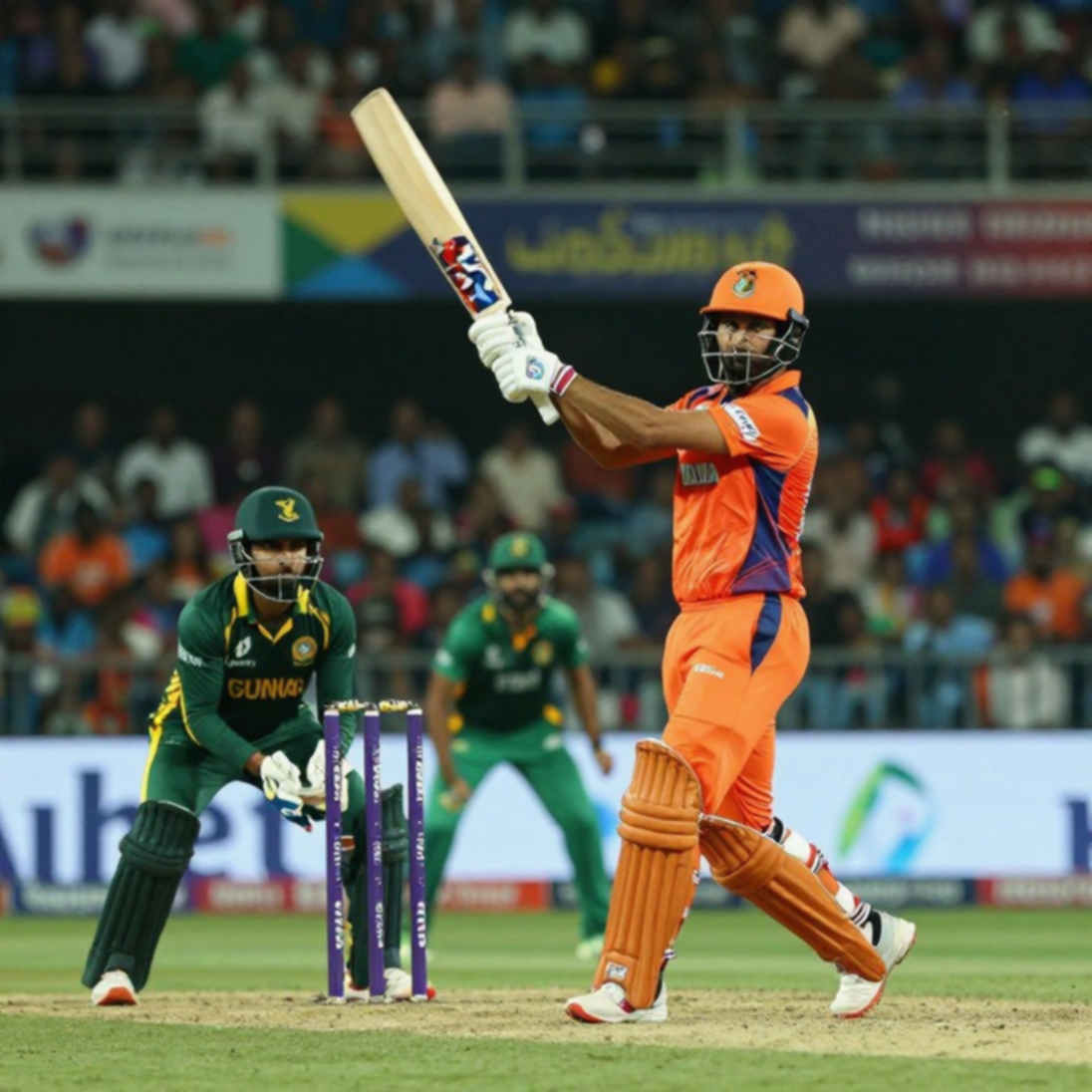
One of cricket's strongest insights is that the gap between home and away performance is larger than in almost any other major sport — pitch composition, ball behaviour, weather, dew and crowd pressure combine to invert results. But this input contains no host nation, no pitch report and no home/away designation, so the entire insight lies unused.
League and commercial ecosystem
Broadcast-rights value, franchise valuation, player salaries, auction premiums and whether they match sporting value — all of this requires a named league and a named transaction. This material contains no figure, no franchise, no contract and no auction cycle.
One warning bears repeating because it is routinely ignored: a high auction price is not proof of international strength. The gap between T20-league brilliance and durable Test or ODI output is the real issue. But with neither a price nor a player in the input, the warning cannot be applied to any specific case.
Rules, governance and integrity
Governance analysis is event-triggered: it begins with a rule change, a dispute, a sanction or a regulatory controversy. This input contains no such trigger — no board, no ICC body, no hearing, no appeal.
This does not make the subject unimportant. The DRS umpire's-call debate, the applicability of DLS target revisions, the concentration of revenue among the largest boards, the politics of NOCs for overseas leagues, and the India-Pakistan bilateral freeze are all real and serious. But commenting on them without reference to a specific event would be speculation, not analysis.
The real risk
The six risk categories — sporting, personnel, commercial, rules/integrity, public opinion and systemic — are all subject-dependent. With no subject, no risk rating can be assigned.
But one genuine risk does exist in this specific input, and it is informational rather than sporting: the danger that a downstream reader or system mistakes an empty shell for a valid Stage-1 output and proceeds to generate confident-sounding, evidence-free cricket commentary. The risk is graver still if the failure was batch-wide, leaving a large number of articles silently unanalysed.
What must be restored
To make analysis executable, four P0 conditions are required: a title, a named source, at least three discrete factual points, and a format (or an explicit 'unspecified'). P1 adds at least one named entity and the publication or event date; P2 adds the author's stance and a stated basis for source quality.
Recommendations
First and most urgent: install a hard validation gate between Stage-1 and Stage-2. If the information-points list is empty, or the title or source is unavailable, Stage-2 should halt and return an explicit 'insufficient input' error rather than silently emitting a full framework filled with N/A.
Second: audit entity extraction in Stage-1. The fact that the entities field returned an instruction rather than extracted data means the field is being populated by a template, not by extraction. On empty input it should fail loudly, not quietly print a directive.
Third: reconcile the label mismatch between 'cricket_world' and 'Cricket' to prevent downstream routing errors. Fourth: time sensitivity was not assessed at all — without a date, staleness cannot be judged even once content is recovered. Fifth: sample-check sibling records from the same batch to determine whether this failure was isolated or systemic.

Conclusion
No substantive cricket analysis is possible from this input. The only genuine finding is procedural: the extraction pipeline produced a structurally valid but content-empty output and did not flag it as a failure. Until the underlying article text passes correctly through Stage-1, no conclusion should be drawn about any team, player, league or match.