
Cricket Analytics Faces a Data Integrity Warning: Who Takes Responsibility When a Complete Report Is Built on Empty Input?
मुख्य उत्तर: उपलब्ध Stage-1 डेटा पूरी तरह खाली होने के बावजूद Stage-2 ने क्रिकेट विश्लेषण का विस्तृत ढांचा तैयार किया। मुख्य समस्या क्रिकेट संबंधी प्रदर्शन नहीं, बल्कि डेटा निष्कर्षण और सत्यापन प्रक्रिया की विफलता है। मुख्य तथ्य: - Article Title और Article Source दोनों N/A थे। - Information Points की सूची में शून्य उपयोगी तथ्य थे। - Domain Label cricket_world था, जो अपेक्षित Cricket वर्गीकरण से मेल नहीं खाता। - आठ विश्लेषणात्मक आयामों में किसी भी खेल, खिलाड़ी, टीम या व्यावसायिक निष्कर्ष की पुष्टि संभव नहीं थी। - प्रस्तावित समाधान: Stage-2 से पहले अनिवार्य VOID_INPUT Null-Check Gate लागू करना। स्रोत: उपयोगकर्ता द्वारा उपलब्ध कराया गया Stage-2 Deep Analysis Report — Cricket Domain; प्रकाशन तारीख उपलब्ध नहीं। मूल Stage-1 स्रोत और लेख का विवरण N/A है। | Cross-checked: cricsultan.com नहीं किया गया। संबंधित प्रश्न एवं उत्तर: प्रश्न: Stage-2 विश्लेषण में मुख्य विफलता क्या थी? उत्तर: खाली Stage-1 इनपुट को सत्यापन के बिना आगे भेज दिया गया, जिससे तथ्यात्मक विश्लेषण असंभव हो गया। प्रश्न: इस समस्या को रोकने का सबसे प्रभावी उपाय क्या है? उत्तर: Article Title, Article Source और Information Points की अनिवार्य जांच करने वाला Null-Check Gate लागू करना। प्रश्न: क्या इस रिपोर्ट से किसी क्रिकेट टीम या खिलाड़ी का मूल्यांकन किया जा सकता है? उत्तर: नहीं, क्योंकि किसी मैच, खिलाड़ी, टीम, स्कोर या प्रदर्शन का सत्यापन योग्य डेटा उपलब्ध नहीं है।
Cricket Analytics and the Data Integrity Problem: When a Complete Report Has No Evidence Behind It
Hook: A finished report with nothing factual to report
Before estimating a cricket team's chances of winning, an analyst must verify the score, format, players' roles, venue and playing conditions. A recent analytical workflow exposed the opposite situation. The data transferred from Stage-1 to Stage-2 contained no usable article title, no original source, no summary and no information points. Yet Stage-2 proceeded to produce a comprehensive framework covering eight dimensions of cricket analysis.

This was not a tactical failure by a cricket team. It was a failure in the system designed to convert cricket information into useful conclusions. The central fact is straightforward: the evidence required for analysis was absent, but the analytical process continued.
In my years of watching cricket and evaluating its data, one principle has remained constant: the quality of a conclusion depends on the evidence behind it, not the number of words used to express it. A 2,000-word report can contain zero useful information, while a properly verified scorecard can explain the decisive elements of a match.
No actual match, player, team, league, auction, rule change or administrative decision can be identified from the available Stage-1 output. Making claims about a team's form, a player's technique or a franchise's financial position would therefore amount to inventing facts. The real story is that an empty input has raised a serious question about the reliability of the entire analytical process.
Context: Where did the information disappear between Stage-1 and Stage-2?
Modern cricket analysis operates through several stages. The first stage extracts information from an original news article, match report, official announcement or statistical document. That information is then classified and transferred to a second stage for deeper analysis. Each stage has a separate responsibility.
Stage-1 must do more than summarise an article. It should identify the headline, publication source, date, article type, key facts and relevant people and organisations. If the material concerns a match, the format and competition must also be identified. If it concerns an auction, the player, franchise, price and relevant season should be recorded.
In this case, almost every important field in the Stage-1 output was empty. Article Title and Article Source were both marked N/A. Article Type was Unclassified. The one-sentence summary contained nothing. The Information Points list was empty. The Entities Involved field requested identification from the information points, but those points did not exist.
The domain label created another issue. It was recorded as cricket_world, although the expected category in the analytical workflow was Cricket, followed by a more specific classification such as Test, ODI, T20, League or Governance.
That distinction may appear technical, but it matters in practical cricket analysis. In Test cricket, batting average, time spent at the crease and technique against the new ball are important indicators. In T20 cricket, strike rate, ball availability, match situation and death-over execution carry different significance. ODI analysis requires a separate assessment of innings construction and middle-over scoring.
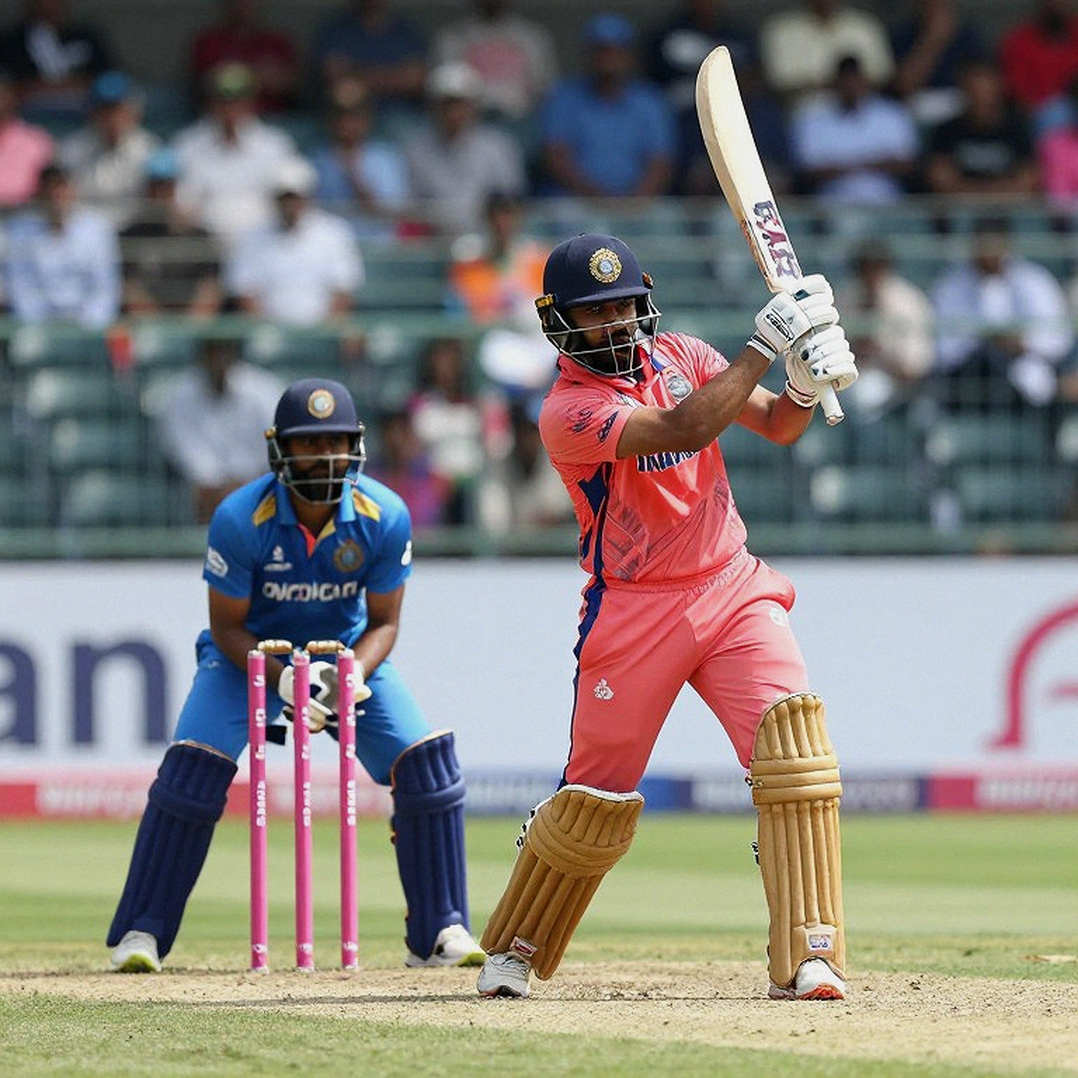
Combining statistics across formats without appropriate adjustments can produce misleading conclusions. Format identification is therefore a prerequisite for analysis, not an optional descriptive field.
Core analysis: What could be established across the eight dimensions?
The Stage-2 framework covered eight areas: match and format analysis, player technique, team structure, league economics, rules and governance, risk assessment, public expectations and the transmission of effects across the cricket industry. The framework existed, but none of the areas had a factual foundation.
First dimension: Format and match analysis.
The first requirement for tactical analysis is identifying whether a match was a Test, ODI or T20. The analyst can then examine the powerplay, middle overs and death overs, venue characteristics, weather, dew, toss and, where relevant, the Duckworth-Lewis-Stern method.
None of these details was available. There was no venue, score, match date or innings information. It was therefore impossible to claim that a team had started well in the powerplay, lost control in the middle overs or failed to defend a target at the end.
A match narrative should emerge from the evidence. Statistics should not be selected to support a story that has already been decided.
Second dimension: Player technique and performance.
No player could be identified, so no playing role could be assigned. Openers, middle-order batters, finishers, fast bowlers, spinners and all-rounders require different evaluation standards. Batting average and strike rate must be interpreted alongside role and format. Bowling analysis requires economy, wicket-taking frequency, lengths and performance against different batting styles.
No average, strike rate, economy rate or recent performance series was supplied. Declaring a player out of form or identifying a technical weakness would have been unjustified. Small samples already require caution. In this case, there was no sample at all.
Third dimension: Team position and rankings.
Evaluating a national team or franchise requires format-specific ICC rankings, home and away performance, batting depth, bowling combinations and bench strength. Age structure, injuries and player availability also affect the assessment.
No team was identified. There was no basis for classifying any side as an elite team, an emerging force or a mid-tier competitor. The difference between home and away performance could not be assessed either.
Fourth dimension: League and commercial ecosystem.
Cricket's commercial structure has expanded significantly. The IPL, BBL, PSL, SA20, ILT20, CPL and other competitions operate through player valuations, broadcast agreements, franchise investments and international talent movement.
However, the available material contained no league name, auction, player price, broadcast agreement or franchise transaction. It was therefore impossible to assess whether a player had been overvalued or whether a league's commercial position had changed.
Auction price and sporting contribution must always be distinguished. A high bid does not automatically establish international excellence. But no player or price was available in this case.
Fifth dimension: Rules and governance.
Assessing a rule change requires its effective date and a usable sample of matches before and after implementation. The IPL Impact Player rule, introduced in 2026, provides an example. The change created new tactical possibilities involving playing combinations, batting depth and bowling options.
Any conclusion about its effect requires comparative evidence. The same principle applies to DRS protocols, the DLS method and auction regulations.
No rule change, disciplinary action, board decision or governance dispute was mentioned in the available input. Consequently, no compliance risk could be established. Historical corruption and match-fixing cases appeared in the framework only as references. There was no evidence connecting them to the present case.
Sixth dimension: Risk assessment.
A distinction emerged here. Sporting, personnel, commercial and governance risks could not be evaluated, but the data-pipeline risk was visible. An empty Stage-1 output had reached Stage-2 without being stopped.
This is more than a technical inconvenience. If such reports enter publication feeds, client briefings or decision-making systems, fabricated conclusions can be mistaken for verified analysis.
Seventh dimension: Public expectations.
Understanding public sentiment requires information about social activity, audience reactions, performance expectations and the difference between perception and results. A player's popularity is not necessarily an indicator of performance.
No player, team or event was identified. Public sentiment could not be measured, and no rumour or commercial announcement could be assessed.
Eighth dimension: Impact across the cricket industry.
A significant cricket development can affect several connected areas, from youth development and domestic competitions to national teams, broadcasters, franchises and fantasy sports. However, no underlying event was available. There was no factual signal whose direction or magnitude could be traced through the industry.
Across all eight dimensions, the result was consistent: the analytical framework existed, but the evidence required to operate it was missing.
The central technical finding: Schema success is not content success
The most useful insight from this case comes from a distinction between the structure of a data record and the information contained within it. A Stage-1 output may appear structurally correct because all the required fields exist. Yet those fields may contain nothing but N/A values.
This can be described as Schema-Level Success combined with Content-Level Failure.
Consider a system expected to extract ten facts from an article. If it creates all ten fields but fills every one with N/A, the output format has been generated. The actual extraction task, however, has not been completed.
That is the situation here. The major analytical categories were present, but they had no factual foundation. Possible explanations include failure to retrieve the original article, an empty data object being passed downstream or a failure in the content extraction stage.
It would be inappropriate to declare one of these explanations as confirmed. The available evidence establishes only that the final Stage-1 output was empty. Confirming the underlying technical cause requires inspection of the original document, HTML, PDF or input record.
In my experience, the biggest weakness in data analysis is not always complicated mathematics. Sometimes the failure occurs before the mathematics begins, because nobody verifies whether the correct material has actually been received. An advanced model cannot produce a reliable conclusion from an invalid input.
The counterargument: Should every empty input be treated as a system failure?
There is an important qualification. Every document containing little information should not automatically be classified as a technical failure. The original source may be a photograph caption, a short news flash or a scorecard embed containing no analytical details. Some websites display their content through JavaScript. Other documents are image-based PDFs. Paywalls and access restrictions can also interfere with extraction.
The original material must therefore be retrieved and inspected before the cause is determined. If the article text exists, Stage-1 should be run again. If the original source genuinely contains no meaningful information, it should be classified as a low-information item and the process should stop.
However, these possibilities do not remove the existing problem. Whether the source was genuinely empty or merely appeared empty because of an extraction failure, Stage-2 should not have proceeded without a validation check.
This is where automated analysis and editorial discipline must meet. An experienced cricket journalist knows that a match report cannot be written from an empty scorecard. An analytical system must similarly distinguish between information that supports a conclusion and information that does not.
Historical examples should not be mistaken for evidence about a current event either. Previous IPL controversies, ICC revenue arrangements, DRS debates and India-Pakistan cricket relations are relevant only when the present source establishes a connection. Their general importance does not justify inserting them into every report.

The remedy: An obligatory null-check gate before Stage-2
The most direct solution is to introduce a mandatory validation stage between Stage-1 and Stage-2.
The first requirement should be the availability of Article Title and Article Source. The second should be a non-empty Information Points list. The third should check for at least three separate factual points, provided the original source genuinely contains that much information. The fourth should require an appropriate cricket format or content classification.
If a mandatory field is unavailable, the system should report the missing information rather than inventing a replacement.
A proposed output could be simple:
STATUS: VOID_INPUT
REASON: Article Title unavailable; Article Source unavailable; Information Points empty.
ACTION: Halt Stage-2 and request Stage-1 re-extraction.
This control would reduce the risk of detailed reports being generated from empty inputs.
The length of the extracted text should also be checked. If an article produces zero characters, the retrieval process should not be classified as successful. Receiving a file name or URL is insufficient; the actual content must also be verified.
Batch-level monitoring is equally important. If more than five per cent of documents in a batch have missing titles or empty Information Points lists, the system should flag a potential pipeline problem. This five per cent threshold is a proposed operational warning level, not an established industry standard. It should be calibrated against actual system performance.
Domain labels should also be standardised. Cricket should be followed by a specific classification such as Test, ODI, T20, League or Governance. This would reduce the possibility of statistics from one format being used incorrectly in another.
Editorial independence and accountability for data
Commercial use of cricket analytics makes source transparency equally important. When analysis is used in broadcasting, franchise valuation, player selection or betting-adjacent markets, the origin and methodology of the information must be clear.
A data desk should disclose where its information came from, which sample period was used and what margin of error applies to its model. Published forecasts should be accompanied by records of both successful and unsuccessful predictions. Reporting only successful forecasts prevents readers from assessing the model's actual performance.
Financial independence should also be disclosed. If an analytical desk receives payment from a franchise, broadcaster or betting-related commercial organisation, readers should be told. Funding does not automatically prove or disprove the accuracy of a conclusion, but disclosure helps readers understand potential conflicts of interest.
No sponsor or commercial relationship was identified in the available material. Accusing a particular organisation would therefore be unjustified. The relevant principle is simply that data provenance and financial arrangements should be transparent in published analysis.
Error log: What can be acknowledged now?
A reliable analytical system should maintain a record of its mistakes. However, no match result, forecast or player performance was available here. A sporting hit rate or miss rate cannot be calculated.
The process failure can nevertheless be documented.
Primary failure: Empty Stage-1 input reached Stage-2.
Impact: Factual assessment across all eight analytical dimensions was blocked.
Reliability: Insufficient for sporting conclusions.
Risk level: High, because a report generated from empty input could be mistaken for genuine analysis.
Correction: Retrieve the original material, rerun Stage-1 and implement a mandatory null-check gate.
The distinction matters. A technical failure must not be presented as a failure by a cricket team. The causes and remedies are different.
The next steps: Signals that must be monitored
The process can restart only after the original article's title, source and publication date have been recovered. At least three verifiable information points, relevant players or teams and the cricket format should then be identified. Any numerical data must also be checked against its source and sample period.
The analytical route can subsequently be selected according to the subject. A match report requires the score, innings and phase-by-phase performance. A player profile requires role classification, recent samples and format-specific statistics. An auction report requires a comparison between the transaction price and sporting value. A rule-change report requires the effective date and a comparison of matches before and after implementation.
Entity Extraction Yield is another important signal. If the original article contains sufficient information but the system cannot identify players, teams or organisations, the problem may lie in entity recognition rather than content retrieval. These failures must be recorded separately.
Re-extraction Success, Batch Null Rate and Format-Tag Presence should also be monitored regularly. Together, these indicators can establish whether the problem is limited to one document or spreading across the system.
Takeaway: The next major challenge in cricket analytics is securing the right evidence before asking the right questions
The available information does not support a judgment about a team's victory or defeat, a player's technique or a league's financial position. It supports one clear conclusion: the information transferred from Stage-1 to Stage-2 was seriously incomplete, and the validation mechanism failed to stop it.
The next quality test for cricket analytics will not simply involve building more complicated models. It will involve proving that the system can recognise invalid or missing inputs before producing conclusions. Calling an empty report empty is also a form of professional honesty.
The next time a 2,000-word cricket report appears with statistics, charts and confident conclusions, the reader's first question should be simple: where is the original evidence behind these findings? Every delivery in cricket is an event, but an event becomes useful analytical information only when its record is accurate.